DISCLOSURE: This post contains affiliate links. If you purchase through our links we may earn a small commission at no extra cost to you.
The Biology of Tattoo Healing
When a tattoo needle deposits ink into the dermis the epidermis above it is damaged. For the first 14 days the skin rebuilds this surface layer through keratinocyte migration — the cells that form the outer skin layer travel horizontally to close the wound. The dermis takes 3 to 4 months to fully stabilize. During this period the tattoo looks milky or dull because new epidermal cells are semi-opaque until they mature. The final color and clarity of your tattoo becomes visible between months 2 and 4.
"The dull cloudy appearance of a healing tattoo in weeks 3 and 4 is not color loss. It is semi-opaque new epidermal cells. The color returns between months 2 and 4."
Already have your design? Each design in our library includes the recommended aftercare protocol for its specific style and placement. Browse verified designs →
The Short Answer
The peeling you see in Week 2 is not your tattoo falling off. The itching is not an infection. The dull cloudy appearance in Week 3 is not permanent color loss. This guide explains the biology of every healing stage so you stop panicking and start healing correctly.
The Biology of Tattoo Healing
When a tattoo needle deposits ink into the dermis the epidermis above it is damaged. For the first 14 days the skin rebuilds this surface layer through keratinocyte migration — the cells that form the outer skin layer travel horizontally to close the wound. The dermis takes 3 to 4 months to fully stabilize. During this period the tattoo looks milky or dull because new epidermal cells are semi-opaque until they mature. The final color and clarity of your tattoo becomes visible between months 2 and 4.
💡 The dull cloudy appearance of a healing tattoo in weeks 3 and 4 is not color loss. It is semi-opaque new epidermal cells. The color returns between months 2 and 4.
Exactly What To Do, Day by Day
Day 1 — Wrap removal and first wash
Remove the wrap your artist applied after 3 to 5 hours. Wash with lukewarm water and fragrance-free antibacterial soap. Pat completely dry with a fresh paper towel. Apply a very thin layer of Aquaphor.
Days 2 to 3 — Open wound phase
The tattoo weeps plasma and excess ink. This is normal. Continue washing twice daily and applying Aquaphor thinly. Do not pick or scratch. Keep clean and dry between applications.
Day 4 — Switch to lightweight moisturizer
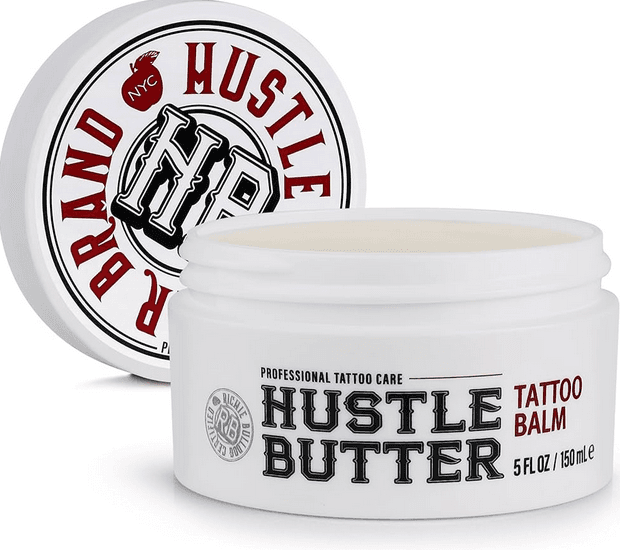
Stop Aquaphor. Switch to Lubriderm or Hustle Butter. Apply twice daily. The skin begins to tighten and feel dry — this is the epidermis beginning to close.
Week 2 — Peeling phase
The tattoo peels like a sunburn. This is completely normal — dead epidermal cells shedding as new ones form beneath. Do not peel manually. Tap gently if itching is intense. Continue twice-daily moisturizer.
Weeks 3 to 4 — Cloudy phase
The surface looks healed but the tattoo appears dull or milky. This is new epidermal cells maturing. The color is still there beneath them. Continue once-daily moisturizer. Add mineral SPF after Day 21.
Months 2 to 4 — Full color reveal
The new epidermal cells mature and become transparent. The full color and line clarity of your tattoo becomes visible. Continue SPF on any sun-exposed placement permanently.
What To Never Use
Swimming or submerging for 4 weeks
Pool chlorine and natural water bacteria penetrate the compromised epidermis and cause infection. Showers are fine — submersion is not.
Direct sun exposure for 30 days
UV on healing skin causes permanent color fade and increases scarring risk. After 30 days mineral SPF is mandatory for outdoor activity.
Picking or peeling
Manually removing peeling skin disrupts keratinocyte migration and can pull ink from the dermis causing permanent patchiness.
Tight clothing over the tattoo
Friction from clothing removes the protective plasma layer and disrupts the forming epidermis. Loose breathable fabric only.