DISCLOSURE: This post contains affiliate links. If you purchase through our links we may earn a small commission at no extra cost to you.
The Short Answer
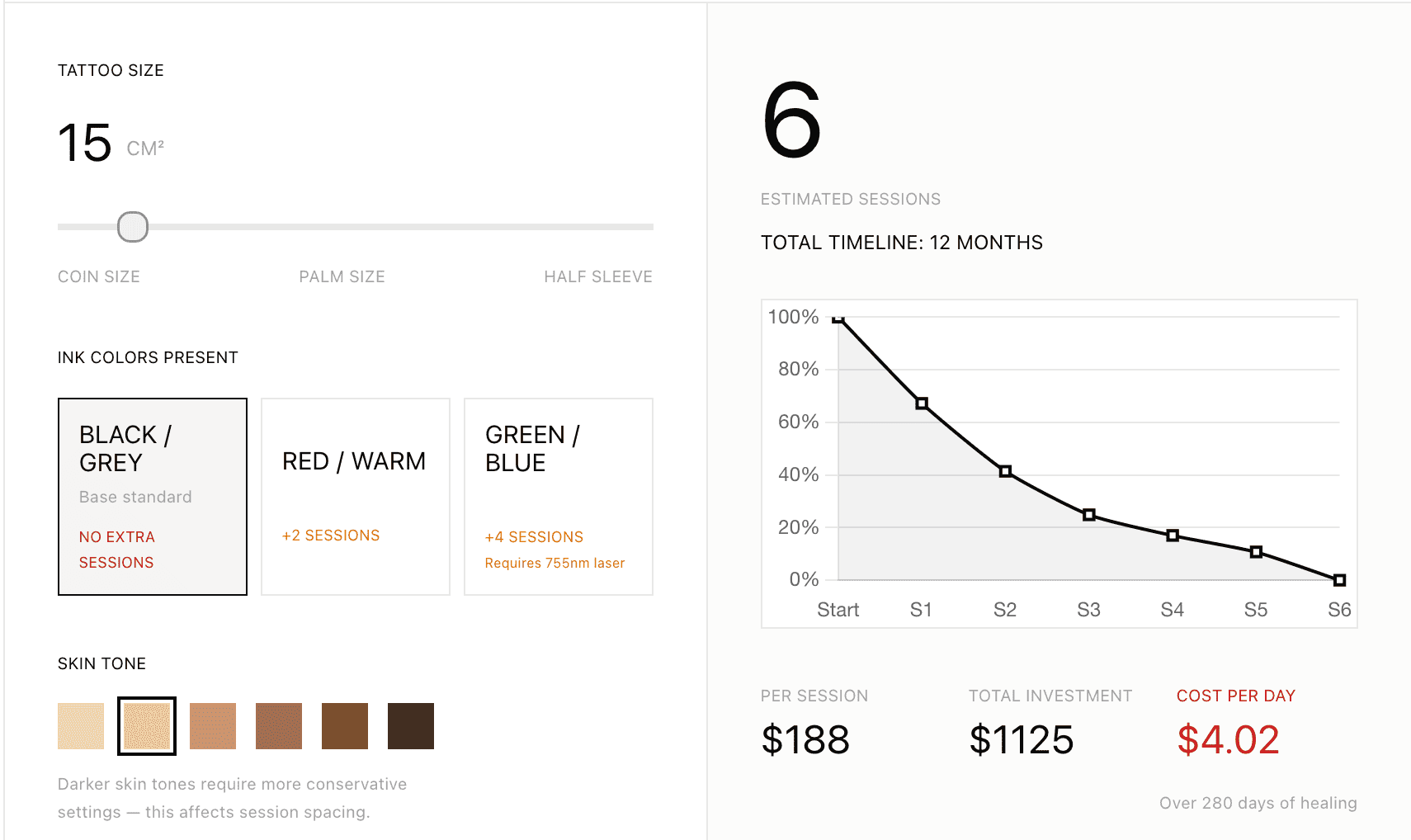
Laser removal breaks ink into fragments small enough for your immune system to carry away, and that clearance happens over six to eight weeks per session. Most tattoos need 6 to 12 sessions spaced 8 to 12 weeks apart, and the visible change between sessions gets smaller as you go — the first three sessions do the dramatic work, the last five chase the stubborn remainder. The realistic end point for most people is a faint ghost or a slight texture change, not blank skin.
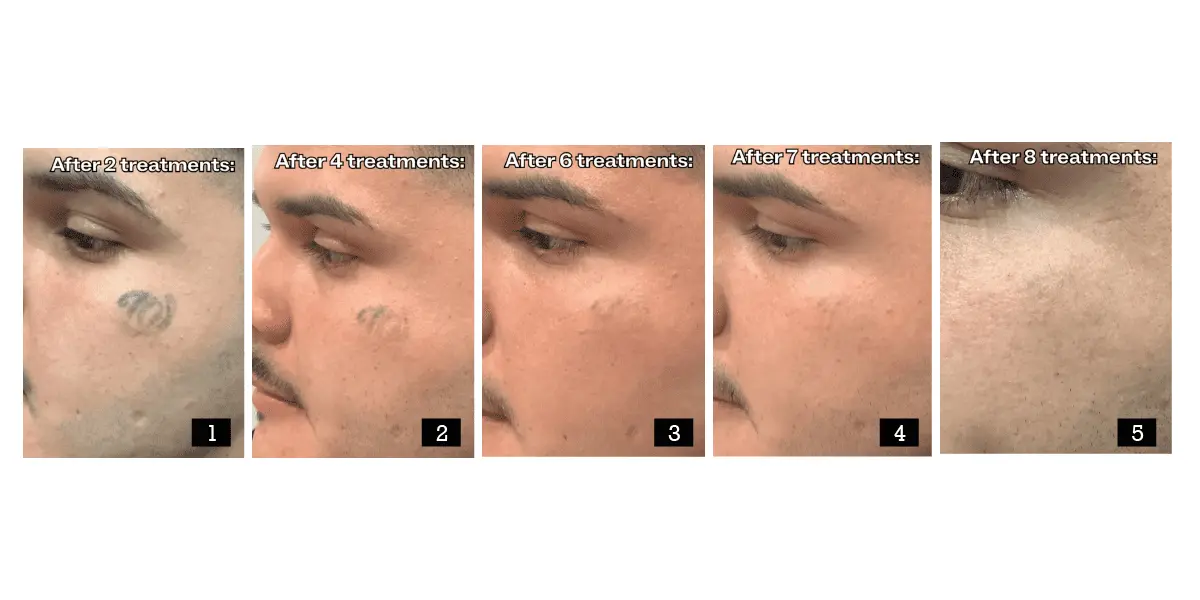
Your clinic showed you before-and-after photos of a black tribal band vanishing in six sessions. They didn't tell you that photo was a best-case tattoo — single-colour, amateur-applied, on a forearm with good circulation — and that your green-and-yellow professional piece on your ankle is a completely different problem. Why the Photos You Were Shown Are Misleading Removal clinics photograph their wins. That's not fraud, it's marketing, but it distorts what you walk in expecting. The tattoos that clear beautifully share a profile: black or dark blue ink, applied by an amateur with a shallow, inconsistent hand, sitting somewhere with strong blood flow like the upper arm or chest, on someone who doesn't smoke and has fair skin. Almost nobody's tattoo checks every box. A professionally applied piece packs ink densely and deeply, which means more particles for the laser to shatter and more passes to reach them. Colours behave wildly differently — black absorbs nearly every wavelength and clears fastest, while green and turquoise resist most lasers and often need a specific 694nm or picosecond wavelength that not every clinic owns. White ink can oxidise and turn grey or black on the first pass, which is the single most common nasty surprise in this process. What "Before and After" Actually Means at Each Stage The honest version is that removal is a fade, not an erase. Between session three and session eight you'll pass through a stage where the tattoo looks blurry and washed-out rather than gone — the outline has softened, the fill is patchy, and it reads as a smudge instead of an image. Some people stop here on purpose because they're getting a cover-up and a faded base is all the new artist needs. HONEST LIMITATION: The laser only removes what your lymphatic system can physically carry away. Ink sitting in scar tissue from a heavy-handed original application has no vascular access, which means those fragments stay put no matter how many sessions you buy — this is the specific reason some tattoos plateau at 80% clearance and never move again.
HOW MACROPHAGES CLEAR SHATTERED INK PARTICLES
Tattoo ink is permanent because the particles are too large for your immune cells to move. When ink is deposited into the dermis, macrophages engulf the particles and then sit there, unable to transport anything that big to the lymph nodes. When one dies, a fresh macrophage swallows the same particle — a relay that keeps your tattoo visible for decades. A Q-switched or picosecond laser fires a pulse measured in nanoseconds or trillionths of a second, which is faster than the ink can dissipate heat. The particle expands violently and fractures into fragments a fraction of its original size. Those fragments are now small enough for macrophages to actually carry. Over the following six to eight weeks, they haul the debris through the lymphatic vessels to the nearest lymph nodes, where it's filtered out. This is why sessions are spaced so far apart and why the fade continues long after the redness settles — the visible change you see at week six is your immune system finishing work the laser started on day one. Think of it as smashing a boulder that's too heavy to lift, then carrying it away one pocketful at a time.
"The first three sessions typically deliver 50 to 60 percent of your total fading, and the remaining five to nine sessions fight for what's left."
Already have your design? Each design in our library includes the recommended aftercare protocol for its specific style and placement. Browse verified designs →
Exactly What To Do, Day by Day
IMMEDIATELY AFTER SESSION 1: FROSTING AND SWELLING
The tattoo turns chalk-white within seconds of the pulse — that's frosting, gas escaping from the shattered ink, and it's the clearest sign the laser hit its target. It feels like hot bacon grease flicked onto sunburn, and the area swells and reddens within minutes. White frosting fading over 20 to 30 minutes into a raised red welt is normal; deep grey-black blistering across the whole piece or skin that splits open is not. Keep it dry and covered for 24 hours and apply a cool pack over the dressing. Don't pick the blisters that form over the next two days — that's how you turn a clean removal into a scar.
DAY 3-14 AFTER SESSION 1: SCABBING AND FALSE HOPE
The tattoo looks darker and angrier than before you started, with pinpoint scabs across the heaviest ink and a shiny, tight surface. It itches deeply and feels bruised to press on. Scabbing, itching, and temporary darkening are normal here; spreading redness beyond the treated area, yellow discharge, or a warm throb that worsens after day four is not. Moisturise with a plain unscented ointment and keep it out of the sun completely. Don't judge your results yet — this is the stage where people panic and book a consultation somewhere else.
WEEK 6-8 AFTER SESSION 1: THE FIRST REAL BEFORE-AND-AFTER
Now you see the actual change. Black lines look thinner and slightly grey, solid fill has gone patchy like a photocopy running out of toner, and the edges have started to blur. This is the point to photograph in the same light and same angle you used before session one, because memory is a terrible measuring tool. Take the photo, compare it honestly, and book session two. Don't compare against someone else's timeline — a 15-year-old faded tattoo will look dramatically better here than a six-month-old professional piece.
SESSION 2-3: THE STEEP PART OF THE CURVE
Each session now produces obvious, satisfying change — the tattoo goes from readable image to soft grey suggestion. It hurts marginally less because there's less ink absorbing energy, though the skin can feel leathery and slightly thickened between sessions. Continued fading with even lightening is normal; a section that goes completely dark and stays that way, or a raised firm ridge along old linework, is not. Keep the 8-to-12-week gap even if you're impatient, because clearance is immune-driven and can't be rushed. Don't let anyone talk you into a four-week interval — you'll get more inflammation and no extra fading.
What To Never Use
Sun exposure on the treated area between sessions
UV drives melanin production, and a tanned target area forces the clinic to drop laser energy, which means weaker sessions and more of them
Picking scabs or draining blisters
this removes the healing epidermis before it's rebuilt and converts a normal inflammatory response into permanent textural scarring, which then traps remaining ink beyond lymphatic reach
Smoking through the treatment course
nicotine constricts peripheral blood vessels and reduces macrophage delivery to the treatment site, which measurably slows ink clearance and adds sessions to your total
Anti-inflammatory painkillers like ibuprofen in the days after a session
inflammation is the mechanism that recruits macrophages to clear fragmented ink, and suppressing it works directly against the clearance you paid for
Booking sessions closer than eight weeks apart
the fade happens during immune clearance, not during the laser pass, so early re-treatment adds trauma and cost without adding results