Cheap black ink doesn't look cheap in the bottle. It looks exactly like the expensive stuff — dense, glossy, black. You find out the difference a year and a half later, when the bold linework somebody paid four hundred dollars for has softened into a bluish-grey smudge. By then the bottle is long gone and the client blames the artist.
Black Ink Is Mostly Carrier
The pigment in almost every professional black is carbon black. That part is roughly the same across brands and it's cheap. What you're actually paying for is everything around it.
The carrier is the liquid holding those particles in suspension — usually some combination of distilled water, glycerin, witch hazel, and alcohol. It controls how the ink flows through the needle, how fast it settles in the cap, and how evenly the pigment deposits.
Bad carrier is why a cheap bottle drags on the line, separates in the cap, and packs unevenly no matter how good your hand is.
Why Cheap Black Heals Grey
Pigment particle size decides whether ink stays put. Particles above a certain size get trapped permanently in dermal cells and stay dark for decades. Smaller particles get picked up and carried off through the lymphatic system, and that's fading.
"The pigment in a nine dollar bottle and a twenty-five dollar bottle is often the same carbon black — you're paying for how consistently it was milled and what it's suspended in."
Poorly milled ink has a wide spread of particle sizes. The big ones stay, the small ones leave, and what you get is a line that looks solid at three months and hazy at three years.
Lot Numbers Are Not Marketing
A lot number means the bottle traces back to a specific production batch. If something goes wrong — a contamination recall, a reaction pattern across multiple clients — that number is how anyone finds out which bottles are involved.
Ink without it is untraceable. You have no way to know what's in it, when it was made, or whether it was sterilized. That's a real risk you're taking on behalf of somebody else's body.
What The Ink Can't Control
Ink quality sets your ceiling, not your floor. Bad technique in good ink still heals badly, and no bottle compensates for blowouts, overworked skin, or packing too shallow.
Healing is also individual. Sun exposure, skin type, placement, and how well the client actually follows aftercare will move the result more than the gap between two decent brands. And if a client reacts — raised, itchy, angry weeks after healing — that's a doctor, not a different bottle next time.
Think of ink like paint on a house. Premium paint on rotten wood still peels. It just peels slower.
The Ranked List
DISCLOSURE: This post contains affiliate links. If you purchase through our links we may earn a small commission at no extra cost to you.
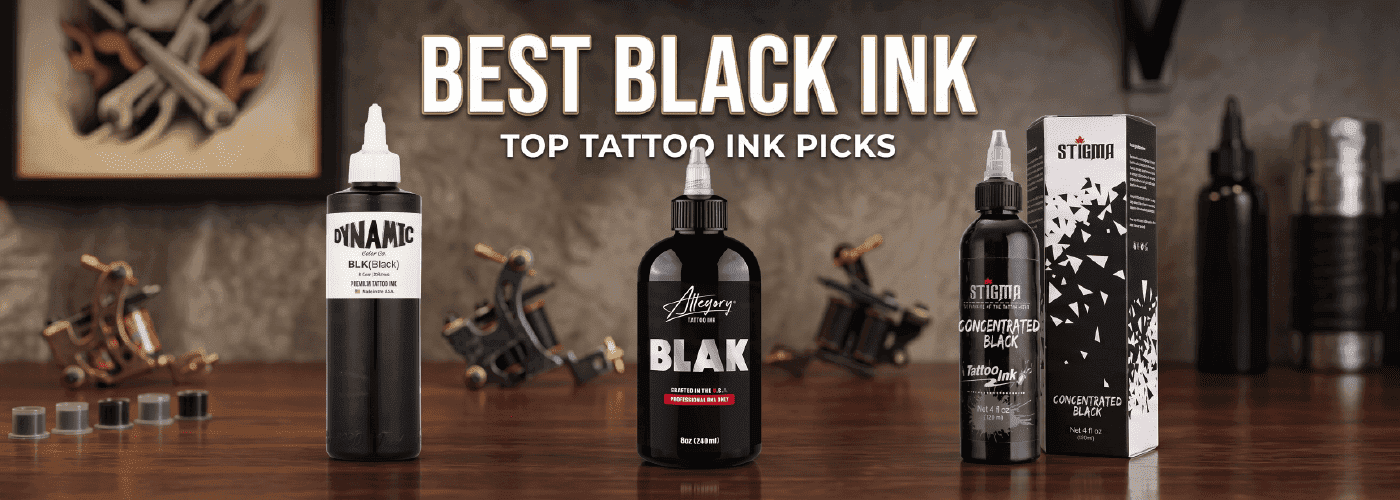
1 — DYNAMIC BLACK 8OZ
BEST OVERALL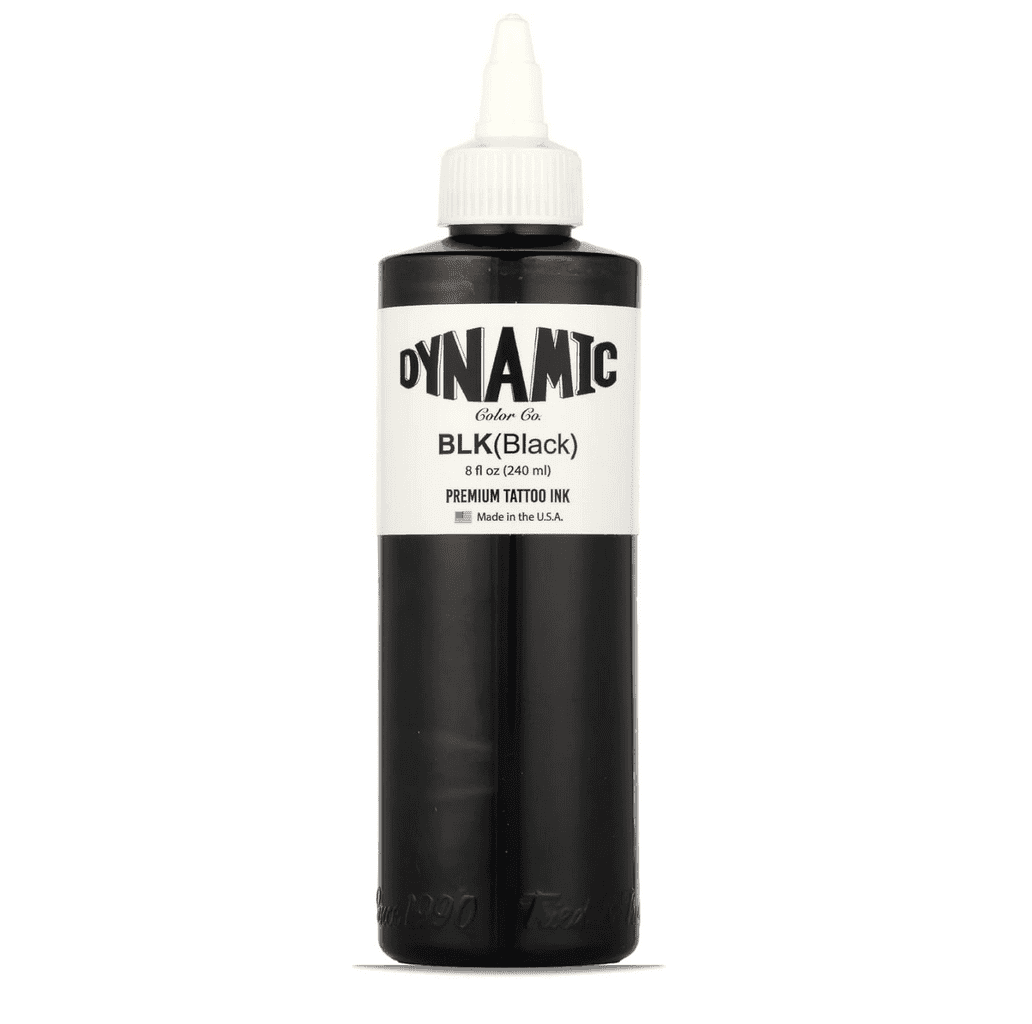
This is the bottle that's been on more stations than anything else in the industry, and it earns it — it pulls a line without dragging and packs solid without you having to go back over the same pass three times. It's slightly thinner than some premium blacks, which most artists dilute less and just work with directly. Every bottle is sterilized and lot-numbered, and after thirty-plus years of American production there's a track record here that newer labels don't have.
It's thin enough straight from the bottle that some artists find it runs on vertical surfaces and heavy shading passes.
WHY PARTICLE SIZE DECIDES LONG-TERM FADING
When the needle deposits ink, most of it lands in the dermis, and your immune system immediately treats it as debris. Macrophages move in and engulf the pigment particles. The ones that succeed either stay parked in the dermis holding that pigment for decades, or migrate out through the lymphatic system carrying it away to the lymph nodes. Which of those happens depends heavily on particle size. Larger carbon black agglomerates are too big to be cleared efficiently and stay locked in place, while fine particles get transported out — which is exactly why a poorly milled ink with a wide particle size distribution loses density over years while a tightly milled one holds. The carrier does the other half of the work. Glycerin slows drying and keeps pigment in suspension so it doesn't crash out in the cap halfway through a session, witch hazel acts as a mild astringent and helps the skin accept the deposit, and the water-to-alcohol ratio sets viscosity. Get that balance wrong and the ink either runs thin and deposits weakly, or sits too thick and forces you to work the same area repeatedly. Overworking is where real damage happens — excess trauma means more scarring, more inflammation, and more aggressive pigment clearance during healing, which is how a technically dark ink still ends up looking washed out.
"The pigment in a nine dollar bottle and a twenty-five dollar bottle is often the same carbon black — you're paying for how consistently it was milled and what it's suspended in. "
Already have your design? Each design in our library includes the recommended aftercare protocol for its specific style and placement. Browse verified designs →
Exactly What To Do, Day by Day
SHAKE THE BOTTLE PROPERLY BEFORE EVERY SESSION
Pigment settles, and thirty seconds of real shaking is the difference between consistent density and a patchy pack. Bottles with a glass agitator need it just as much.
POUR FRESH CAPS FOR EVERY CLIENT
Pour what you need into single-use caps and never work directly out of the bottle. This is the whole reason caps exist.
NEVER RETURN INK TO THE BOTTLE
Once ink has left the bottle it's contaminated, no matter how clean it looks. Whatever's left in the cap gets binned with the cap.
WIPE THE BOTTLE NECK AND RESEAL
Clean the threads before you cap it, since dried ink on the neck breaks the seal and lets the carrier evaporate. Evaporated carrier means thicker, harder-working ink next time.
STORE COOL, DARK, AND SEALED
Keep bottles out of direct sun and away from heat, upright and closed. Heat degrades the carrier and separates the suspension faster than anything else.
What To Never Use
Ink with no lot number or manufacturer address
you can't trace it, verify sterilization, or respond if there's ever a recall.
Craft, calligraphy, or India ink
these contain shellac and binders never intended for the dermis and they're a known cause of granulomas.
Homemade or improvised ink
no sterilization, no controlled particle size, and infection risk that no aftercare protocol fixes.
Bottles that have separated and won't remix
if shaking doesn't bring it back together the carrier has broken down and the ink won't deposit evenly.