DISCLOSURE: This post contains affiliate links. If you purchase through our links we may earn a small commission at no extra cost to you.
Your new tattoo looked perfect walking out of the shop, and now it looks like something went wrong — it's red, it's oozing, it's peeling, and you're googling at midnight trying to figure out if that's normal. It almost certainly is. Tattoo healing is ugly in the middle, and knowing what each stage actually looks like is the difference between calm patience and unnecessary panic.
The Four Stages of Tattoo Healing
Every tattoo heals through the same basic stages, in the same order. The timing shifts depending on your body, the tattoo's size and placement, and your aftercare — but the sequence doesn't change.
Stage 1: Open Wound (Days 1–3)
Your tattoo is a fresh wound. The needle punctured your skin thousands of times, deposited ink into the dermis, and your body is responding exactly the way it responds to any injury.
What's normal:
- Redness and swelling around and within the tattoo
- Warmth — the area feels hot to the touch
- Oozing — clear fluid, plasma, and small amounts of ink weeping from the surface
- Soreness — feels like a sunburn or a deep graze
- Ink on your sheets and clothes — plasma and excess ink leak overnight, this is not your tattoo falling out
What's not normal:
- Pus — thick, yellow, green, or foul-smelling discharge (that's infection territory)
- Pain that intensifies rather than holds steady or improves
- Red streaks spreading outward from the tattoo
"The oozing that panics people on night one is plasma doing its job — it's your body forming the protective layer that lets everything underneath heal."
Days 1 through 3 are the hardest to judge because a fresh wound and an early infection can look similar — both involve redness, swelling, and fluid. The key is trajectory. Normal healing holds steady or improves each day. Infection gets worse. If you're genuinely unsure on day two, it's too early to panic but not too early to message your artist with a photo. They've seen thousands of healing tattoos and can usually tell you in ten seconds whether what you're seeing is routine.
Stage 2: Itching and Peeling (Days 4–14)
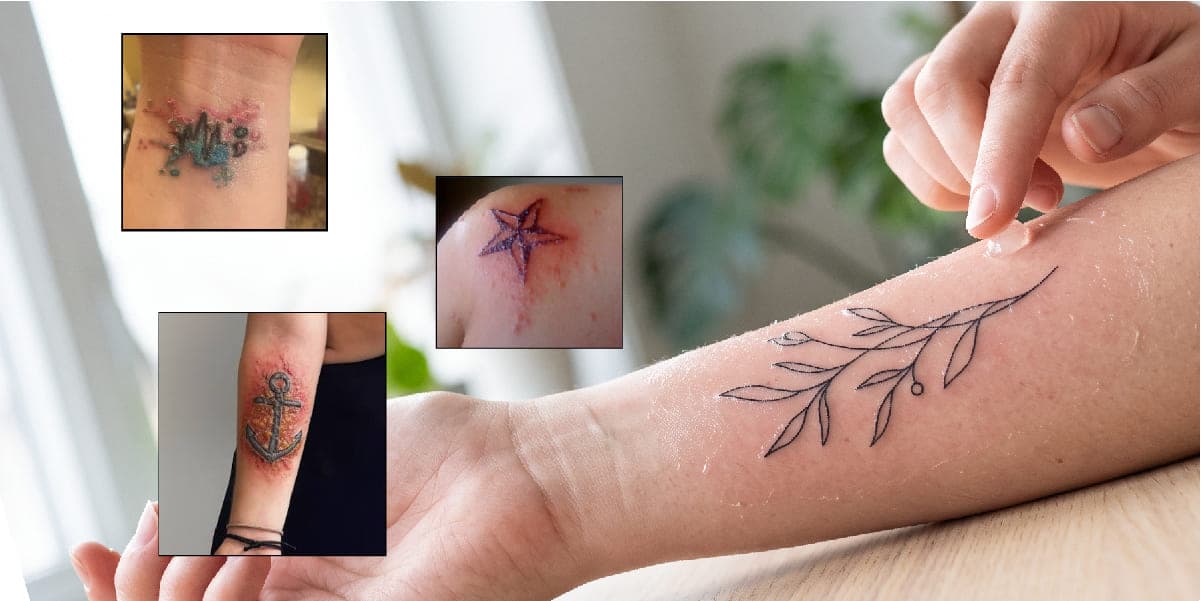
This is the stage that tests people's patience and self-control. The surface starts drying, tightening, and peeling — and the itching can be intense.
What's normal:
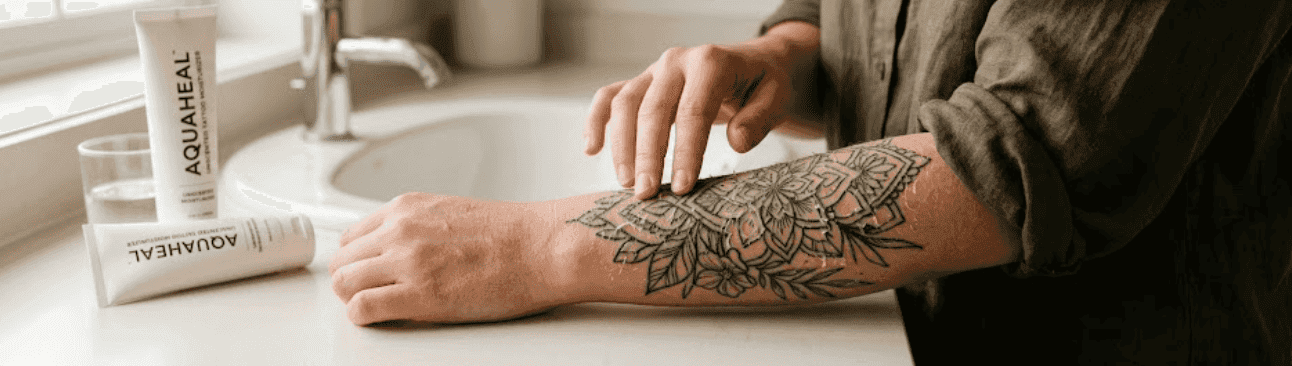
- Flaking and peeling — the top layer of skin sheds like a sunburn, often carrying what looks like coloured flakes. This is dead skin with surface ink, not your tattoo peeling off.
- Itching — sometimes maddening, always normal. Your skin is regenerating underneath.
- Tightness — the skin feels dry, stiff, and stretched
- Dullness — the tattoo looks faded, cloudy, or milky under the peeling skin. This is temporary.
- Scabbing — light, thin scabs over parts of the tattoo are normal. Thick, raised, heavily crusted scabs are less ideal and usually mean the area is drying out too much.
What's not normal:
- Heavy, thick scabs that crack and bleed
- Pus under or around scabs
- Increasing pain or spreading redness at this stage
The "milky" or "cloudy" phase scares people more than anything else in the healing timeline, and it's worth addressing head-on. Around days 7 to 14, your tattoo will look dull, faded, and washed-out under a layer of healing skin. It looks terrible. It's completely normal. The new skin forming over the ink is initially opaque, and as it matures and thins over the coming weeks, the ink underneath becomes clear and vivid again. People panic at this stage and assume the tattoo is ruined — it's not. You're looking at the tattoo through a frosted window that hasn't cleared yet.
Stage 3: Settling (Weeks 2–4)
The peeling stops, the itching fades, and the tattoo starts looking like a tattoo again. Your skin is rebuilding itself over and around the ink.
What's normal:
- The tattoo sharpening up — clarity and colour returning as the new skin matures
- Slight shininess — the healed skin may look shinier or slightly different in texture from surrounding skin for a while
- Minor unevenness — some areas may look slightly lighter or darker than others as they settle at different rates
- Residual dryness — the area may still feel drier than normal skin
What's not normal:
- Persistent bumps or raised areas that aren't settling
- Ongoing redness or irritation that isn't improving
- Signs of reaction to a specific colour (itchy, raised, confined to one colour — that's an allergy concern)
"Healed" at the two-to-four-week mark means surface-healed — the outer skin has closed and rebuilt. The deeper layers where the ink actually sits take longer to fully settle, often two to three months. This is why artists say to wait before judging the final result or booking a touch-up. What looks slightly uneven at week three may look perfectly fine at week eight. Patience at this stage saves you from a premature touch-up on skin that hadn't finished settling.
Stage 4: Fully Healed (Months 1–3)
The skin has fully regenerated at every level, the ink has settled into its permanent position in the dermis, and what you see now is what you've got.
What's normal:
- The tattoo looking crisp and clear — this is the real result
- Slight texture difference — the tattooed skin may feel subtly different from surrounding skin permanently, which is normal
- The colours settling to their true tone — slightly different from how they looked fresh, usually a touch softer
What to assess now:
- Patches that healed lighter — spots where ink didn't take, which a touch-up can fix
- Lines that softened more than expected — normal settling versus a potential blowout
- Colour that dropped out in spots — some areas, especially high-movement joints, may need re-inking
The tattoo you see at three months isn't the tattoo you saw on day one — it's slightly softer, slightly less vivid, and that's completely normal for every tattoo ever done. Ink settles, skin filters light differently than a fresh wound does, and the colours mature. If you're comparing your healed tattoo to the fresh photo your artist posted, you're comparing an unfair snapshot to the lived reality. Healed is always a step down from fresh, and a good artist's work still looks excellent at this stage — just not identical to the Instagram post.
What Affects How Fast You Heal
Not everyone heals at the same rate, and knowing what speeds or slows it helps set realistic expectations.
- Placement — areas with more blood flow (upper arms, chest, back) heal faster than extremities (ankles, feet, hands, fingers)
- Size and density — larger, more heavily worked tattoos take longer because there's more trauma to recover from
- Your health — sleep, hydration, nutrition, and immune function all affect healing speed
- Age — younger skin regenerates faster, though the difference is modest for most adults
- Smoking — slows healing measurably by reducing blood flow to the skin
- Aftercare — proper cleaning, moisturising, and protection shorten healing; neglect, picking, and sun exposure extend it
The timelines in this guide are averages, and your tattoo may run ahead or behind them without anything being wrong. A small wrist tattoo might feel fully healed in two weeks. A full back piece might take six weeks to stop peeling. Both are normal for their size and placement. Use the stages as a sequence to expect, not a stopwatch to measure against — what matters is that each stage progresses to the next, not that it happens on exactly the right day.
The Mistakes That Slow Healing
Most healing problems aren't bad luck — they're avoidable mistakes during the first two weeks.
- Picking or peeling scabs and flakes — pulling off peeling skin can pull out ink and create patchy spots. Let it fall off naturally, every time, no matter how tempting.
- Submerging the tattoo — pools, baths, hot tubs, lakes, and the ocean introduce bacteria to an open wound and soften scabs prematurely. Showers are fine; submersion isn't. Our swimming guide covers the timeline.
- Sun exposure — UV on a healing tattoo causes inflammation, fading, and can permanently damage the result. Cover it completely for the first month.
- Over-moisturising — a thin layer of unscented moisturiser is correct. Thick, goopy layers suffocate the skin and trap bacteria.
- Under-moisturising — letting it dry out completely leads to thick cracking scabs that pull out ink when they finally fall off.
- Gym and sweat too early — heavy sweating on a fresh tattoo in the first few days can irritate the wound. Light activity is fine after day two or three; heavy exercise on the tattooed area, wait a few more days.
- Tight clothing rubbing the tattoo — friction on a healing tattoo irritates and can pull scabs. Wear loose, breathable clothing over the area.
"The two-week healing window is where the tattoo's long-term quality is won or lost — everything after that is just waiting."
Perfect aftercare doesn't guarantee perfect healing, and imperfect aftercare doesn't guarantee disaster — bodies are variable, and sometimes a spot heals lighter or a scab forms despite doing everything right. The point of good aftercare is stacking the odds heavily in your favour, not eliminating all uncertainty. If a small area didn't heal perfectly despite solid care, that's what touch-ups exist for. Don't beat yourself up over a minor imperfection; fix it in six weeks when the skin is ready.
When to Actually Worry
Most healing anxiety is unnecessary — but some signs are real and worth acting on. Here's the short list of things that warrant contacting your artist or seeing a doctor.
- Pain that's getting worse after day three instead of steadily improving
- Pus — thick, opaque, yellow or green discharge, especially if it smells
- Red streaks spreading outward from the tattoo — this can indicate infection spreading and needs urgent care
- Fever, chills, or feeling unwell alongside a healing tattoo — see a doctor promptly
- A reaction confined to one colour that persists well past normal healing — possible ink allergy
- Thick, cracking, bleeding scabs that aren't resolving — may need professional assessment
Everything else — the oozing, the peeling, the itching, the cloudy phase, the dullness, the flakes that look like coloured confetti on your sheets — is your skin doing exactly what it's supposed to do. The healing process is ugly in the middle. That's not a sign of a problem. That's the process.
Think of tattoo healing like renovating a room. Day one it looks great — fresh paint, everything clean. Then the workers come back and it looks worse: dust everywhere, tape on the trim, things torn up that were fine before. It looks like a mess because it is a mess, and that mess is the work happening. You don't rip out the new floor because it's dusty on day four. You wait, let the work finish, and judge it when the tape comes off and the dust settles. Your tattoo at week two is the dusty room. Your tattoo at week eight is the finished renovation.
"The oozing that panics people on night one is plasma doing its job — it’s your body forming the protective layer that lets everything underneath heal."
Already have your design? Each design in our library includes the recommended aftercare protocol for its specific style and placement. Browse verified designs →
What To Never Use
Picking or pulling peeling skin and scabs
pulls out ink, creates patchy spots
Submerging the tattoo in water during the first 2–3 weeks
pools, baths, hot tubs introduce bacteria
Sun exposure on a healing tattoo
causes inflammation and permanent fading
Over-moisturising with thick layers
suffocates the skin and traps bacteria
Judging your tattoo during the cloudy phase (days 7–14)
the milky look is temporary, not the final result