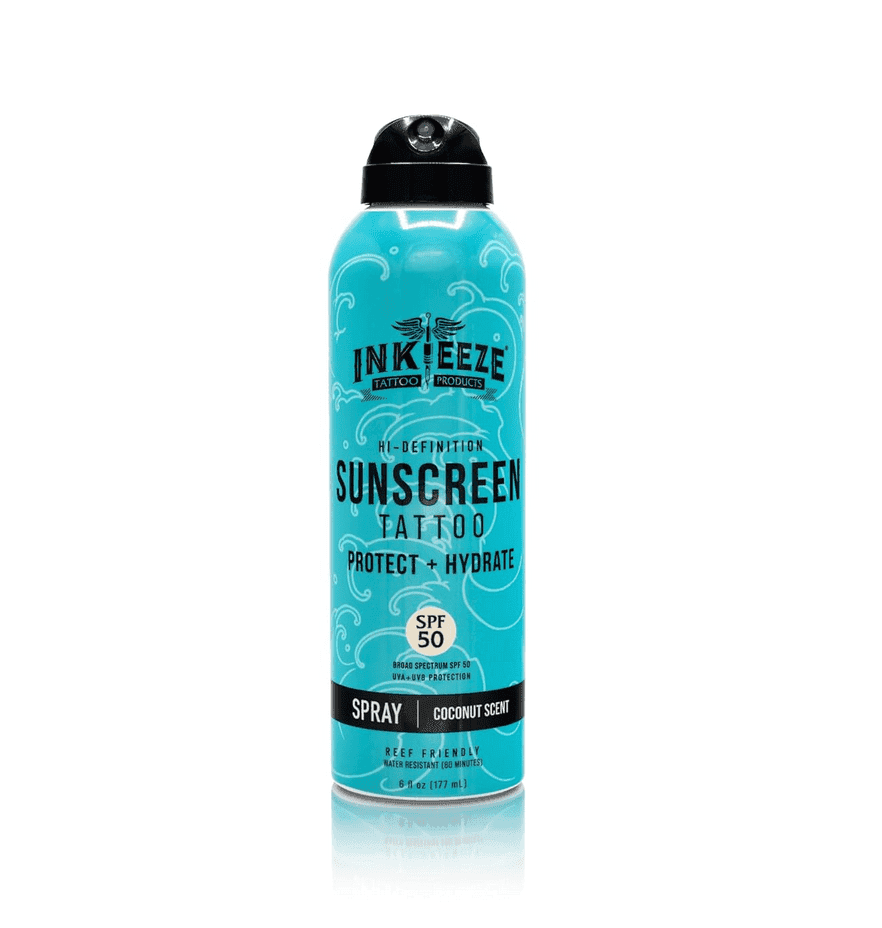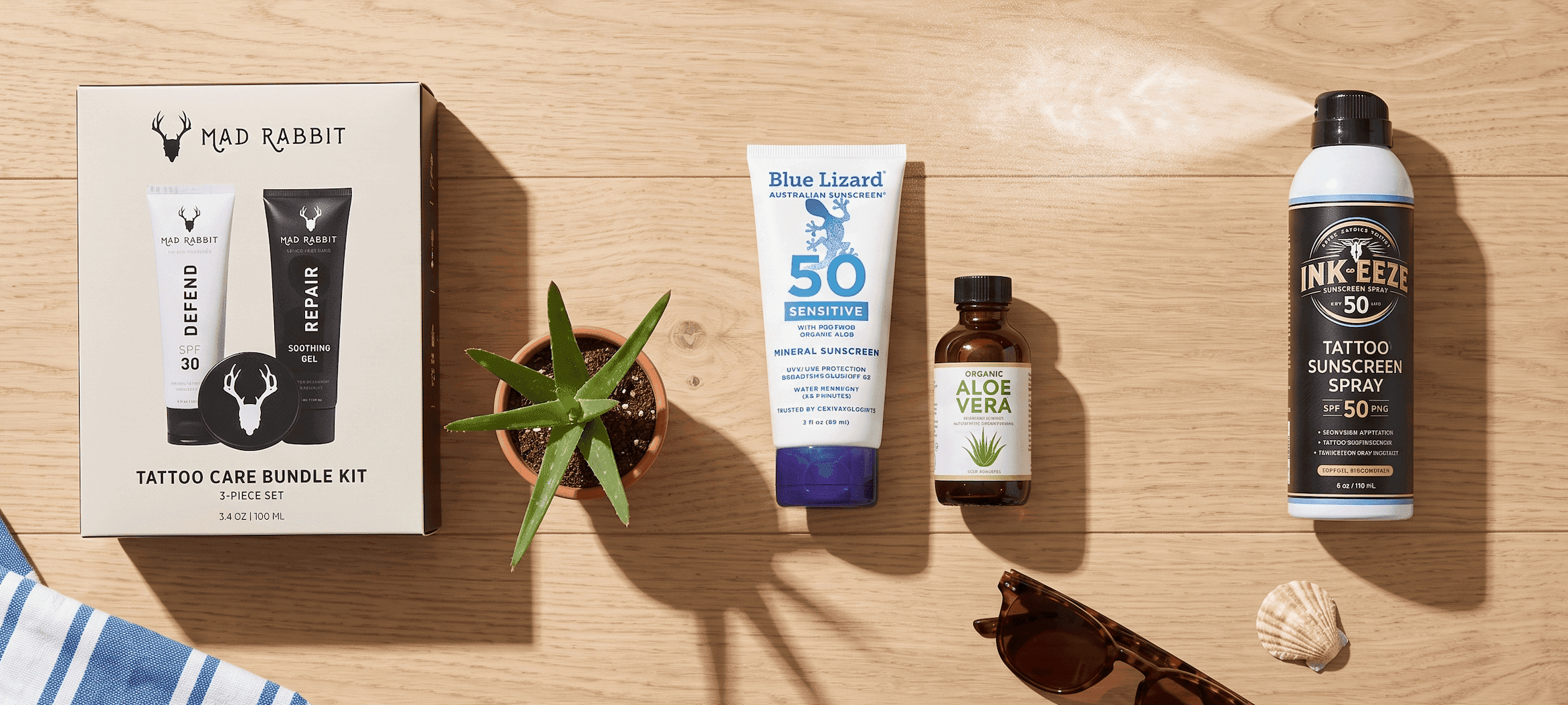
The Short Answer
For daily protection on healed tattoos Mad Rabbit SPF 30 is the most user-friendly option — formulated specifically for tattooed skin with no white cast. For healing tattoos use a mineral sunscreen only — EltaMD UV Clear has the right balance of zinc oxide coverage and cosmetic elegance. Apply before sun exposure not during.
UV radiation is the primary mechanism of tattoo fading — not time, not skin cell turnover, not the quality of the ink. A tattoo on skin that never sees direct sun temporarily barely fades over decades. The same tattoo in the same person on sun-exposed skin can show significant colour shift in three years.
While sunscreen is critical for healed tattoos, the initial healing phase should rely on protective second skin film followed by a quality aftercare lotion.
Why Sunscreen Matters More Than Aftercare Products
Most tattoo aftercare discussion focuses on the healing phase — the first three weeks. The decisions that determine how a tattoo looks at year ten are the decisions made for the following decade, and the most important of those decisions is consistent SPF use on tattooed skin in sun-exposed placements.
The UV radiation mechanism is simple: photons at UV wavelengths have enough energy to break the molecular bonds in pigment compounds. When those bonds break the molecule changes structure, which changes which wavelengths of light it absorbs and reflects — which changes the colour you perceive. Black becomes grey-green. Red becomes orange-pink. Blue becomes teal. This process is irreversible.
SPF 50 blocks approximately 98 percent of UVB radiation. UVA radiation — which penetrates deeper and is responsible for more of the long-term pigment degradation — requires a broad-spectrum formulation with explicit UVA coverage, usually indicated by a PA+++ rating or the Boots star system.
Even consistent SPF 50 broad-spectrum use slows fading — it does not prevent it entirely. A tattoo in a sun-exposed placement on someone who spends significant time outdoors will fade faster than the same tattoo on someone who spends most of their time indoors, regardless of SPF use. Set expectations accordingly.
Chemical vs Mineral Sunscreen on Tattoos
Chemical sunscreens work by absorbing UV radiation and converting it to heat. Mineral sunscreens — zinc oxide and titanium dioxide — work by reflecting UV radiation before it reaches the skin.
For healing tattoos — the first three to four weeks — mineral sunscreens are the correct choice because they sit on the skin surface without being absorbed. Chemical sunscreen filters are absorbed into the skin and penetrate into the epidermis, which means they contact the healing dermis directly. On a tattoo where the dermal layer is still settling this is a potential source of irritation.
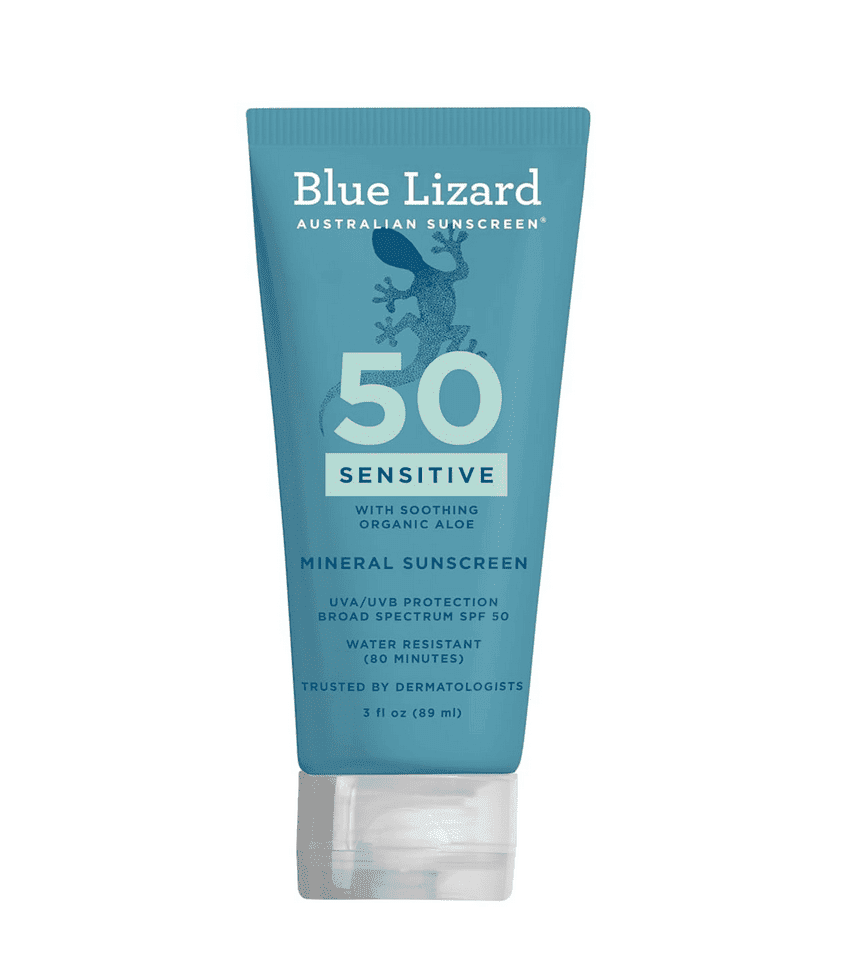
For healed tattoos either formulation works. The choice becomes a preference question. Mineral sunscreens leave a white cast that is more visible on darker skin tones. Chemical sunscreens absorb invisibly but some people experience sensitivity to specific chemical filter compounds, particularly oxybenzone.
The most effective sunscreen is the one you will actually use consistently. A technically superior broad-spectrum SPF 50 that you do not enjoy applying will be applied less consistently than a SPF 30 product you like using. Consistency matters more than the marginal difference between SPF 30 and SPF 50 in real-world use.
The Timing That Most People Miss
Sunscreen needs to be applied before sun exposure, not during or after. Chemical sunscreens require 20 to 30 minutes to absorb and activate before they provide their rated protection. Mineral sunscreens are effective immediately on application but require even, complete coverage to work — gaps in application are gaps in protection.
The practical implication is that if you are going outdoors for any significant period you need to apply sunscreen before leaving the house, not when you arrive at the beach or the park. Most people who think they have applied sunscreen have applied it in conditions where its effectiveness is already compromised.
Sunscreen degrades with sun exposure, sweating, and water contact. Reapplication every two hours of direct sun exposure is not a conservative recommendation — it is the minimum needed to maintain the rated protection level throughout a day outdoors.
The Ranked List
DISCLOSURE: This post contains affiliate links. If you purchase through our links we may earn a small commission at no extra cost to you.
Mad Rabbit Tattoo Care Bundle Kit (3-Piece)
BEST OVERALL
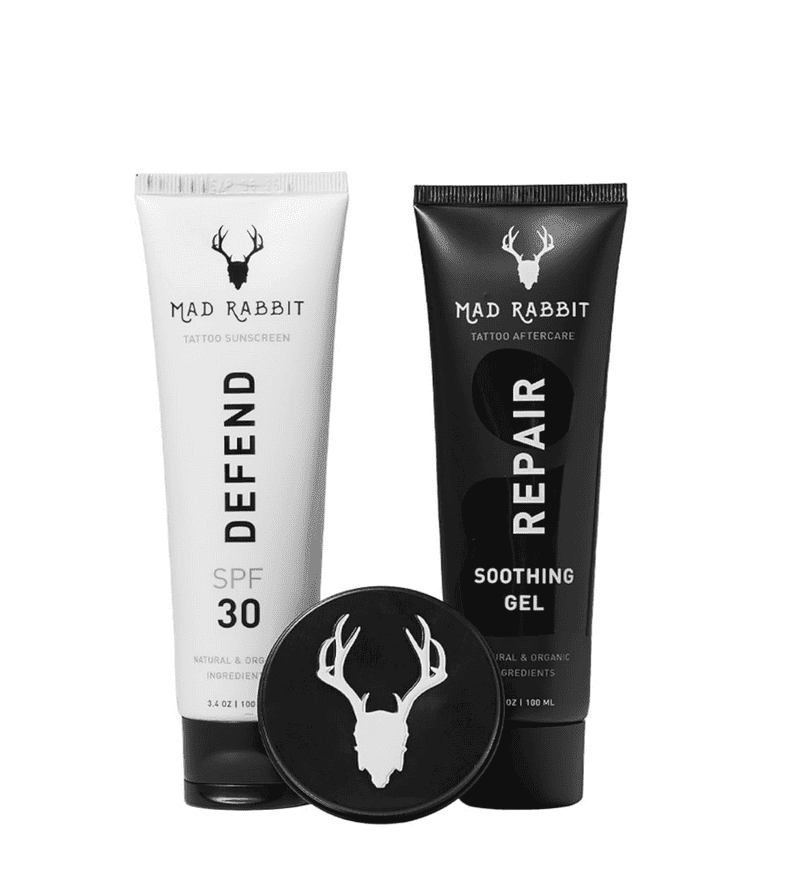
What it actually does >> This is the full package. The Repair Soothing Gel calms irritation and itchiness in fresh ink. The Enhance Balm boosts depth, clarity, and contrast apply daily and see results after one use. The Defend SPF 30 Sunscreen is a 100% mineral formula packed with antioxidants and vitamins to protect against UVA/UVB damage. Clean ingredients, no nonsense. It's the complete routine from healing to daily protection.
SPF 30 is the minimum recommended fine for daily use, but SPF 50 is better for long sun exposure. Also, you're buying three products, so it's a bigger upfront investment than just a sunscreen.
How UV Radiation Breaks Down Tattoo Pigment at a Molecular Level
Tattoo pigment molecules are organic compounds that absorb specific wavelengths of light — which is why they appear the colours they do. The colour you see is the wavelengths the pigment does not absorb and reflects back to your eye. UV photons at 280 to 400nm wavelengths carry enough energy to break the covalent bonds within these organic molecules — a process called photodegradation. When a bond breaks the molecule fragments into smaller compounds with different electron configurations. These fragments absorb and reflect different wavelengths of light than the original pigment molecule. The cumulative effect of millions of pigment molecules undergoing photodegradation is a visible colour shift in the tattoo — the characteristic greening of black ink and pinking of red ink that occurs over years of UV exposure. SPF sunscreen reduces the number of UV photons that reach the pigment by absorbing or reflecting them before they penetrate to the dermis where the pigment sits. SPF 50 allows approximately 2 percent of UVB photons to pass through — significantly reducing the photodegradation rate but not eliminating it. Broad-spectrum formulations also attenuate UVA radiation which penetrates more deeply and reaches the dermal pigment deposits more effectively than UVB.
"A tattoo never seen by direct sun barely fades over decades. The decisions made about sunscreen for the next ten years matter more than any product used in the first three weeks."
Already have your design? Each design in our library includes the recommended aftercare protocol for its specific style and placement. Browse verified designs →
Exactly What To Do, Day by Day
WAIT UNTIL FULLY HEALED.
No sunscreen on fresh tattoos. Cover with clothing for the first 4-6 weeks.
APPLY 15 MINUTES BEFORE SUN EXPOSURE.
Gives the sunscreen time to form a proper barrier.
USE ENOUGH.
Most people don't apply enough. A nickel-sized amount for each tattooed area is a good rule.
REAPPLY EVERY 2 HOURS.
Or after swimming, sweating, or towel drying.
DON'T FORGET THE EDGES.
Sun exposure on the skin around your tattoo can still cause ink spread over time.
MAKE IT DAILY.
Even on cloudy days. UVA rays penetrate clouds and windows.
What To Never Use
Chemical sunscreens with oxybenzone.
They can irritate sensitive skin and may interact with tattoo pigments. Also, they're bad for coral reefs.
Spray sunscreens as your only protection.
They go on uneven and you'll miss spots. Use them for touch-ups, not your primary application.
Applying sunscreen to fresh tattoos.
Wait 4-6 weeks until fully healed. Before that, cover with clothing.
SPF below 30.
Experts say SPF 30 is the minimum—SPF 50 is preferred for tattoos in sun-exposed spots.
Fragranced sunscreens.
Fragrances can irritate tattooed skin, which is often more sensitive than surrounding skin.