WHY CHOOSING THE RIGHT SOAP MATTERS
Here's the thing about fresh tattoos. That needle just shoved ink into your dermis, and the skin above it is wrecked. For the first two weeks, your body is working overtime to rebuild that outer layer. Cells called keratinocytes have to migrate horizontally across the wound to close it up. Anything you put on that skin either helps that process or messes with it. There's no in-between.
Fragrant alcohols linalool, limonene, geraniol are bad news. They trigger mast cells in the tissue, which release histamine, which causes inflammation. And inflammation in a healing tattoo pushes ink around. That's how you get blown-out lines years down the road. Doesn't matter if the product says "natural" or "organic" on the bottle. The problem is the specific compounds, not where they came from.
Related Aftercare Protocols
- Stage 2 Hydration: Compare formulas in our Best Tattoo Aftercare Lotion Guide.
- Washing Protocol: See gentle cleanser options in our Best Soap for Tattoo Aftercare Guide.
- Complications: Learn to identify early symptoms in our Tattoo Infection vs Healing Guide.
The Ranked List
DISCLOSURE: This post contains affiliate links. If you purchase through our links we may earn a small commission at no extra cost to you.
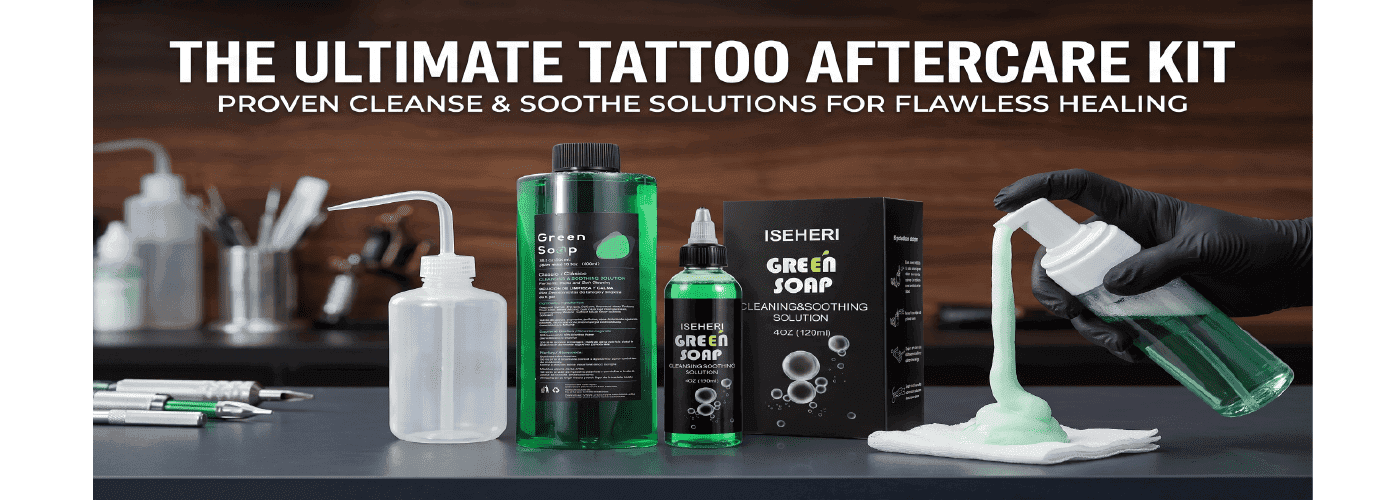
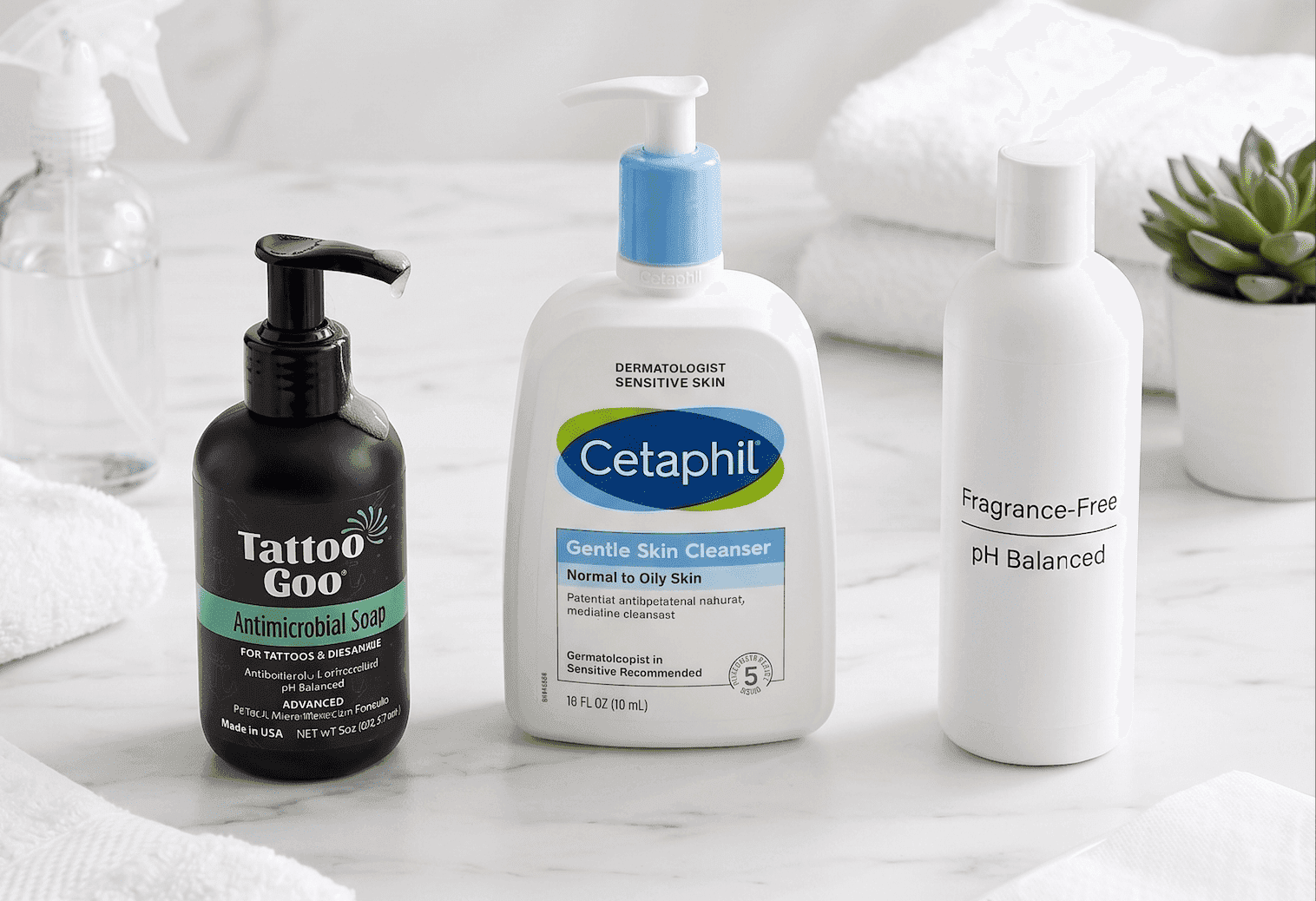
Tattoo Goo Cleansing Soap
BEST OVERALL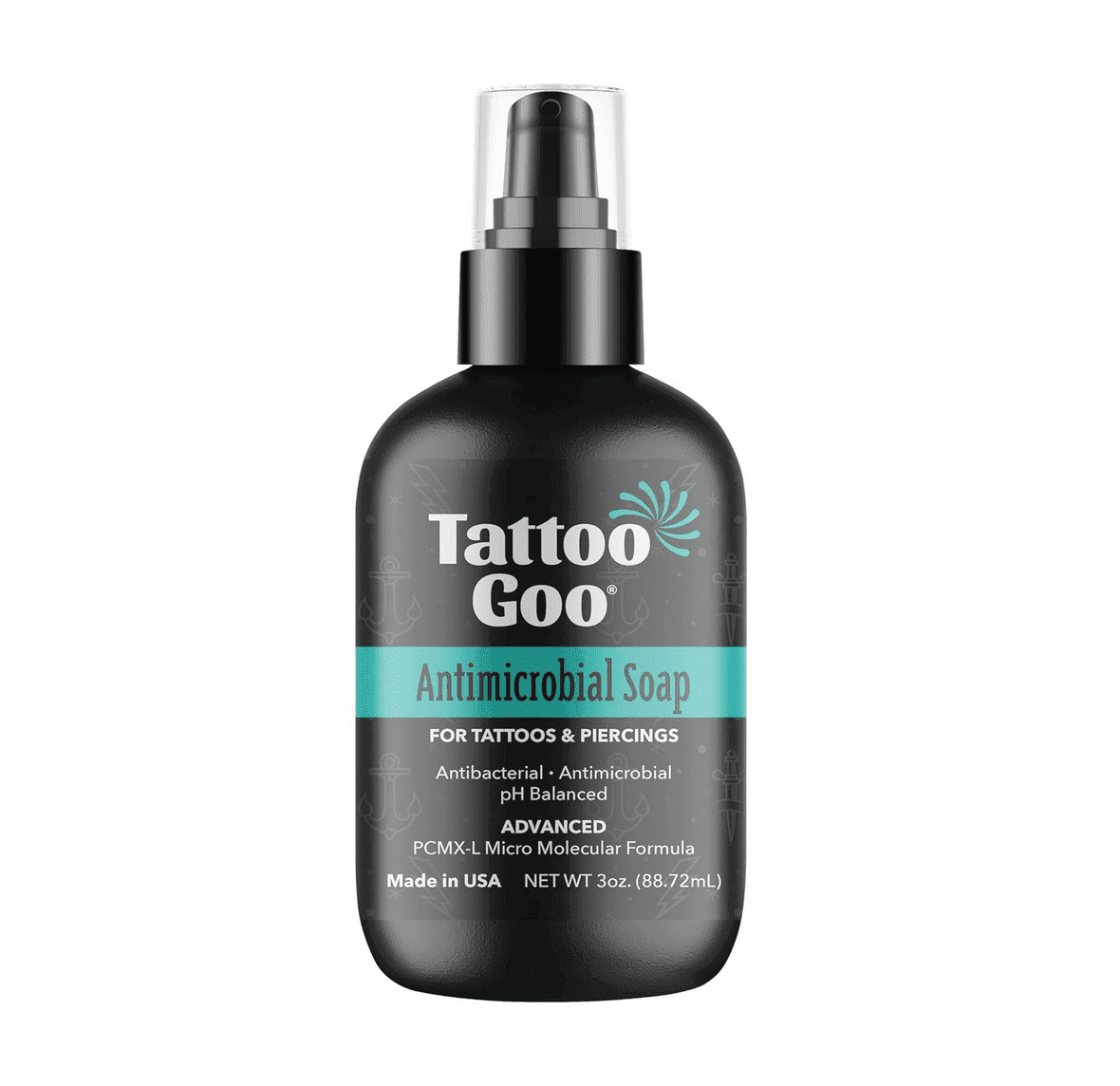
This one uses a PCMX-L formula that cleans deep without that burn you get from harsh antibacterials. The pH is balanced to match your skin, so it doesn't strip your barrier during those critical first 14 days.
The honest downside: It's made specifically for tattoos and piercings, so you're paying more per ounce than you would for a generic cleanser at the drugstore. About $9 on Amazon.
WHY CHOOSING THE RIGHT SOAP MATTERS
Here's the thing about fresh tattoos. That needle just shoved ink into your dermis, and the skin above it is wrecked. For the first two weeks, your body is working overtime to rebuild that outer layer. Cells called keratinocytes have to migrate horizontally across the wound to close it up. Anything you put on that skin either helps that process or messes with it. There's no in-between.
"Fragrant alcohols linalool, limonene, geraniol are bad news. They trigger mast cells in the tissue, which release histamine, which causes inflammation. And inflammation in a healing tattoo pushes ink around. That's how you get blown-out lines years down the road. Doesn't matter if the product says "natural" or "organic" on the bottle. The problem is the specific compounds, not where they came from."
Already have your design? Each design in our library includes the recommended aftercare protocol for its specific style and placement. Browse verified designs →
Exactly What To Do, Day by Day
WASH YOUR HANDS FIRST.
Every single time before touching the tattoo. Your hands are the most common vector for introducing bacteria to healing skin.
WET THE TATTOO WITH LUKEWARM WATER.
Gently wet the area. Lukewarm only — hot water opens pores and pulls ink. Do not let shower pressure blast directly onto fresh work.
LATHER IN YOUR HANDS FIRST.
Pump soap into clean hands and work up a lather before touching the tattoo. Never apply concentrated soap directly to healing skin. Never use a washcloth, sponge, or loofah.
CLEAN WITH BARE FINGERTIPS.
Use light circular motions with your fingertips to remove plasma, dried blood, excess ink, and ointment residue. No scrubbing. No pressure. Be gentle.
RINSE THOROUGHLY AND PAT DRY.
Rinse until no soap residue remains. Pat dry with a clean paper towel — never a cloth towel which harbours bacteria. Follow immediately with a fragrance-free moisturiser.
What To Never Use
Bar soaps.
They sit in standing water and collect bacteria, dead skin cells, and contaminants between every use. You press all of that against an open wound every time you use one. Liquid soap from a pump dispenser only.
Washcloths, sponges, and loofahs.
Abrasive surfaces tear healing skin cells and retain bacteria between uses. Bare fingertips are the only safe applicator on a fresh tattoo.
Scented soaps of any kind.
Artificial fragrance is the most common cause of contact dermatitis on healing tattoos. Linalool, limonene, and geraniol trigger immune responses in broken skin. If the ingredients say fragrance or parfum it does not belong near a healing tattoo.
Harsh antiseptics — Dettol, rubbing alcohol, hydrogen peroxide.
These are cytotoxic. They kill the keratinocytes migrating to close the wound and delay healing. They are never appropriate for tattoo aftercare regardless of what anyone tells you.