DISCLOSURE: This post contains affiliate links. If you purchase through our links we may earn a small commission at no extra cost to you.
Nobody hands you a tipping guide when you book a tattoo, so people improvise — and end up either stiffing an artist who did beautiful work or standing at the counter doing panicked mental math. It's simpler than the anxiety suggests. Tattooing is a skilled personal service, and you tip it like one.
The Standard: 15 to 20%
Start with the baseline and adjust from there. The expected tip for a tattoo artist is 15 to 20% of the total cost — the same range you'd tip for other skilled, personal services. That's the number to anchor on.
Put in real figures:
- $150 tattoo — $22 to $30
- $200 tattoo — $30 to $40
- $500 tattoo — $75 to $100
- $1,000 tattoo — $150 to $200
- $2,000 piece — $300 to $400
Where you land in the range depends on the experience:
- 20% or more for work that exceeded your expectations, an artist who went above and beyond, or a design they clearly poured extra care into
- 15 to 18% for solid, professional, exactly-what-you-asked-for work
- Below 15% only if something genuinely fell short — and even then, a conversation is usually better than a silent low tip
The percentage math gets genuinely uncomfortable on large pieces, and it's worth naming rather than pretending everyone happily tips $400 on a $2,000 tattoo. That's a lot of money on top of an already big bill, and some people can't stretch to a full 20% on major work — that's a real constraint, not stinginess. If a big piece maxes your budget, tipping a somewhat lower percentage is understandable, and there are non-cash ways to show appreciation covered below. But the honest default remains 15 to 20%; if a large tattoo's tip feels unaffordable, the better move is often to budget the tip in from the start or save a little longer, rather than book the piece and tip short.
What to Tip in Specific Situations
The percentage is the rule; here's how it plays out in the cases people actually ask about.
Small or shop-minimum tattoos. Tip on the actual price. On a $100 minimum, $15 to $20 is right. Don't skip the tip just because the tattoo was small — the artist still did a full sterile setup and gave you their time.
Large multi-session pieces. You can tip per session as you go rather than saving one large tip for the end. Many people find this easier to manage, and it's welcome throughout rather than in one lump. Tip roughly 15 to 20% of each session's cost.
The shop owner. A persistent myth says you don't tip owners. In tattooing, tip the owner the same as any artist — they did the work, and the old "don't tip the owner" rule doesn't really apply here. When in doubt, tip.
Custom design work. If an artist spent significant time designing a custom piece, that effort is part of what you're tipping for. Factor the care and hours into landing at the higher end of the range.
Touch-ups. For a free touch-up, a tip is a gracious thank-you even though there's no charge — a modest cash tip for their time is appreciated. For a paid touch-up, tip on it as normal.
The "you don't tip the owner" belief is common enough that people act on it and accidentally under-tip, so it's worth being direct: in the tattoo world, that rule mostly doesn't hold. Whether the person who tattooed you owns the shop or rents a chair in it, they performed the skilled work, and the norm is to tip them the same either way. The don't-tip-owners convention comes from other industries and got imported by mistake. If you're unsure whether your artist owns the place, it doesn't change what you should do — tip them regardless.
How and When to Tip
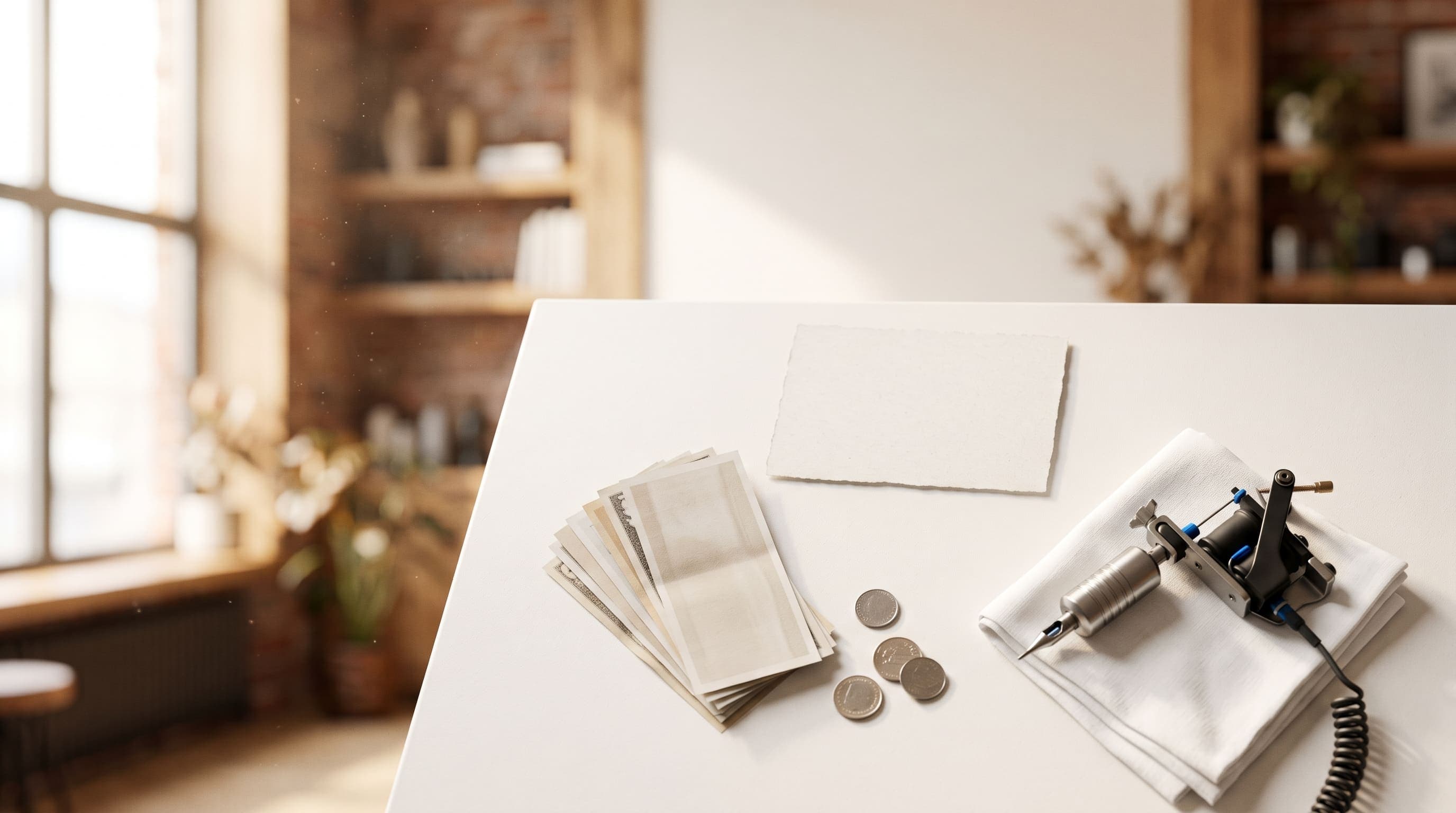
Cash is preferred. Tip in cash when you can. It goes straight to the artist without card-processing delays or fees, and it's the norm in the industry. Bring cash for the tip even if you're paying for the tattoo by card.
Tip at the end, once the work is done and you've seen it. For multi-session pieces, at the end of each session works.
Card tips are fine if that's all you have. Many shops let you add a tip to a card payment. Cash is preferred but a card tip is far better than no tip because you didn't bring cash.
Budget it in advance. This is the single most useful habit. Fold the 15 to 20% into your cost from the moment you book, so a $400 tattoo lives in your head as ~$480. Tipping goes from a stressful counter-moment to a non-event.
Bringing cash specifically for the tip is the practical detail people most often miss, and it causes real awkwardness at the counter. You pay for the tattoo by card, then realise you've no cash for the tip and either scramble or feel you've come up short. The fix is simple and worth stating plainly: decide your tip when you book, and bring it in cash to the appointment. If you forget, a card tip or even sending it afterward is completely acceptable — the artist would far rather have the tip late or by card than not at all.
Why Tipping Matters Here
It's fair to understand what the tip is actually doing, because it's not an empty formality.
Many tattoo artists don't keep the full price you pay — a significant share often goes to the shop as a chair rental or commission split, so the sticker price isn't the artist's take-home. The tip frequently goes directly to the artist and can be a meaningful part of what they actually earn from the work.
Beyond the money, tattooing is relationship-based. If you like an artist's work, you'll likely want to go back — for touch-ups, additions, or your next piece. Good tipping is part of being a client an artist is glad to see again, and in a field where the best artists have waiting lists and choose their clients, that relationship has real value.
Tipping norms do vary by country, and it would be misleading to present a single global rule, so it's worth flagging. The 15 to 20% standard is strongest in North America; in some other countries tipping is less ingrained or the percentages are lower, and local custom genuinely differs. If you're outside a heavy-tipping culture, it's reasonable to follow local norms rather than import an American percentage. That said, tattooing skews toward tipping even in places where it's otherwise uncommon, so when unsure, a tip is rarely wrong — and if you're getting work done somewhere new, a quick, discreet ask about local custom beats guessing.
Think of the tip like the difference between a transaction and a relationship. Paying the price settles the bill; tipping well says you valued the person, not just the product — and in a craft where you're literally trusting someone to mark you permanently, that's worth saying. The math is only ever a few percent of a decision you'll wear for life. Rounding up generously on the person who did it well is the cheapest good decision in the whole process.
Related Pricing & Etiquette Guides
- Pricing Breakdown: See what goes into session rates in our How Much Does a Tattoo Cost Guide.
- Tipping Etiquette: Review studio norms in our How Much to Tip a Tattoo Artist Guide.
"The artist often doesn't keep the sticker price — a chunk goes to the shop, so your tip can be a real part of what they actually earn."
Already have your design? Each design in our library includes the recommended aftercare protocol for its specific style and placement. Browse verified designs →
What To Never Use
Skipping the tip on a small or shop-minimum tattoo
the artist still did a full sterile setup and gave their time, so tip 15 to 20% on the actual price regardless of size.
Not tipping the owner
the "don't tip owners" rule is imported from other industries and mostly doesn't apply in tattooing, where you tip whoever did the skilled work the same either way.
Forgetting to bring cash for the tip
you'll pay the tattoo by card and be caught short at the counter, so decide the tip when you book and bring it in cash, or use a card tip rather than none.
Treating the tip as an afterthought at the counter
budget the 15 to 20% into your cost from the moment you book so a $400 tattoo lives in your head as $480 and tipping stops being stressful.