Tattoo Touch Up: When You Need One and What It Costs
FAQ & How-To7 MIN READ
Tattoo Touch Up — When You Need One and What It Actually Costs
A touch-up is normal, not a sign something went wrong. When to get one, how long to wait, whether it's free, and when an old tattoo needs more than a fix.
By TattoosMap Editorial — September 2026
The Short Answer
A tattoo touch-up is a follow-up session to fix spots that healed lighter, fill patchy areas, or refresh faded colour and lines. Wait until the tattoo is fully healed — at least 4 to 6 weeks — before judging, because mid-heal patchiness often resolves on its own. Many artists include a free touch-up within a few months of the original; outside that window or on older tattoos, expect to pay the shop minimum or an hourly rate. Needing a touch-up is normal, not a sign something went wrong.
DISCLOSURE: This post contains affiliate links. If you purchase through our links we may earn a small commission at no extra cost to you.
Your tattoo healed and a few spots look patchy, faded, or thinner than the day you got it — and now you're wondering if something went wrong, or if you're stuck with it. Most likely, neither. You probably just need a touch-up, and it's one of the most normal, routine parts of owning a tattoo.
What a Tattoo Touch-Up Actually Is
A touch-up is a follow-up session where the artist goes back over an existing tattoo to fix, refine, or refresh it. They re-ink areas that healed lighter than intended, sharpen lines that softened, fill spots that dropped out, or refresh colour that faded.
There are really two kinds, and they get confused:
The healing touch-up — a small fix a few weeks or months after a new tattoo, correcting spots that didn't heal perfectly. This is common and often expected.
The refresh touch-up — going over an older tattoo, sometimes years later, to restore faded lines and colour that time and sun have worn down.
Both use the same process — the artist tattoos over the existing work — but they happen for different reasons and at very different points in a tattoo's life.
HONEST LIMITATION
A touch-up being needed on a fresh tattoo doesn't automatically mean the artist did a bad job, and it's worth saying that clearly because people jump to blame. Tattoos are living skin, and how they heal depends partly on your body, the placement, and your aftercare — not just the artist's work. Even excellent tattoos sometimes have a spot that heals lighter, especially in high-movement or high-friction areas. A small healing touch-up is routine, not a red flag. What would be a concern is a tattoo that healed badly all over, which is a different conversation.
Why Tattoos Need Touching Up
Tattoos fade and change for a handful of reasons, and understanding them tells you whether a touch-up will actually help.
Uneven healing — some areas, especially over joints, hands, feet, and other high-movement spots, don't retain ink as well and may need a fix
Ink dropping out — occasionally a patch of ink doesn't settle during healing and heals lighter or patchy
Sun exposure — UV breaks down pigment over time, the single biggest cause of long-term fading
SHARE THIS
"A small healing touch-up is routine, not a red flag — even excellent tattoos sometimes have a spot that heals lighter."
FROM TATTOOSMAP
Already have your design? Each design in our library includes the recommended aftercare protocol for its specific style and placement. Browse verified designs →
What To Never Use
Rushing back for a touch-up before the tattoo is fully healed
a patchy-looking spot during the healing weeks often fills in once settled, so judging or tattooing over unhealed skin is premature and risks irritation.
Assuming a healing touch-up means the artist did a bad job
ink dropping out or settling unevenly is partly your body, the placement, and your aftercare, and a small fix is routine rather than a failure.
Skipping the free touch-up window your artist offers
most include a complimentary fix within a set period, so ask about it when you book and use it before it expires.
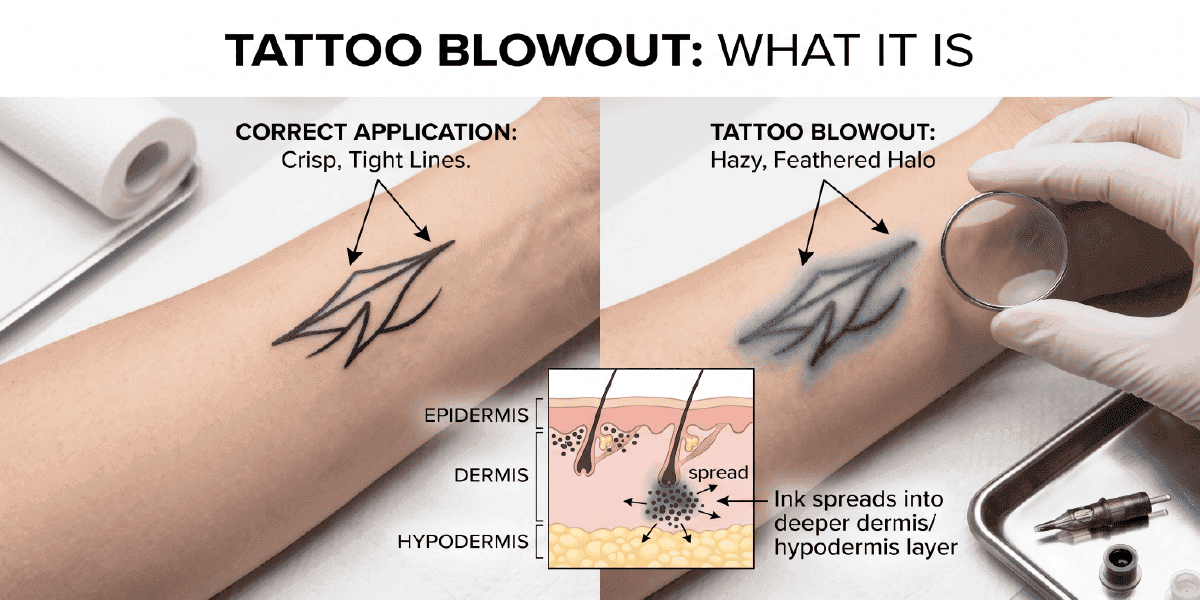
Expecting a touch-up to rescue a heavily faded or blown-out old tattoo
beyond a certain point, a rework or cover-up serves better, and an honest artist will tell you that rather than take your money for a job that won't deliver.
Frequently Asked Questions
A follow-up session where the artist goes back over an existing tattoo to fix spots that healed lighter, fill patchy areas, sharpen softened lines, or refresh faded colour. It's one of the most routine parts of owning a tattoo, both on fresh pieces that healed unevenly and on older tattoos that faded over time.
Wait at least 4 to 6 weeks until the tattoo is fully healed — sometimes longer depending on placement and your healing rate. Mid-heal patchiness often resolves on its own, so judging too early leads to unnecessary fixes. Many artists set a touch-up window starting around the 6-week mark.
Many artists include a free touch-up within a few months of the original tattoo, covering spots that didn't heal evenly. Outside that window, or on older faded tattoos, you'll usually pay the shop minimum or an hourly rate. A full refresh on heavily faded work can cost nearly as much as the original, since the labour is comparable.
Yes. Some spots naturally heal lighter — especially over joints, high-friction areas, and hands or feet — and all tattoos soften and fade gradually over years from sun, skin renewal, and friction. A touch-up is standard maintenance, not a sign something went wrong.
Yes, if there's enough structure left to work with. A refresh re-inks faded lines and colour and can make an older tattoo look sharp again. But if the tattoo has degraded too far — heavily faded, blown out, or badly aged — a full rework or cover-up may serve better than a touch-up, and an honest artist will tell you which.
Discussion (0)
Verified Accounts
No public comments yet.
Find Your Artist
Ready To Book?
Browse verified tattoo artists on TattoosMap — filtered by style, city, and specialty.
Natural fading — all tattoos soften and lighten gradually over years as skin renews and pigment disperses
Friction and placement — high-friction areas like fingers, palms, and feet fade fastest and most
Aftercare during healing — picking scabs or poor healing can pull out ink before it settles
The pattern is that some fading is normal and expected over years, while patchy healing on a fresh tattoo is a specific fixable issue. A touch-up addresses both — it just happens at different times.
HONEST LIMITATION
Some placements will always need more touch-ups than others, and it's honest to set that expectation before you get tattooed there rather than after. Fingers, hands, feet, and inner-lip tattoos are notorious for fading fast and needing repeated touch-ups — sometimes indefinitely — because of constant friction and skin renewal. That's not the artist failing; it's the location fighting the ink. If you're set on a high-fade placement, go in knowing touch-ups are part of the ongoing cost of keeping it looking sharp, not a one-time fix.
When to Get One — And When to Wait
Timing matters, and getting it wrong wastes a session or damages healing skin.
For a healing touch-up:
Wait until the tattoo is fully healed — usually at least 4 to 6 weeks, often longer. Touching up before it's healed is pointless and risks the skin.
Assess once it's settled — some spots that look patchy mid-heal fill in as they finish healing, so don't judge too early.
Many artists include a free touch-up within a window (often a few months) — check yours.
For a refresh touch-up:
When lines have visibly softened or colour has faded enough to bother you, which might be years
Before it fades so far that it becomes a bigger rework job — maintaining is easier than restoring
When you're ready to commit to aftercare again — a refresh is a fresh healing process
HONEST LIMITATION
The "wait until fully healed" rule is the one people most want to break, out of anxiety that a patchy-looking spot means something's wrong — and it's worth being firm about. A tattoo can look uneven, dull, or patchy during the healing weeks and then settle into looking perfectly fine once fully healed. Rushing back for a touch-up on skin that's still healing is not only premature, it can irritate skin that would have resolved on its own. Give it the full heal, then judge. If your artist offers a touch-up window, that window exists precisely so you assess at the right time.
What a Touch-Up Costs
Cost varies, and knowing the norms keeps you from over- or under-paying.
Free healing touch-ups — many artists include a complimentary touch-up within a set window after a new tattoo, as part of standing behind their work. Ask about this when you book the original.
Paid touch-ups — outside that window, or for older tattoos, you'll usually pay, often the shop minimum or an hourly rate for the time involved.
Refresh work on old tattoos — priced like regular tattoo work based on size, detail, and time, since it can be nearly as involved as the original.
Not always cheaper than you'd think — a full refresh of a faded piece can approach the cost of the original, because it's a comparable amount of work.
HONEST LIMITATION
"Free touch-up" has conditions worth reading, and it's fair to flag that so you're not surprised. The free window usually applies only to healing issues, not to fading you caused by picking scabs, sun exposure, or poor aftercare — and it often excludes high-fade placements like hands and feet that artists know will need ongoing work. Some artists also void it if you didn't follow aftercare. It's a genuine goodwill offer, but it covers the artist's execution, not your maintenance. Ask exactly what's included when you book, rather than assuming everything's covered.
How to Get the Best Result
A few things make a touch-up go smoothly and last.
Go back to the original artist if you can — they know the work, the colours used, and often offer a free or discounted touch-up
Wait for full healing before any touch-up, and assess honestly once it's settled
Communicate clearly what's bothering you — specific spots, faded areas, softened lines
Follow aftercare properly — a touch-up heals like a new tattoo, so the same rules apply
Protect it from the sun afterward — the single biggest thing you control to make the result last
Be realistic about old, heavily faded work — sometimes a rework or cover-up serves better than a touch-up
HONEST LIMITATION
There's a point where a tattoo is too far gone for a touch-up to fix, and an honest artist will tell you that rather than take your money for a job that won't deliver. Very old, heavily faded, blown-out, or badly-aged tattoos sometimes need a full rework or a cover-up instead of a touch-up, because there isn't enough original structure left to simply refresh. If an artist suggests that, they're being straight with you, not upselling. A touch-up refreshes something that's still fundamentally intact; it can't rebuild a tattoo that's mostly gone.
Think of a touch-up like repainting the trim on a house rather than repainting the whole thing. When the structure is sound and it's just weathered a bit — a few faded spots, some softened edges — a touch-up refreshes it beautifully and cheaply. But if the whole surface has degraded past a certain point, spot-painting won't save it, and you're really talking about a bigger job. Know which one your tattoo needs, get the timing right, and a touch-up keeps good work looking sharp for years.