Half the people buying green soap are buying it for the wrong reason. They've seen an artist spraying it during a session, assumed it's tattoo soap, and taken a bottle home to wash their fresh piece with. That's not what this is. Used on a healing tattoo at full strength, green soap will dry your skin out and make the peeling worse.
Green Soap Is Prep Not Aftercare
This is a studio product. Artists use it to clean skin before the stencil goes on, to wipe away ink, plasma, and stencil residue during the session, and to break down protein soils on equipment and work surfaces.
It's built to be aggressive. That's the whole point — it's lifting dried blood off skin and off tools, and it does that job better than almost anything else.
But aggressive is exactly wrong for a tattoo that's four days old and trying to close. Different job, different product.
Concentration Is The Whole Story
Every bottle here is sold ultra-concentrated, which means you're not buying soap so much as buying the stuff you make soap from. You dilute it with distilled water — not tap water — usually somewhere between one part soap to five parts water and one part to ten.
"You're not buying 16.9 ounces of green soap. You're buying enough concentrate to make roughly a gallon and a half of it."
That's why price comparisons look strange at first. A 4oz bottle isn't small if you're diluting it properly, and a 16.9oz bottle isn't a lifetime supply if you're running a busy chair.
The Bottle Matters More Than You Think
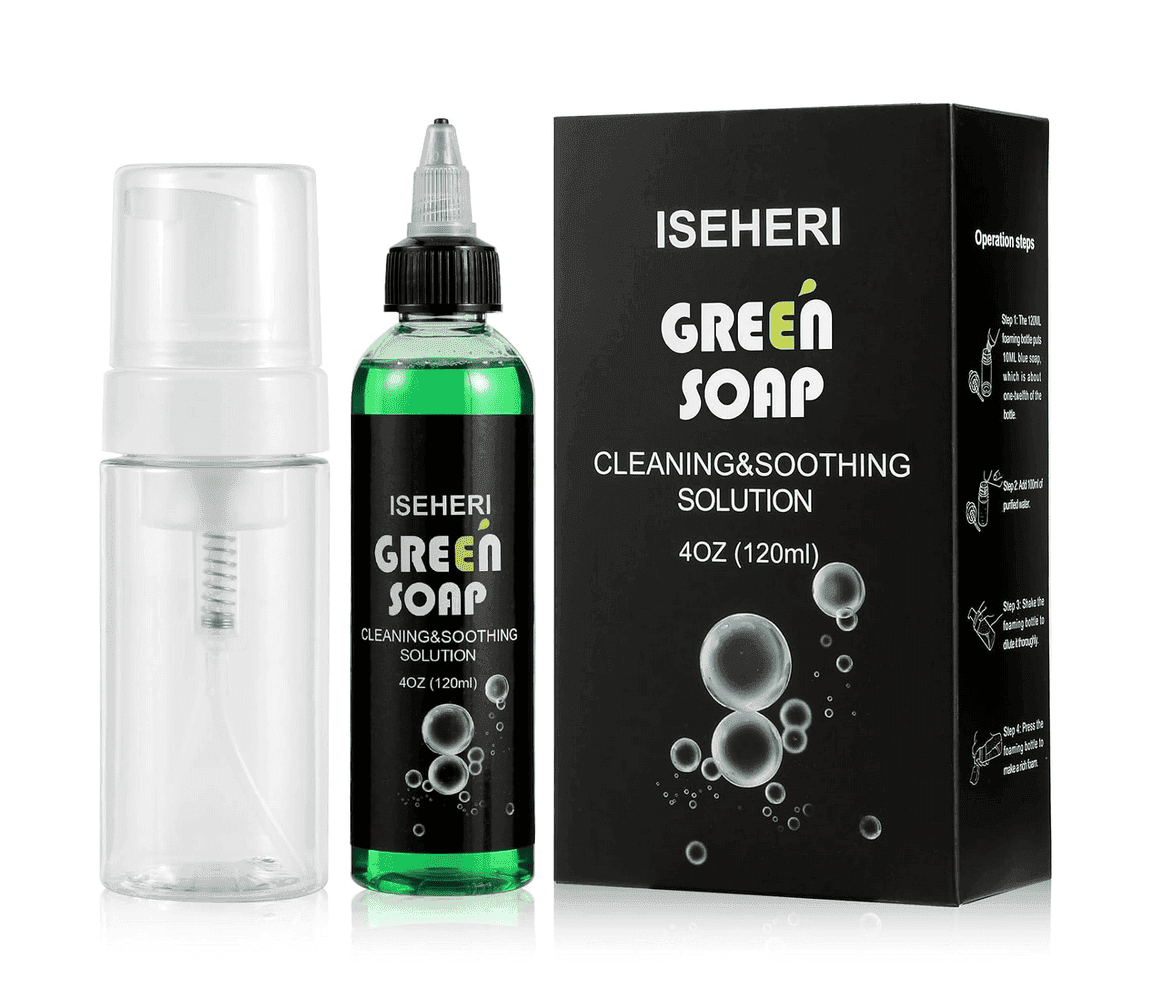
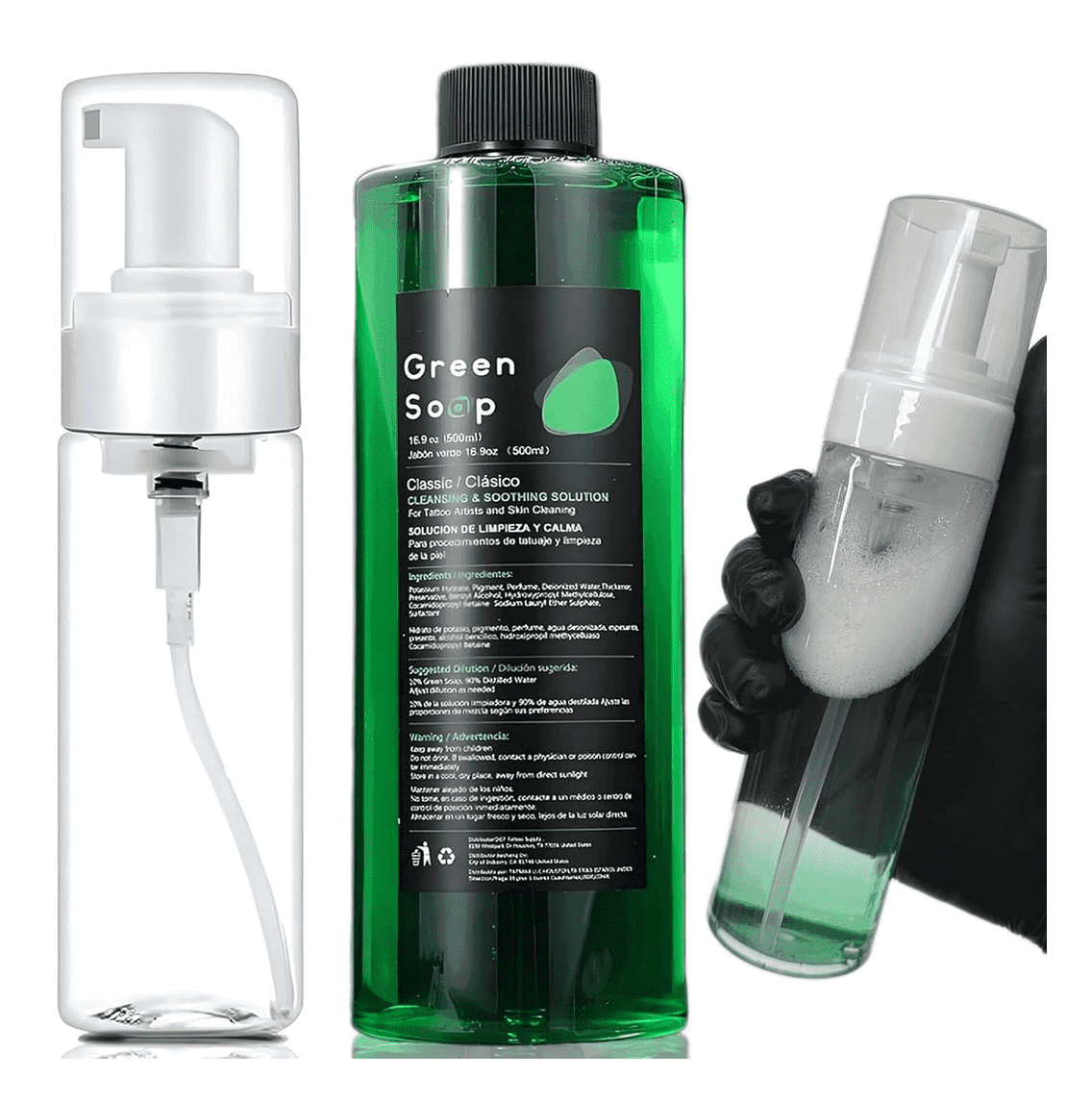
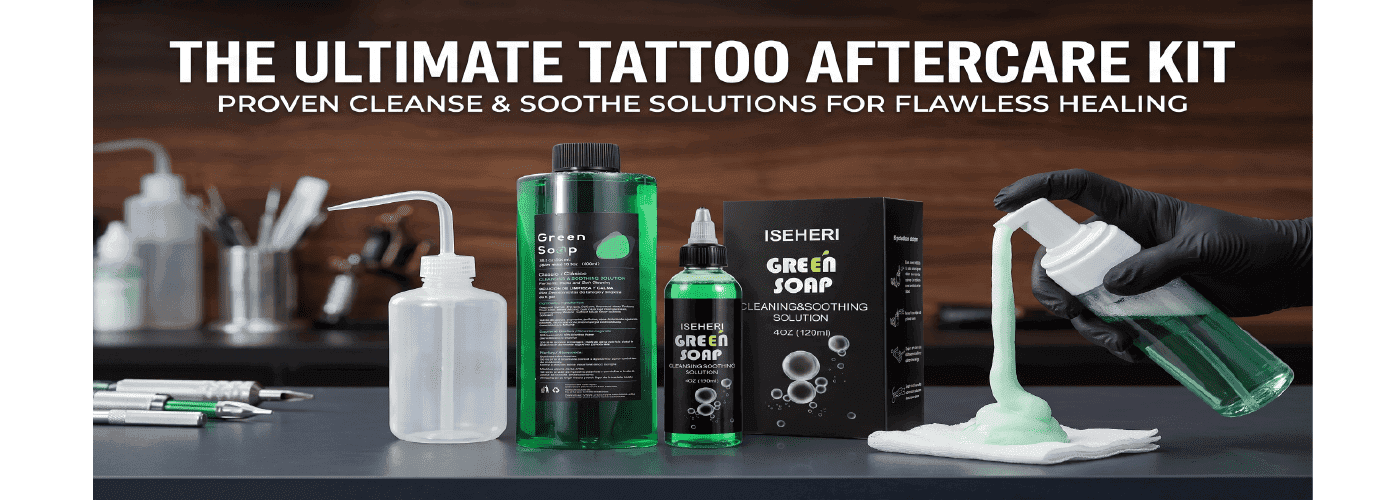
Squeeze bottles and foam pumps do genuinely different things. A squeeze bottle gives you a directed stream you can aim at one spot while you're working, which is what you want mid-session with one gloved hand.
Foam pumps give you an even lather with less waste, which is better for prepping a large area before you start. Most artists who've been doing this a while end up owning both.
What Green Soap Can't Do
It's a cleaner, not a sterilant. Green soap removes soil so a disinfectant can actually work — it doesn't replace your surface disinfectant, your autoclave, or your skin prep protocol.
It also won't fix a reaction. Some people are sensitive to the essential oils in these formulas, and if a client's skin goes red and angry after the prep wash, that's the soap and you switch products for them.
Think of it like degreasing an engine part before you paint it. Nobody thinks the degreaser is the paint. Green soap is the degreaser.
The Ranked List
DISCLOSURE: This post contains affiliate links. If you purchase through our links we may earn a small commission at no extra cost to you.
1 — DRAGON ART GREEN SOAP 16.9OZ BEST OVERALL
BEST OVERALL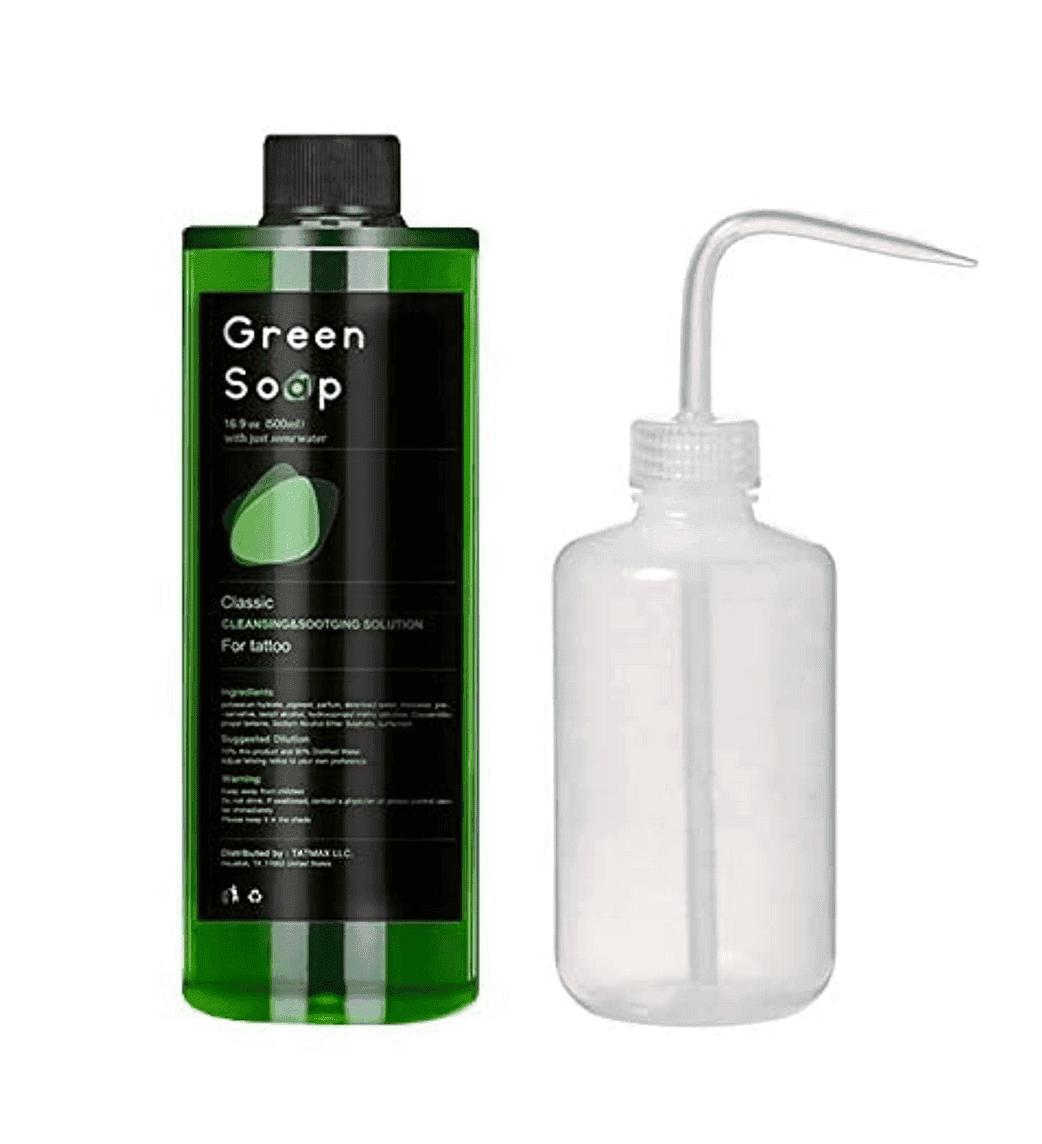
The concentrate pours thick and dark, almost like maple syrup, and a little goes further than you'd guess the first time you mix it. The peppermint is sharp when you open the bottle but mellows completely once diluted. And the 8oz squeeze bottle is the right call — you can aim it one-handed mid-session, which a foam pump won't do.
The peppermint stings on freshly worked skin, so some clients will tell you about it halfway through the session.
WHY ALKALINE SOAP LIFTS PROTEIN SOILS
Green soap is a saponified vegetable oil soap, traditionally made by reacting oils with potassium hydroxide, which produces a soft, water-soluble soap that sits on the alkaline side of neutral. That alkalinity is what makes it good at its job. Dried blood and plasma are protein soils, and proteins denature and loosen in alkaline conditions — the bonds holding the crust together give way, and the soap's surfactant action carries the loosened material off in water. Neutral pH cleansers don't do this nearly as well, which is why studios have stuck with green soap for over a century. The same chemistry explains why it's wrong for healing skin. Your stratum corneum sits at roughly pH 4.5 to 5.5, slightly acidic, and that acid mantle is part of how the barrier holds moisture and keeps bacteria in check. Wash open, healing skin repeatedly with an alkaline soap and you shift that pH, strip lipids alongside the crust, and end up with dehydrated skin that scabs thicker. Dilution helps a lot — that's the entire reason these products ship concentrated with a mixing bottle — but even diluted, this is a prep and session cleaner, not something to hand a client for their two-week routine.
"You're not buying 16.9 ounces of green soap — you're buying enough concentrate to make roughly a gallon and a half of it."
Already have your design? Each design in our library includes the recommended aftercare protocol for its specific style and placement. Browse verified designs →
Exactly What To Do, Day by Day
MIX WITH DISTILLED WATER ONLY
Dilute the concentrate one part soap to five or ten parts distilled water depending on how strong you want it. Tap water carries minerals and microbes you don't want in a bottle sitting on your station.
LABEL AND DATE THE MIXED BOTTLE
Write the dilution ratio and the date on the working bottle. Mixed green soap doesn't keep forever and you won't remember which strength you made.
PREP THE SKIN BEFORE THE STENCIL
Wash the area, rinse, and dry completely before applying stencil solution. Any residue left on the skin makes the stencil slide or lift early.
WIPE DOWN DURING THE SESSION
Spray or squeeze onto a clean paper towel rather than directly onto the tattoo, then wipe. Direct spraying wastes soap and pushes fluid across areas you've already cleaned.
DO A FINAL RINSE BEFORE WRAPPING
Wash the finished piece, rinse the soap off completely, and pat dry before the bandage goes on. Leftover green soap under a wrap sits against open skin for hours.
What To Never Use
Green soap on a healing tattoo
it's alkaline and built to strip protein soils, which is the opposite of what closing skin needs.
Tap water for dilution
the minerals and microbial load in tap water contaminate a bottle that sits open on your station all day.
Undiluted concentrate on skin
full strength it's harsh enough to leave the area red and irritated before you've even started the stencil.
Refilling a working bottle without washing it
topping up old mixed soap builds a residue layer inside the bottle that grows bacteria.