The Short Answer
After Inked is the correct daily lotion for most healing tattoos — fragrance-free, lanolin-free, water-based, and formulated specifically for the settling phase from day four onwards. Use Aquaphor for the first three days then transition. The most common mistake is applying any lotion too early and too thick.
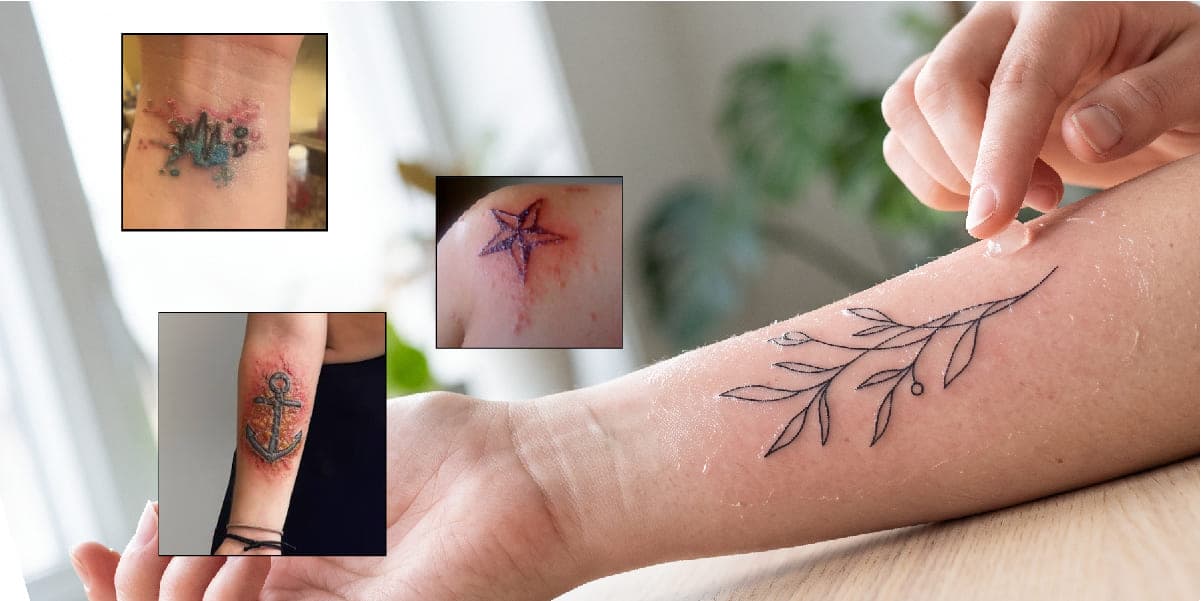
The first mistake most people make with tattoo aftercare lotion is applying it too early and too thick. A fresh tattoo needs to breathe and weep plasma for the first few hours. Sealing that process under a heavy layer of lotion before it completes traps bacteria and moisture against an open wound.
Always clean the tattoo first with a mild fragrance-free soap, and protect the fully healed design from sun exposure to prevent fading.
The Two-Phase Aftercare Window
Tattoo healing has two distinct phases that require different approaches. Days one through five are the acute wound phase — the epidermis is broken, plasma is weeping, and the primary risk is infection and scabbing. Days six through twenty-one are the peeling and settling phase — the epidermis is rebuilding and the primary risk is dehydration and premature scab removal.
Most aftercare lotions are designed for phase two. Using them in phase one — before the initial plasma weeping is complete — creates a seal over a wound that still needs to breathe. The result is either increased bacterial risk or a thick wet environment that promotes excessive scabbing.
The correct sequence is to use a thin, semi-occlusive ointment like Aquaphor for days one through three, then transition to a dedicated aftercare lotion from day four onwards when the surface has begun to close.
Every tattoo heals differently and every artist has their preferred aftercare protocol. Some artists specifically tell clients not to use Aquaphor at all because they find it too occlusive for their particular tattooing style. Always follow your artist's specific instructions over any general guide — they know how they laid the ink.
What Ingredients Actually Matter
The three things you need from an aftercare lotion are hydration to prevent cracking during peeling, barrier support to protect the rebuilding epidermis from environmental contamination, and absence of anything that will cause an immune response in already-sensitised tissue.
Fragrance is the ingredient that eliminates the most lotions immediately. Synthetic fragrance compounds — which can include hundreds of undisclosed chemicals under a single "fragrance" listing — cause contact dermatitis in a significant number of people on intact skin. On a healing tattoo where the epidermis is broken and the dermis is inflamed, fragrance compounds cross directly into living tissue and cause reactions that look like infection.
Lanolin is the second common sensitiser in aftercare products. It is a natural emollient derived from sheep wool that is highly effective as a moisturiser but causes allergic reactions in a meaningful proportion of users. If you have ever had a reaction to wool products use lanolin-free aftercare only.
Even fragrance-free, lanolin-free lotions can cause reactions in some people. If you experience increasing redness, itching beyond the normal healing itch, or any weeping or crusting that worsens after applying a lotion, stop using it and switch to plain unscented petroleum jelly while the reaction settles.
How Much and How Often
Thin layer. Every time. More lotion does not mean more hydration — it means a thicker occlusive seal that prevents the skin from breathing and can trap moisture that leads to prolonged healing.
The correct amount is enough to give the tattoo a slight sheen — visible but not wet-looking. If you can see white residue on the skin you have applied too much. Rub it in completely and wipe off any excess with a clean tissue.
Apply two to three times daily during the peeling phase. More frequent application is not necessary and can over-hydrate the healing skin, causing the new epidermis to become waterlogged and peel unevenly.
The twice-daily application schedule assumes normal activity levels. If you work outdoors, swim, or otherwise expose the tattoo to significant environmental stress you may need more frequent application to compensate for moisture loss. Use your judgment — if the tattoo feels tight and dry between applications, apply more often.
The Ranked List
DISCLOSURE: This post contains affiliate links. If you purchase through our links we may earn a small commission at no extra cost to you.
After Inked Tattoo Aftercare Lotion
BEST OVERALL
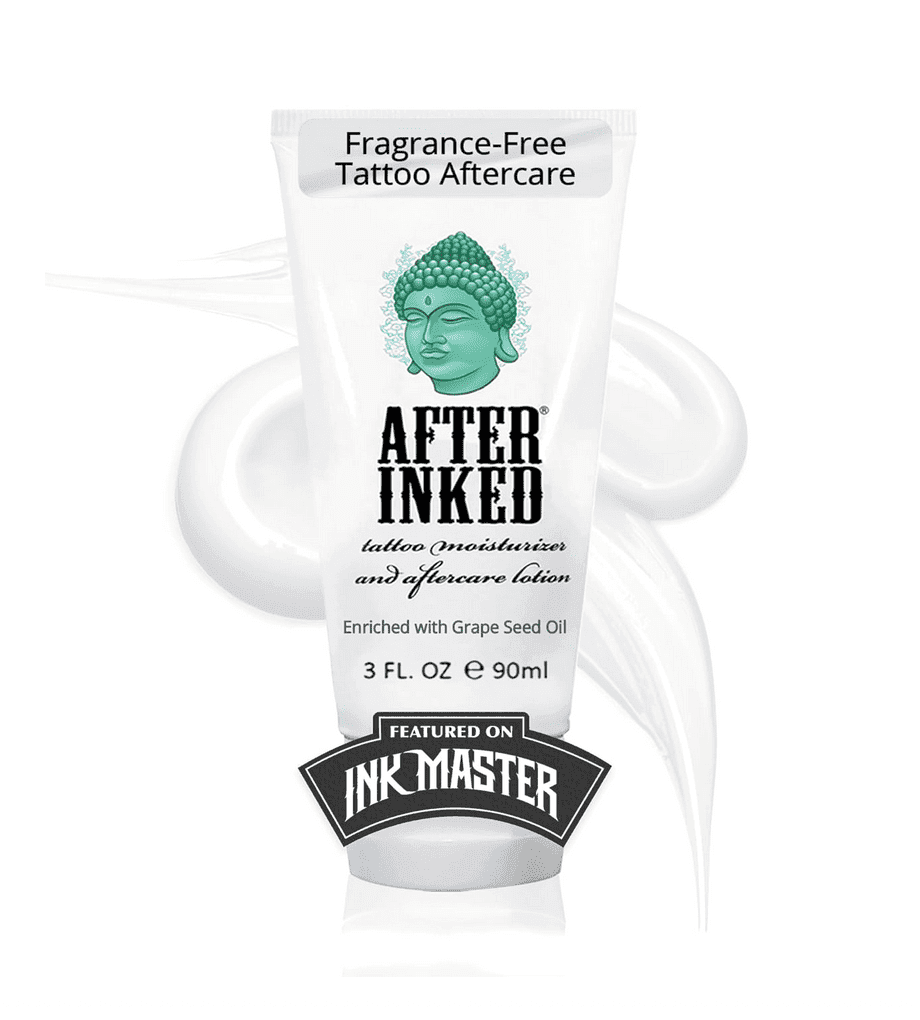
What it actually does This one is boring in the best way. Fragrance-free and absorbs fast + no greasy residue. The grape seed oil gives it a light feel that sinks in within a minute, so you're not waiting around before putting clothes back on. It works for new tattoos, old tattoos, and even permanent makeup if that's your thing. The travel size is convenient and the 3oz tube lasts longer than you'd expect.
It's not the most hydrating option out there if your skin is naturally dry or you're healing a large color piece, you might need to apply it more often than you would with a thicker balm.
Why the Epidermis Needs to Breathe Before It Needs to Hydrate
The epidermis rebuilds through a process called re-epithelialisation — keratinocytes at the wound edge migrate across the wound surface and differentiate into new epidermal cells. This migration requires a specific micro-environment: moist enough that cells do not desiccate and die mid-migration, but not so occluded that the oxygen exchange that drives cellular respiration is blocked. In the first 24 to 72 hours after tattooing the wound is still in the inflammatory phase — neutrophils and macrophages are clearing debris and the plasma weeping is part of this process. Applying a thick emollient during this phase does not hydrate the wound — it seals the exudate against the skin and creates a bacterial growth environment. From day four onwards when the inflammatory phase is resolving and re-epithelialisation is underway, a hydrating lotion supports the keratinocyte migration by keeping the wound surface moist enough for cell movement without blocking oxygen exchange. This is the clinical basis for the Aquaphor-then-lotion transition that most dermatologists recommend for wound care — and that most tattoo aftercare guides either skip or never explain.
"The most expensive aftercare lotion does nothing for a tattoo in the first three days. Apply it too early and you are sealing a wound that still needs to breathe."
Already have your design? Each design in our library includes the recommended aftercare protocol for its specific style and placement. Browse verified designs →
Exactly What To Do, Day by Day
WASH YOUR HANDS.
Every single time. You're touching an open wound.
CLEAN THE TATTOO.
Use fragrance-free soap and lukewarm water. Pat dry with a paper towel no cloth towels, they harbor bacteria.
APPLY A PEA-SIZED AMOUNT.
Dab it over the tattoo, then rub it in gently until it disappears. You shouldn't see A shiny layer sitting on top.
BLOT OFF EXCESS.
If it feels greasy after a minute, blot with a clean paper towel. <<Less is more>>.
REPEAT 2–3 TIMES DAILY.
Morning, after a shower, and before bed. Don't overdo it, over-moisturizing is just as bad as under-moisturizing.
What To Never Use
Petroleum-based products like Aquaphor or Vaseline
during the initial healing phase. They're occlusive they seal the skin completely and don't let it breathe. Fine for a day or two, not for a full heal.
Anything with fragrance or essential oils.
Linalool, limonene and geraniol these trigger inflammation in healing tissue and can cause ink migration over time. Natural doesn't mean safe.
Products that claim to "numb" or "speed heal."
There's no shortcut. Healing takes time. Anything promising faster results is usually lying or using ingredients that irritate the skin.
Using too much.
A pea-sized amount is plenty for most tattoos. <<More product doesn't mean better healing>>, it means clogged pores and potential breakouts.