DISCLOSURE: This post contains affiliate links. If you purchase through our links we may earn a small commission at no extra cost to you.
Short Answer
For most people with black or dark ink on fair to medium skin PicoWay or PicoSure gives the fastest clearance. For darker skin tones the Q-Switch Nd:YAG on conservative settings is the safest starting point. For stubborn colored ink — especially greens and blues — PicoWay has the broadest wavelength range.
:::shortanswer For most people with black or dark ink on fair to medium skin PicoWay or PicoSure gives the fastest clearance. For darker skin tones the Q-Switch Nd:YAG on conservative settings is the safest starting point. For stubborn colored ink — especially greens and blues — PicoWay has the broadest wavelength range. :::
Why the Laser Technology Matters
Most clinics advertise "laser tattoo removal" like it is one thing. It is not. There are three fundamentally different laser technologies being used right now and they produce significantly different results on different ink colors and skin tones. Choosing the wrong clinic means choosing the wrong laser.
PicoWay — Best for Most People
PicoWay uses a dual-wavelength picosecond laser system. The 1064nm wavelength targets black and dark blue ink. The 532nm wavelength targets red, orange, and yellow pigments. Some PicoWay systems also include a 785nm wavelength for green and teal — the two colors most lasers struggle with.
PicoWay sessions cost 20 to 40% more than Q-Switch sessions. Not every clinic has one. If your clinic does not have PicoWay they will not tell you it exists.
PicoSure — Best for Stubborn Blues and Greens
PicoSure operates primarily at 755nm — the alexandrite wavelength. This is particularly effective for blue and green ink that absorbs poorly at the 1064nm wavelength used by most Q-Switch systems.
PicoSure's 755nm wavelength is less effective on very dark skin tones due to competition with melanin absorption at that wavelength.
Q-Switch Nd:YAG — Safest for Darker Skin Tones
The Q-Switch Nd:YAG laser has been the clinical standard for tattoo removal for 30 years. At 1064nm it targets black and dark ink with minimal melanin competition — making it the preferred option for Fitzpatrick IV through VI skin tones.
Q-Switch is a nanosecond system. On fair skin with black ink it will take more sessions than PicoWay or PicoSure to achieve the same clearance percentage.
Why Pulse Duration Determines Your Session Count
The physics behind laser tattoo removal comes down to selective photothermolysis — using specific wavelengths of light to target specific chromophores without damaging surrounding tissue. Q-Switch lasers achieve this in nanoseconds. Picosecond lasers achieve it roughly 100 times faster. Nanosecond pulses rely primarily on photothermal energy — heat that breaks ink. Picosecond pulses create a photoacoustic shockwave — a pressure wave that shatters ink mechanically with less heat. Smaller fragments. Faster lymphatic clearance. Fewer sessions required.
"Most clinics will not tell you which laser they use until you ask. The machine in the room determines your results more than anything else in the building."
Already have your design? Each design in our library includes the recommended aftercare protocol for its specific style and placement. Browse verified designs →
Exactly What To Do, Day by Day
Ask the specific question before booking
Call the clinic and ask: Which laser system do you use and what wavelengths does it operate at? A reputable clinic answers this immediately. If they cannot name the specific device find a different clinic.
Request a patch test on your actual tattoo
Before committing to a package ask for a single test pulse on a small area of your tattoo. Never commit to a multi-session package before a patch test.
Space sessions 6 to 8 weeks apart
Your lymphatic system needs this window to clear the fragmented ink particles. Rushing sessions does not accelerate clearance — it reduces it and increases scarring risk.
Protect the treated area from sun between sessions
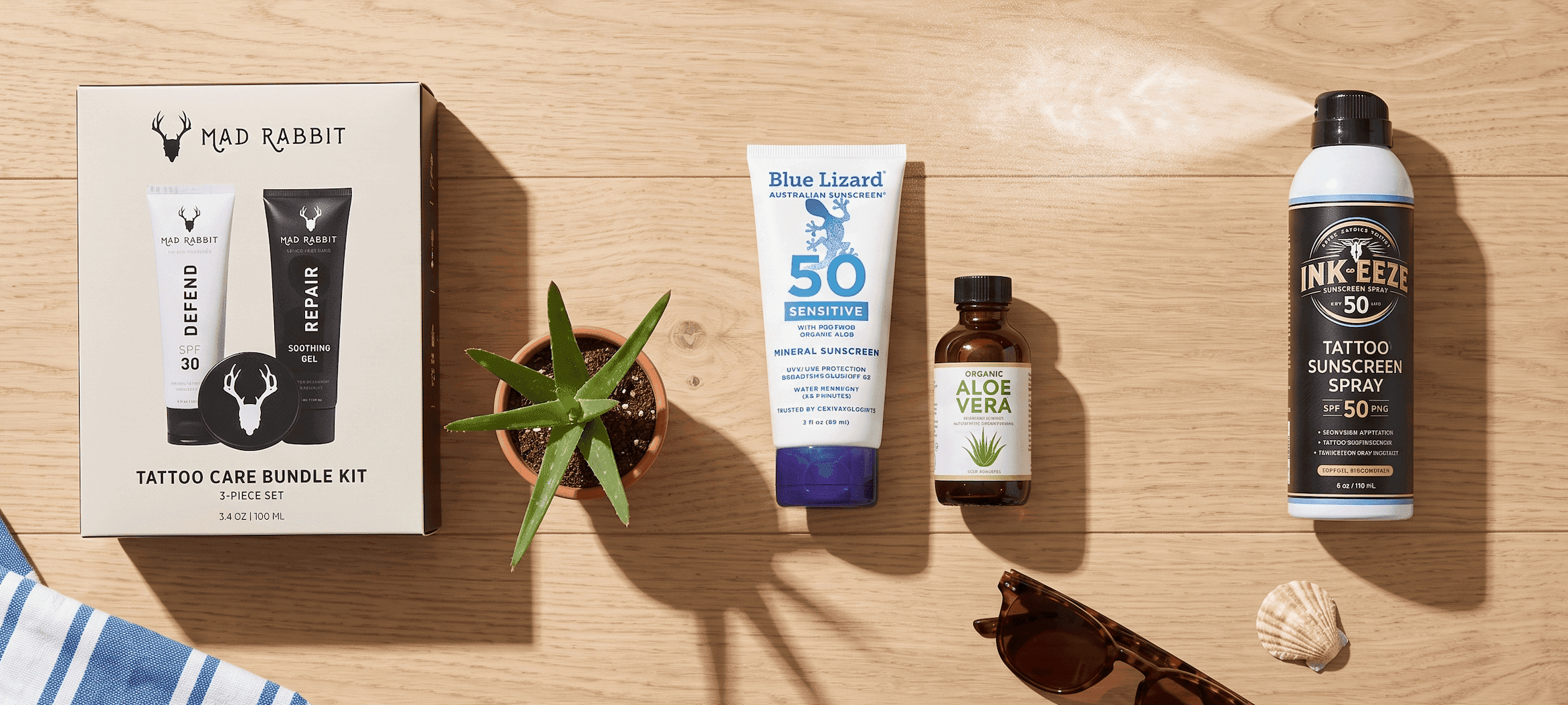
UV exposure on treated skin causes hyperpigmentation. Mineral SPF 50 on any sun-exposed treated area between every session. Use zinc oxide only.
Apply Aquaphor for the first 3 days after each session
Post-session skin is an open wound. Aquaphor prevents infection and moisture loss. After day 3 switch to a fragrance-free lightweight moisturizer.
What To Never Use
Clinics that cannot name their laser device
A reputable clinic knows exactly what technology they use and explains it clearly. Vague answers about the latest technology without naming the specific system is a red flag.
Multi-session packages before a patch test
No ethical clinic can guarantee session count before assessing your tattoo's response to their specific laser. Pressure to commit upfront is a revenue tactic not a clinical recommendation.
Sessions spaced less than 6 weeks apart
The lymphatic system needs 6 to 8 weeks to clear fragmented ink. Shorter intervals reduce efficiency and increase thermal damage risk.
At-home laser devices marketed for tattoo removal
Consumer-grade devices cannot generate the pulse intensity required to shatter dermis-level ink particles. They can burn the epidermis while leaving the ink completely untouched.