DISCLOSURE: This post contains affiliate links. If you purchase through our links we may earn a small commission at no extra cost to you.
You booked a consultation and now you're not sure what actually happens at one — do you just show up and talk, or is there paperwork, or does it turn into the tattoo itself? The consultation is the planning conversation before any needle touches skin, and treating it well is one of the biggest things separating a tattoo you love from one you settle for.
What a Consultation Actually Is
A tattoo consultation is a meeting — in person or sometimes virtual — where you and the artist plan your tattoo before booking the actual session. No tattooing happens at a consultation. It's the design, sizing, placement, pricing, and expectation-setting stage.
Think of it as the difference between briefing an architect and pouring the foundation. The consultation is where the idea becomes a concrete plan: what you want, whether it'll work, how big, where, what it'll cost, and whether this artist is the right person to do it.
Some consultations are quick and casual for simple pieces; others are detailed sessions for large or custom work. Either way, the goal is the same — everyone leaves clear on exactly what's being tattooed.
Not every tattoo needs a formal consultation, and it's honest to say so rather than imply you always must book one. Small, simple, or flash pieces are often handled as walk-ins with a quick chat instead. Consultations earn their place for custom designs, large work, cover-ups, and anything where planning genuinely affects the result. If you're getting something small and standard, a full consultation may be more process than the tattoo needs — though a brief conversation with the artist before they start never hurts.
What Actually Happens at One
Consultations vary, but most cover the same ground. Here's what to expect.
- You describe your idea — what you want, the meaning or feeling behind it, and any specific elements you're set on
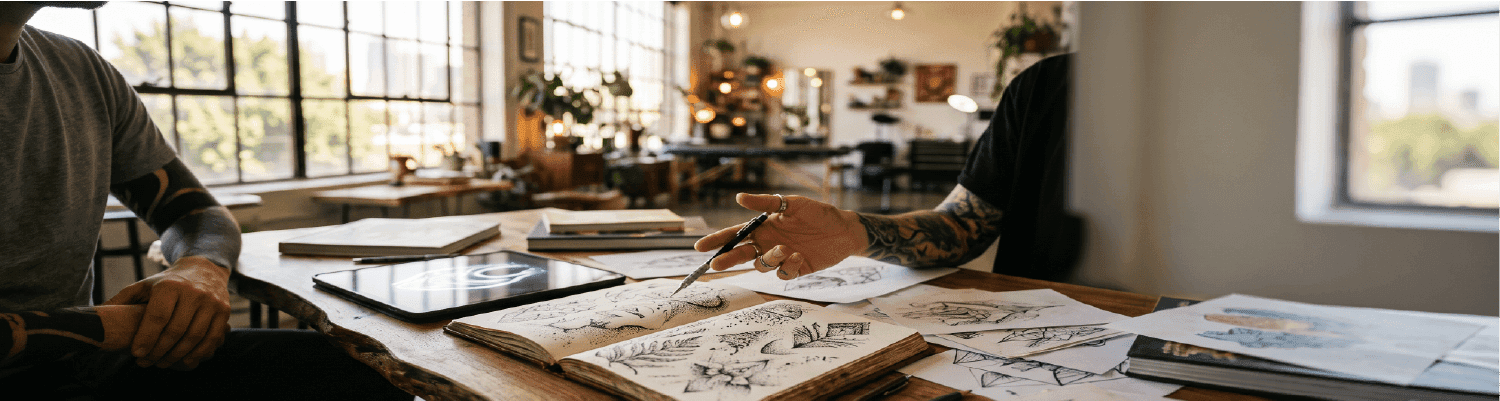
- You show references — images, sketches, other tattoos, anything that communicates the style and look you're after
- The artist gives their input — what will and won't work as a tattoo, how it'll age, and often suggestions to improve the design
- Placement and sizing — where on your body, how big, and how that affects the design and detail
- Style and approach — the artist explains how they'd render it in their style, which is why matching artist to style matters
- Pricing and timing — a rough or firm quote, how many sessions, and how long each will take
- Booking and deposit — if you go ahead, you book the session and usually leave a deposit
For custom work, the artist often doesn't draw the design at the consultation itself — they take your brief and references away and produce the artwork before your session, sometimes with a chance to review and tweak it.
You usually won't leave the consultation with finished artwork in hand, and it's worth setting that expectation so you're not disappointed. Custom design takes the artist time after the meeting, and good artists guard that time — they won't sketch a full custom piece on the spot for free. Some show rough directions; most develop the real drawing between the consultation and the session. If seeing the design before committing matters to you, ask at the consultation when and how you'll get to review it, rather than expecting it that day.
How to Prepare So It Goes Well
The more you bring to a consultation, the better the tattoo that comes out of it. A little preparation makes a real difference.
- Gather reference images — collect examples of the style, elements, and feel you want, plus things you specifically don't want
- Know your rough placement and size — even approximate helps the artist plan, though they may advise adjustments
- Have a budget in mind — so the pricing conversation is realistic and you're not blindsided
- Write down your questions — anything about the design, healing, aftercare, sessions, or the artist's experience
- Be open to their expertise — you're paying for their eye, so listen when they suggest changes; they're usually protecting the result
- Bring an open, decisive mind — clear enough to communicate what you want, flexible enough to take good advice
There's a balance between having a clear vision and being rigidly attached to every detail, and the consultation is where it gets tested. An artist's job is partly to tell you when an idea won't work well as a tattoo — too much fine detail for the size, text that'll blur, a placement that ages badly. Coming in so fixed on your exact original idea that you dismiss that expertise is how people end up with technically-what-they-asked-for tattoos that don't actually work. The best results come from a clear brief plus genuine openness to the professional across the table.
Questions Worth Asking
A consultation runs both ways — you're also assessing whether this is the right artist. Good questions to bring:
- "Can I see healed examples of work like mine?" — healed photos, not just fresh ones, tell you how their work actually holds up
- "How would you approach this design?" — their answer reveals their style and whether it matches your vision
- "How many sessions will this take, and how long each?" — sets your time and cost expectations
- "What's the total cost, including any touch-ups?" — so there are no surprises later
- "What's your aftercare guidance?" — good artists have clear, confident aftercare advice
- "How far out are you booking?" — sought-after artists may be weeks or months out
How an artist handles your questions is itself part of the information, and it's fair to weigh it. A good artist welcomes questions, answers clearly, and is honest about limitations — including telling you if your idea isn't their strength and pointing you elsewhere. An artist who's dismissive, cagey about healed work, or vague about pricing is telling you something, regardless of how good their fresh portfolio looks. The consultation is as much about whether you trust this person to mark you permanently as it is about the design itself.
What to Do After the Consultation
The consultation isn't the finish line — a few things happen between it and the needle.
- Review the design if the artist develops custom artwork, and speak up about changes before the session, not during it
- Confirm your booking and deposit, and note the deposit terms — usually deducted from the final price, forfeited if you no-show
- Prepare for the session — good sleep, a proper meal, hydration, no alcohol beforehand, and comfortable clothing for the placement
- Sit with the decision — the gap between consultation and session is a natural chance to be sure. Use it
- Ask if anything's unclear — a quick message to the artist beats sitting down with lingering doubts
The deposit is the part people misunderstand most, and it's worth being clear-eyed about. A deposit isn't the artist being greedy — it's them reserving time they can't sell to anyone else and protecting the design work they've put in. It's normally deducted from your tattoo's final price, so you're not paying extra. But it's usually non-refundable if you cancel late or don't show, because their time was held for you. Know the terms before you pay it, and treat a booked session as a real commitment, because that's what it is on their end too.
Think of a consultation like meeting an architect before building a house. You don't show up expecting to move in that day — you show up with a vision, some reference images, and a budget, and you leave with a plan, a timeline, and a cost. The building comes later, and it comes out well precisely because you spent the time planning it properly first. Skip or rush the consultation, and you're building without blueprints. Use it well, and the tattoo that follows is the one you actually wanted.
"Skip or rush the consultation and you're building without blueprints — use it well, and the tattoo that follows is the one you actually wanted."
Already have your design? Each design in our library includes the recommended aftercare protocol for its specific style and placement. Browse verified designs →
What To Never Use
Expecting finished artwork at the consultation itself
custom design takes the artist time afterward, so ask when you'll review it rather than expecting it that day.
Coming in rigidly attached to every detail
dismissing the artist's expertise on what works as a tattoo is how people end up with technically-correct pieces that don't actually work.
Paying a deposit without knowing the terms
it's normally deducted from the final price but non-refundable on a late cancel or no-show, so treat a booked session as a real commitment.
Ignoring how the artist handles your questions
dismissiveness, cageyness about healed work, or vague pricing tells you something a glossy fresh portfolio doesn't.