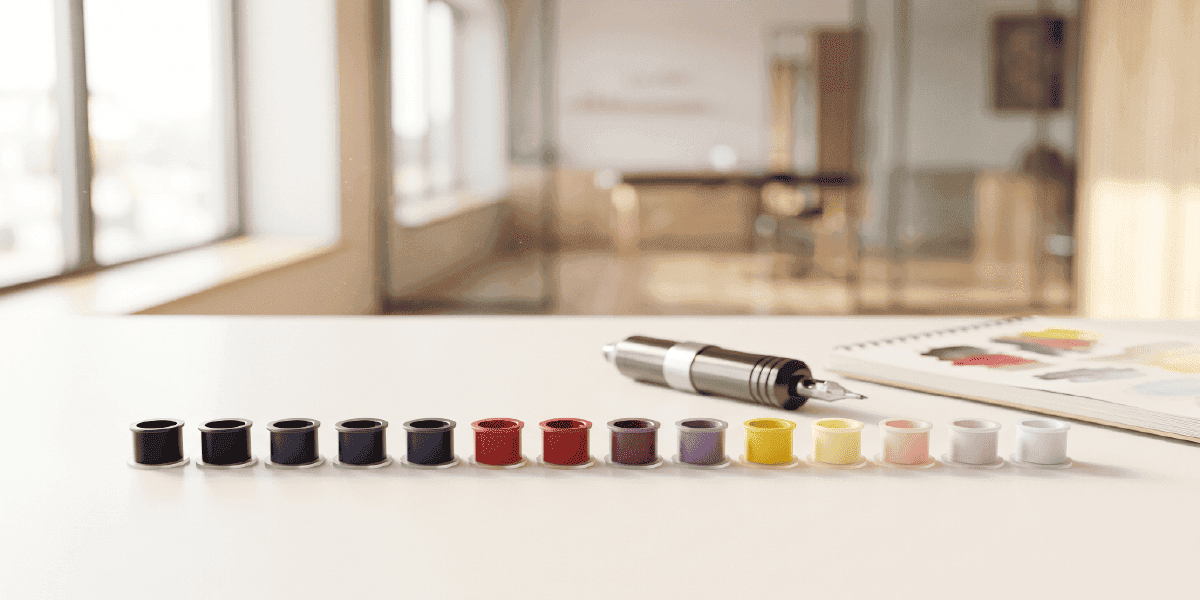
Colour tattoos fade faster than black, and each colour ages differently. Which last, which fade fastest, what speeds it up, and how to keep colour vivid.
By TattoosMap Editorial — August 2026
The Short Answer
Colour tattoos fade faster than black-and-grey, and the rate depends heavily on the colour — black and dark blues last longest, reds and greens are middling, and yellows, whites, pastels, and light colours fade fastest and least predictably. Sun exposure is the biggest accelerant, along with skin tone, placement, and ink quality. Expect colour tattoos to need touch-ups over the years, protect them relentlessly from UV, and choose bolder, more saturated colours over delicate pastels if longevity matters to you.
DISCLOSURE: This post contains affiliate links. If you purchase through our links we may earn a small commission at no extra cost to you.
The colour tattoo that healed looking like a stained-glass window won't necessarily look that way in ten years — and how much it changes depends enormously on which colours are in it.
Colour tattoos can absolutely last and look beautiful long-term, but only if you go in understanding how they age and choose accordingly. Here's the honest version, colour by colour.
How Colour Tattoos Age Compared to Black
The first honest point: colour tattoos generally fade faster and less evenly than black-and-grey.
Black ink is the most stable, longest-lasting pigment in tattooing — dense, opaque, and holding up for decades with relatively little change. Coloured pigments are more varied in composition and many are less stable, so they fade sooner and at different rates from each other.
The Uneven Fade Surprises People Most
A colour tattoo doesn't fade uniformly like a photo dimming. Instead, the least stable colours drop out first while the more stable ones hold, so over time the piece shifts in balance.
"A vibrant multicolour tattoo can gradually become a mostly-dark tattoo with faint traces of its original colours."
None of this means colour tattoos are a bad choice. It means they're a higher-maintenance choice than black-and-grey, and one where the specific colours you pick heavily determine how well it lasts.
HONEST LIMITATION
Even a well-done colour tattoo by a great artist will change more over time than black-and-grey, and no technique fully prevents this.
A skilled artist using quality inks, packing colour densely and saturating it properly, gets a far better and longer-lasting result than a poor one — but the underlying pigment stability still means colour fades faster than black.
If someone promises you a colour tattoo that stays exactly as vivid as day one forever, that's overselling. The realistic promise is a beautiful colour tattoo that will soften and shift over the years and benefit from occasional touch-ups.
Which Colours Last and Which Fade Fastest
This is the practical heart of it, because the colours you choose largely determine longevity. Here's the honest ranking.
Longest-Lasting
WHY DIFFERENT PIGMENTS FADE AT DIFFERENT RATES
Tattoo fading is fundamentally about two ongoing processes — your immune system slowly removing pigment, and light breaking it down — and different colours resist these to very different degrees based on their chemistry. All tattoo ink sits in the dermis, where the body treats the pigment particles as foreign material and immune cells continuously, if slowly, work to break them down and carry them away, which is why every tattoo fades gradually over a lifetime. Black pigment, typically carbon-based, is exceptionally stable: the particles are dense, chemically inert, and resistant to being broken down, so black holds up for decades. Coloured pigments are a chemically diverse group — some organic compounds, some metal-based, some synthetic dyes — and many are inherently less stable than carbon black, more readily broken down by the body and more chemically vulnerable to change. This is why colours fade faster than black and, crucially, why they fade at different rates from one another: their durability tracks their individual chemical stability, so the least stable pigments like those in yellows and pastels degrade first while more stable dark blues and greens persist.
Light exposure accelerates all of this, and it explains why sun is the dominant controllable factor in colour fading. Ultraviolet radiation carries enough energy to break chemical bonds, and when it penetrates the skin and reaches the pigment, it degrades the pigment molecules directly — a photochemical breakdown that dulls and lightens the colour over time. Different pigments have different susceptibility to this UV degradation, generally mirroring their overall stability, so the same light exposure fades a yellow far faster than a black. Two further optical factors compound the visible result. First, saturation: lighter and pastel colours contain less concentrated pigment to begin with, so they have less material to lose before becoming invisible, which is why they fade fastest regardless of chemistry. Second, skin tone: because the pigment is viewed through the melanin-containing epidermis, more melanin filters and mutes the colours seen from the surface, particularly the lighter, more translucent ones, so on deeper skin those colours read faintly and reach effective invisibility sooner. Every aspect of how a colour tattoo ages — which colours last, how fast, and how they look on different skin — traces back to this combination of pigment chemistry, light-driven breakdown, saturation, and the optics of viewing colour through skin.
SHARE THIS
"A vivid multicolour tattoo can slowly become a mostly-dark one — the yellows and pastels drop out first while black and dark blue hold for decades."
FROM TATTOOSMAP
Already have your design? Each design in our library includes the recommended aftercare protocol for its specific style and placement. Browse verified designs →
Exactly What To Do, Day by Day
01
CHOOSE COLOURS BY DURABILITY IF LONGEVITY MATTERS
Favour black, dark blues, and dark greens for the longest-lasting results, and go in knowing yellows, whites, pastels, and neons fade fastest. Bolder, more saturated colours outlast delicate light tones.
02
MATCH THE PALETTE TO YOUR SKIN TONE HONESTLY
On deeper skin, bold saturated colours show and last far better than light or pastel tones, which read faintly and fade sooner. Choose colours that will actually pop on your skin rather than fighting the optics.
03
PICK AN ARTIST BY THEIR HEALED COLOUR WORK
Look at colour tattoos over a year old, not fresh photos, to judge how their colour holds. Quality inks and proper saturation from a skilled artist directly affect how long colour lasts.
04
PROTECT IT FROM THE SUN FOR ITS ENTIRE LIFE
UV is the biggest controllable accelerant of colour fading, so cover the tattoo or use high-SPF mineral sunscreen on it whenever it's exposed — as an ongoing lifelong habit, not just during healing.
05
BUDGET FOR TOUCH-UPS AS PART OF CHOOSING COLOUR
Colour tattoos benefit from occasional refreshing over the years, so treat that as part of the commitment rather than a failure, and plan for it when you choose colour over black-and-grey.
What To Never Use
Expecting colour to stay as vivid as day one forever
coloured pigments are less stable than black and fade faster and unevenly, so even great colour work softens and shifts over the years.
Choosing delicate pastels and light tones when longevity matters
they're the least saturated and fade fastest, becoming faint or invisible far sooner than bold saturated colours.
Getting light or pastel colours on deeper skin without honest advice
melanin mutes translucent colours so they read faintly and fade sooner, while bold saturated palettes work far better.
Skipping lifelong sun protection
UV is the single biggest controllable cause of colour fading, and treating it as a healing-only rule rather than an ongoing habit dulls colour years early.
Frequently Asked Questions
Yes. Black is the most stable, longest-lasting pigment, holding up for decades, while coloured pigments are more varied and many are less stable, fading sooner and at different rates from each other. This is why a colour tattoo often shifts over time toward its darker, more stable colours as the lighter ones fade first.
Yellow, white, pastels, light tones, and fluorescents fade fastest, because they're the least stable and least saturated pigments. Black, dark blues, and dark greens last longest. Generally, darker and more saturated colours endure while lighter, softer, more translucent ones fade soonest.
Two main reasons — your immune system slowly breaks down and removes pigment over time, and UV light degrades pigment molecules directly. Coloured pigments are chemically less stable than black, so they succumb to both faster. Sun exposure is the biggest accelerant, along with skin tone, placement, ink quality, and healing.
Bold, saturated, darker colours work well on deeper skin, while light and pastel colours show less vividly and fade sooner because they're viewed through more melanin. It's about the optics of pigment under skin, not a limitation of you. A good artist experienced with darker skin will steer you toward colours that actually show and last.
Protect it from the sun relentlessly for its whole life — the biggest controllable factor — choose bold saturated colours suited to your skin over delicate pastels, pick a skilled artist using quality inks, place it away from high-sun and high-friction areas, and accept occasional touch-ups as part of owning a colour tattoo.
Discussion (0)
Verified Accounts
No public comments yet.
Find Your Artist
Ready To Book?
Browse verified tattoo artists on TattoosMap — filtered by style, city, and specialty.
Black — the gold standard, dense and stable, lasts decades
Dark blues and dark greens — among the more stable colours, hold up well
Middle of the Range
Reds and dark oranges — reasonably durable, though red can be prone to reactions and some fading
Purples and browns — moderate, depending on shade and saturation, with darker versions lasting better
Fastest to Fade
Yellow — one of the least stable, fades and dulls quickly
White — the most impermanent, often fading to near-invisible or yellowing
Pastels and light colours — light pinks, light blues, and soft tones fade fastest because they're less saturated to begin with
Fluorescents and neons — vivid at first, often the least durable of all
The pattern: darker and more saturated colours last longer, while lighter, softer, and more translucent colours fade fastest. Our white ink guide covers the extreme end of this in depth.
HONEST LIMITATION
The exact durability of any colour depends on the specific ink brand and formulation, so these rankings are the general pattern rather than a guarantee for every pigment.
Ink technology varies — some modern pigments in traditionally weak colours perform better than older ones, while cheap inks in any colour fade fast.
This is another reason artist and studio choice matters. A good artist uses quality, reputable inks, which affects longevity as much as the colour category does.
What Accelerates Colour Fading
Beyond the pigment itself, several factors speed fading, and most involve some control on your part:
Sun exposure — by far the biggest. UV breaks down pigment and hits colour harder than black, so unprotected colour tattoos on sun-exposed areas fade dramatically faster.
Skin tone — lighter colours show and last less well on deeper skin, viewed through more melanin, while darker bolder colours work better.
Placement — high-friction and high-sun areas (hands, feet, fingers, inner wrist) fade faster than protected spots.
Ink quality and artist skill — quality inks and proper saturation last; cheap inks and under-packed colour fade fast.
Aftercare and healing — poor healing, sun during healing, and picking scabs pull out colour before it settles.
Your body — individual skin type, immune activity, and lifestyle all affect fade speed.
HONEST LIMITATION
Sun protection is the one factor you most control and the one that most determines how your colour tattoo ages, so it deserves emphasis over the others.
Diligent lifelong sun protection — covering the tattoo or using high-SPF mineral sunscreen whenever it's exposed — genuinely makes the difference between a colour tattoo that stays rich for years and one that dulls in a few.
"It's not a one-time healing rule; it's an ongoing habit for the life of the tattoo."
People underestimate this constantly, then blame the ink or the artist for fading that consistent sun protection would have largely prevented.
Skin Tone and Colour — An Honest Note
Colour tattoos interact with your skin tone, and honest guidance means addressing this directly rather than pretending all colours work equally on everyone.
Because tattoo ink sits under the skin and is viewed through it, your natural skin tone affects how colours appear and how well they show.
How It Works on Different Skin
On fair skin, a wide range of colours including light and pastel tones read clearly. On medium-to-deep skin tones, melanin means lighter and more translucent colours show less vividly and fade sooner, while bold, saturated, darker colours tend to work far better.
This isn't a limitation of you or the tattoo — it's the optics of viewing pigment through skin. A good artist experienced with a range of skin tones will honestly advise which colours will work and which won't, steering toward choices that actually look good and last.
HONEST LIMITATION
An honest artist telling a client with deeper skin that certain light or pastel colours won't show or last well isn't being discouraging — they're preventing a disappointing tattoo.
The alternative — an artist who applies any colour requested regardless of how it reads on the skin — leads to faded, barely-visible, or muddy results and an unhappy client.
The best colour tattoos on deeper skin tones come from artists who work with the skin rather than against it, choosing bold saturated palettes that pop and last. If an artist won't have that honest conversation, that itself tells you they may not be experienced with your skin tone.
How to Get a Colour Tattoo That Lasts
If you want colour and want it to last, here's how to stack the odds:
Choose an artist experienced in colour work, and look at their healed colour tattoos over a year old, not fresh photos
Favour bolder, more saturated colours over delicate pastels if longevity is a priority
Consider your skin tone honestly and choose colours that will actually show and last
Protect it from the sun relentlessly, for the life of the tattoo — the single biggest controllable factor
Choose placement wisely — lower-sun, lower-friction areas hold colour longer
Accept touch-ups as part of colour — budget for occasional refreshing over the years
Don't cut corners on ink or artist — quality inks and skilled saturation directly affect longevity
Your aftercare doesn't prevent fading entirely, but good habits protect the result you paid for.
HONEST LIMITATION
All these caveats shouldn't scare anyone off — colour work can be stunning and can last well when done and cared for properly.
The point isn't that colour tattoos are inferior. It's that they're a more informed choice than black-and-grey, requiring the right colours, the right artist, the right placement, and ongoing sun protection.
"Colour tattoos reward informed choices and diligent care; they punish assuming they'll behave like black-and-grey with no effort."
Someone who chooses saturated colours suited to their skin, from a skilled artist, and protects the tattoo, can enjoy a vivid colour piece for many years and simply refresh it occasionally. Know the difference and colour is a wonderful option.
Think of colour tattoos like a garden versus a stone path. A well-laid stone path — black-and-grey — sits there looking essentially the same for decades with almost no upkeep.
A vibrant flower garden — a colour tattoo — is more beautiful in full bloom, but it needs the right plants for your soil and light, and ongoing care to stay that way, with some flowers hardier than others. Plant the hardy varieties suited to your conditions, tend it, and it rewards you for years. Neglect it, and it fades far faster than the path ever would.