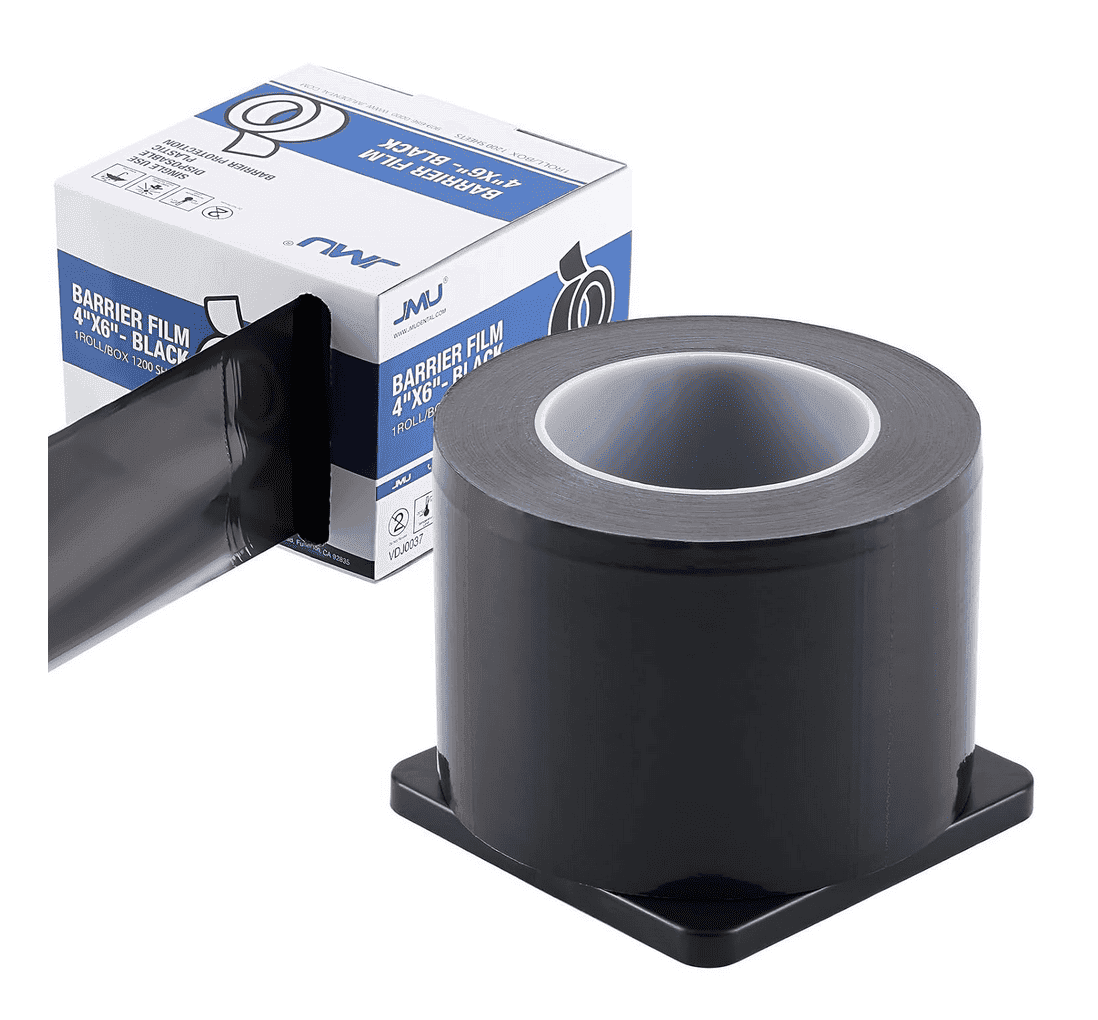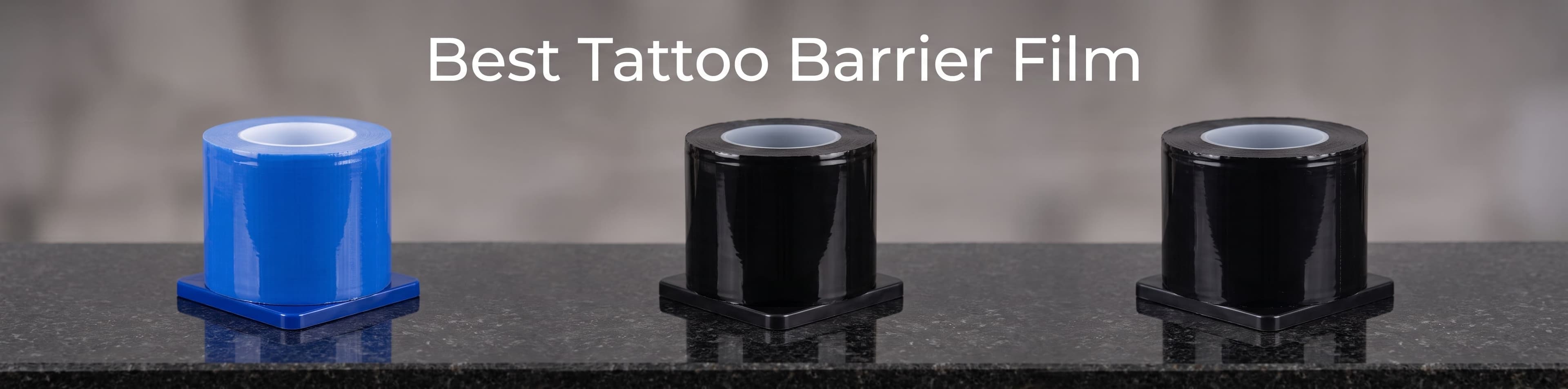
Nobody thinks about barrier film until the day they peel a sheet off a machine grip and the adhesive leaves a sticky stripe that takes five minutes and a solvent to remove. That's five minutes between clients, multiplied by every surface in your station, multiplied by every client that day. The wrong barrier film doesn't just fail — it actively slows you down.
Barrier Film Is Infection Control Not Cleanup
This isn't a convenience product. It's a cross-contamination barrier. Every surface you touch during a session — machine grip, power supply button, spray bottle, phone, lamp switch — becomes a potential vector for bloodborne pathogens the moment you touch it with a contaminated glove.
Barrier film covers those surfaces so you strip and replace between clients instead of scrubbing and disinfecting. It doesn't replace disinfection, but it reduces the number of surfaces that need it, which means faster turnover and fewer missed spots.
"Barrier film doesn't make your station clean — it makes the surfaces underneath your barrier film stay clean, which is a completely different job."
Thickness Is The Spec That Matters
The market standard is 4 to 5 nanometre thickness. That's fine for flat surfaces and light-touch areas. But on a machine grip that's being squeezed for hours, or on a tray edge that catches elbows, thin film punctures and tears — and torn film is worse than no film because it looks like you covered the surface.
Thicker film costs marginally more per sheet and holds up under real use. The difference between 4nm and 6.5nm is the difference between film that survives the session and film you're replacing halfway through.
Adhesive Is Where Cheap Film Fails
The adhesive needs to do two contradictory things: hold firmly enough that the sheet doesn't curl off during the session, and release cleanly enough that it leaves zero residue when you peel it.
Cheap film almost always gets one right and the other wrong. Either it peels off mid-session because the tack is too light, or it bonds so hard that it leaves a gummy stripe on the equipment you now have to clean with solvent. The non-stick edge design — a quarter inch of adhesive-free film at the edge — solves the removal problem by giving you a tab to grip without fighting the adhesive.
What Barrier Film Can't Replace
It covers surfaces. It does not sterilise them. Film goes over surfaces that have already been wiped with a proper disinfectant, and when you peel it off between clients, the surface underneath should be clean enough to re-cover, not clean enough to skip disinfecting.
It also won't cover everything. Bottles, curved handles, and irregular shapes need wrapping rather than sheeting, and a flat 4x6 rectangle doesn't wrap well. For those surfaces you either cut and fold the film or use a separate cling-style barrier wrap.
Think of it like a screen protector on a phone. It doesn't clean the screen underneath — it keeps the screen underneath from getting dirty in the first place. And if it peels up at the corners, it's doing nothing.
The Ranked List
DISCLOSURE: This post contains affiliate links. If you purchase through our links we may earn a small commission at no extra cost to you.
1 — FRONTLINE DENTAL BARRIER FILM
BEST OVERALL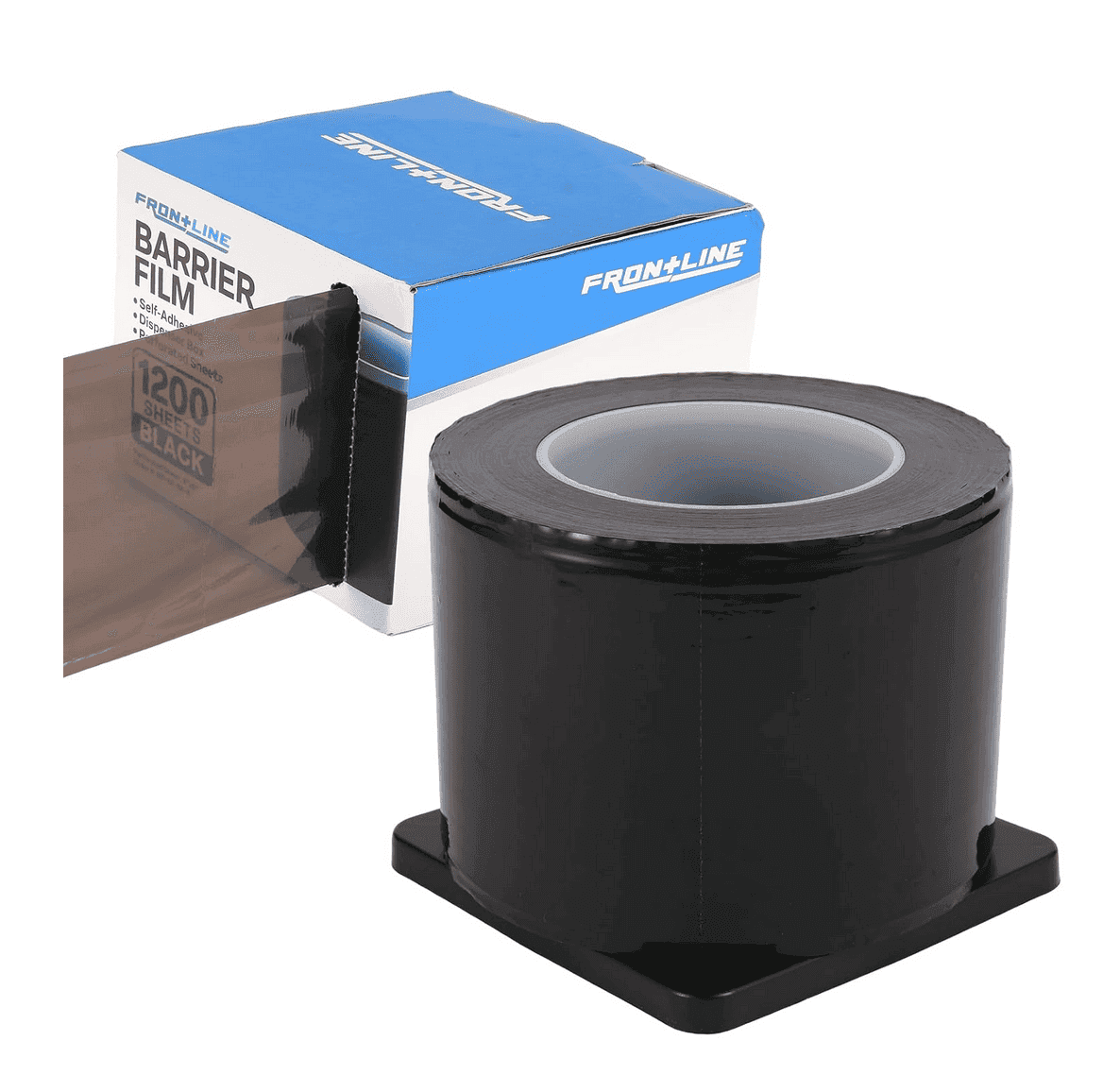
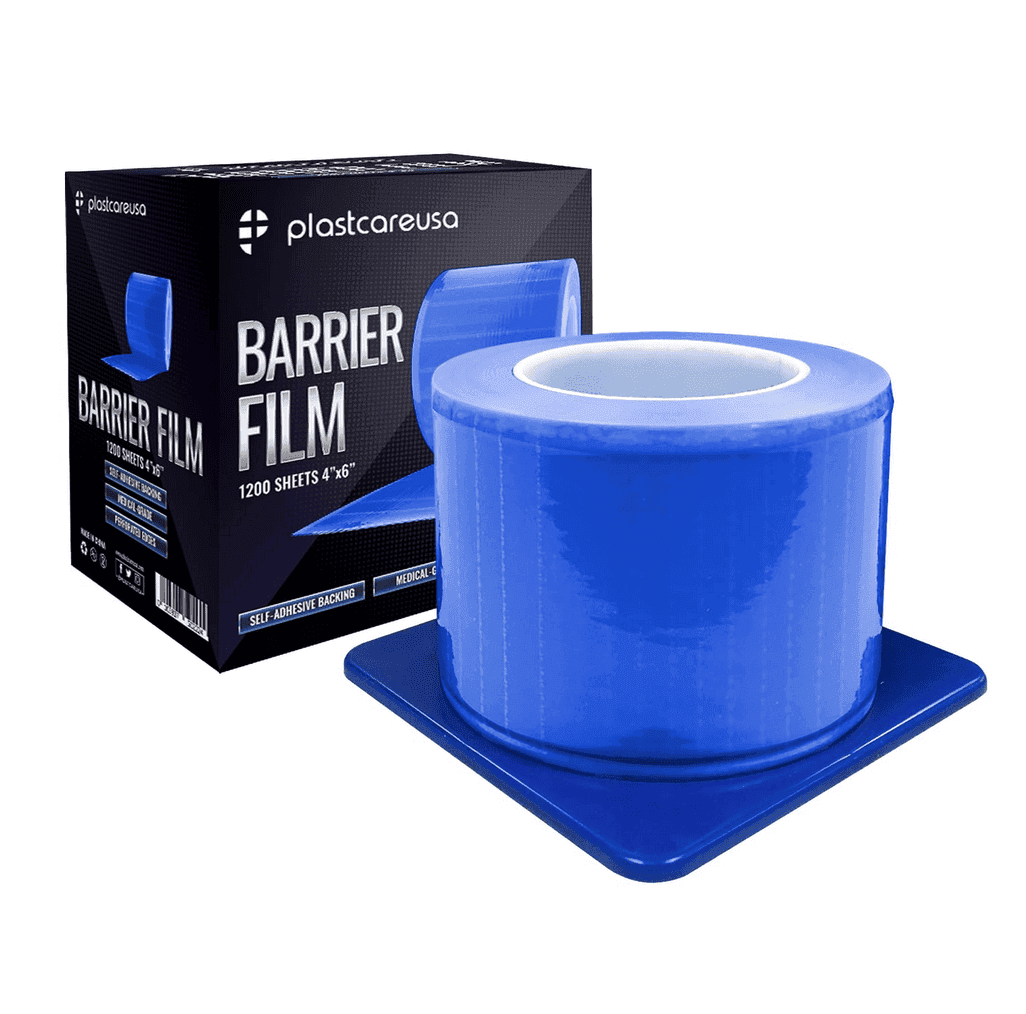
The adhesive on this one hits the sweet spot that most films miss — firm enough that it doesn't curl off a machine grip during a full session, gentle enough that it peels clean from metal, plastic, and composite without leaving a trace. The black colour makes it easy to see which surfaces are covered and which you missed, which matters more under studio lighting than you'd think. Perforated 4x6 sheets tear cleanly from the dispenser box without the film bunching or sticking to itself.
No published thickness spec in the listing, so you're trusting the feel rather than a number — and it feels thinner than the PlastCare when you hold them side by side.
WHY SURFACE BARRIERS REDUCE PATHOGEN TRANSFER
During a tattoo session, the artist's gloves contact the client's blood and tissue fluid. Every surface those gloves then touch — the machine, the power supply, the spray bottle, the lamp — receives a microbial deposit. Pathogens like Hepatitis B can survive on environmental surfaces for up to seven days at room temperature, and Hepatitis C remains viable for hours to days depending on conditions. A single missed surface during post-session cleaning creates an indirect transmission pathway to the next client. Barrier film breaks this chain by creating a disposable intermediary layer. The contamination sits on the film, not the equipment, and the entire contaminated layer is stripped and discarded between clients. The adhesive backing prevents the film from shifting or curling, which would expose the surface underneath and defeat the purpose. This is why adhesive quality matters — a sheet that lifts at the edges creates a gap where pathogens deposit directly on equipment, and the artist doesn't know the barrier has failed because the film still looks like it's in place. Thicker film with a calibrated adhesive that holds under pressure and peels without residue is a genuine infection-control advantage, not a comfort preference.
"Barrier film doesn't make your station clean — it makes the surfaces underneath stay clean, which is a completely different job."
Already have your design? Each design in our library includes the recommended aftercare protocol for its specific style and placement. Browse verified designs →
Exactly What To Do, Day by Day
DISINFECT THE SURFACE FIRST
Wipe every surface with a hospital-grade disinfectant and let it dry fully before you cover it. Film goes over clean surfaces — it's not a substitute for cleaning.
COVER EVERY TOUCH POINT
Machine grip, clip cord, power supply buttons, spray bottle, phone, lamp switch, tray edges. If your gloved hand touches it during the session, it gets covered. No exceptions.
PRESS THE ADHESIVE FLAT
Smooth each sheet from the centre outward to eliminate air bubbles and edge lift. A bubble or curled corner is an exposed surface pretending to be covered.
STRIP EVERYTHING BETWEEN CLIENTS
Peel every sheet, dispose of it, re-disinfect the surface underneath, and apply fresh film. Reusing barrier film between clients is not a shortcut — it's a contamination event.
CHECK FOR RESIDUE AFTER PEELING
Run a gloved finger across the surface after removal. If you feel tack, the film left adhesive behind and the surface needs solvent cleaning before re-covering. Switch brands if it happens consistently.
What To Never Use
Kitchen cling wrap as a barrier substitute
it has no adhesive, shifts constantly, and is not rated for medical or infection-control use.
Film with no non-stick edge
without that adhesive-free tab you end up fighting the adhesive to start the peel and tearing the film instead of lifting it.
Reusing barrier film between clients
the entire point is that the film is the contaminated layer, and leaving it in place transfers that contamination forward.
Industrial-grade film in a studio setting
industrial barrier film is thinner, uses different adhesive chemistry, and isn't manufactured under the same standards as medical-grade product.