Related Studio & Technical Guides
- Needle Configuration: Understand taper & groupings in our Best Tattoo Needles Guide.
- Machine Setup: Compare starter rotary options in our Best Tattoo Machine for Beginners Guide.
- Hygiene Standards: Review barrier controls in our Best Tattoo Grip & Supply Guide.
The Ranked List
DISCLOSURE: This post contains affiliate links. If you purchase through our links we may earn a small commission at no extra cost to you.
SOTICA 200PCS Pen Covers with 6 Grip Tapes
BEST OVERALL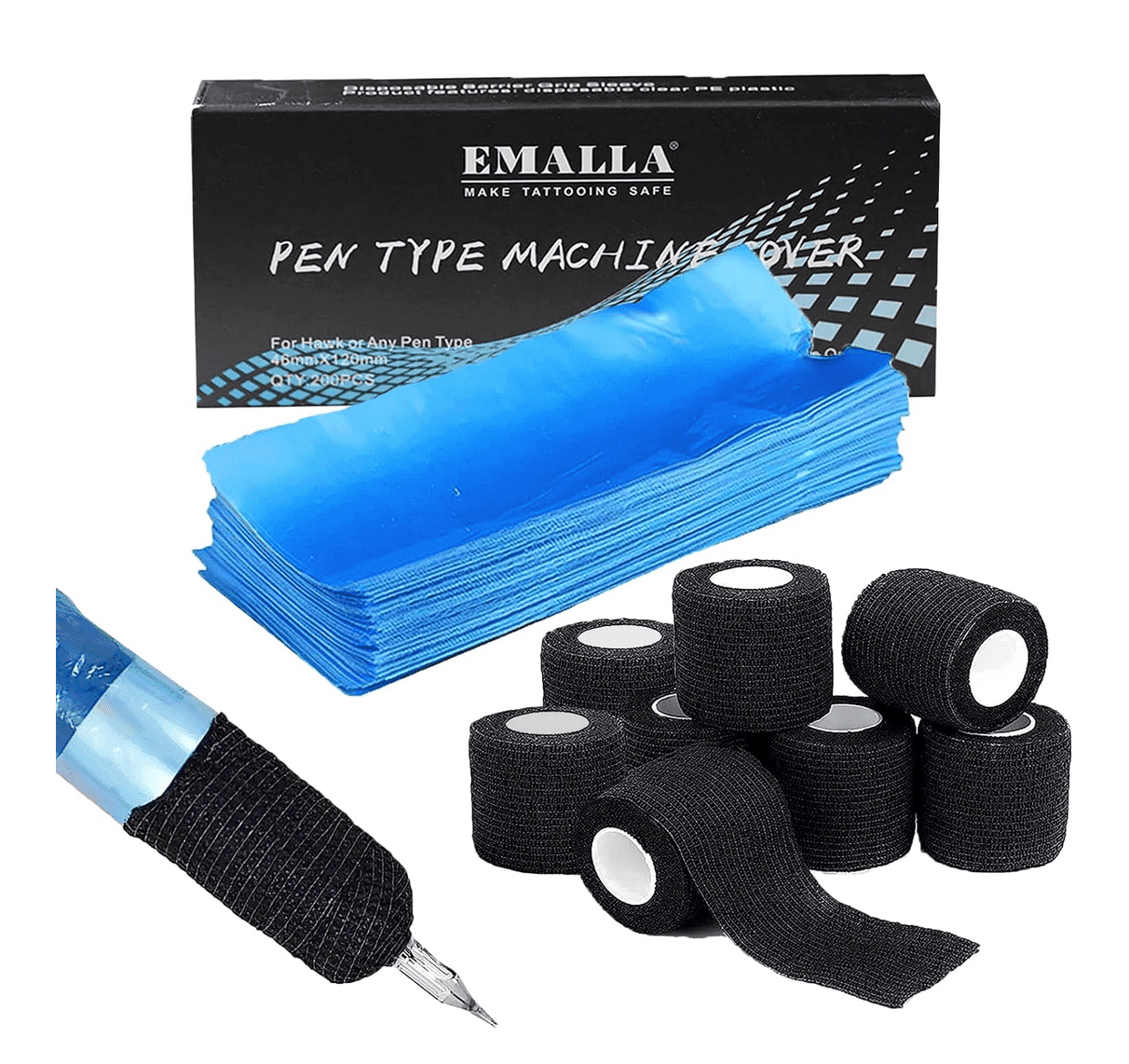
What it actually does >> Everything you need in one box. 200 black translucent covers with pre-punched holes, plus 6 rolls of self-adhesive grip tape. The covers measure 2.56" x 7.09" upgraded to fit most modern wireless pens. Black plastic hides dirt and ink better than clear. The grip tape is elastic, breathable, tears cleanly without scissors, and sticks to itself not your machine. Double protection setup keeps your machine clean and your hand steady.
The listing admits new and old sizes are mixed in inventory you might get the smaller size and need a replacement. That's annoying. Also, the pre-punched hole might not fit every cartridge neck snugly.
How Cross-Contamination Actually Travels in a Tattoo Setup
Bloodborne pathogen transmission in tattooing occurs through a specific chain: contaminated surface to gloved hand, gloved hand to previously clean surface, previously clean surface to next gloved hand or directly to client skin. The chain can be broken at any link but the most reliable approach is to establish a clean contaminated zone and a clean zone at the start of each session and maintain the separation throughout. The contaminated zone is everything that gloved hands touch after first contact with the client — the machine, the spray bottle, the ink tray. The clean zone is everything that should not be touched with contaminated gloves — the supply storage, the ink bottles, the stencil paper. Barrier film converts contaminated zone surfaces into surfaces that can be disposed of rather than disinfected. The film itself becomes the contaminated surface that is removed and discarded, leaving the underlying equipment surface clean for the next session with only standard disinfection required. This is why barrier film is not just a convenience — it is a contamination containment system that makes the hygiene protocol more reliable by converting a cleaning requirement into a disposal requirement.
"Barrier film does not make a surface clean. It makes contamination containable — which is a different and more reliable thing in a working session."
Already have your design? Each design in our library includes the recommended aftercare protocol for its specific style and placement. Browse verified designs →
Exactly What To Do, Day by Day
MEASURE YOUR MACHINE.
Grip diameter and total length. A 0.2-inch difference can make a cover unusable.
CHECK THE HOLE SIZE.
Slide a cartridge through the pre-punched hole to make sure it's a snug fit. No gaps.
APPLY THE COVER.
Slide it over the grip until the cartridge neck pokes through. Secure the top with tape if needed.
WRAP THE GRIP TAPE.
Overlap each layer, stretch slightly as you go. Self-adhesive tape sticks to itself, not your machine.
CHANGE BETWEEN CLIENTS.
Fresh cover, fresh tape, every time.
What To Never Use
Covers with oversized pre-punched holes.
If the hole doesn't fit snugly around the cartridge neck, ink can seep onto the cover and your hand.
Thin plastic covers that tear easily.
Some brands use brittle material that splits at the seam when stretched over thicker grips.
Assuming "universal fit" means every machine.
Grip diameters vary. Measure before buying in bulk.