Related Studio & Technical Guides
- Needle Configuration: Understand taper & groupings in our Best Tattoo Needles Guide.
- Machine Setup: Compare starter rotary options in our Best Tattoo Machine for Beginners Guide.
- Hygiene Standards: Review barrier controls in our Best Tattoo Grip & Supply Guide.
The Ranked List
DISCLOSURE: This post contains affiliate links. If you purchase through our links we may earn a small commission at no extra cost to you.
Dragonhawk Mast Tour Wired Tattoo Machine Kit
BEST OVERALL FOR BEGINNERS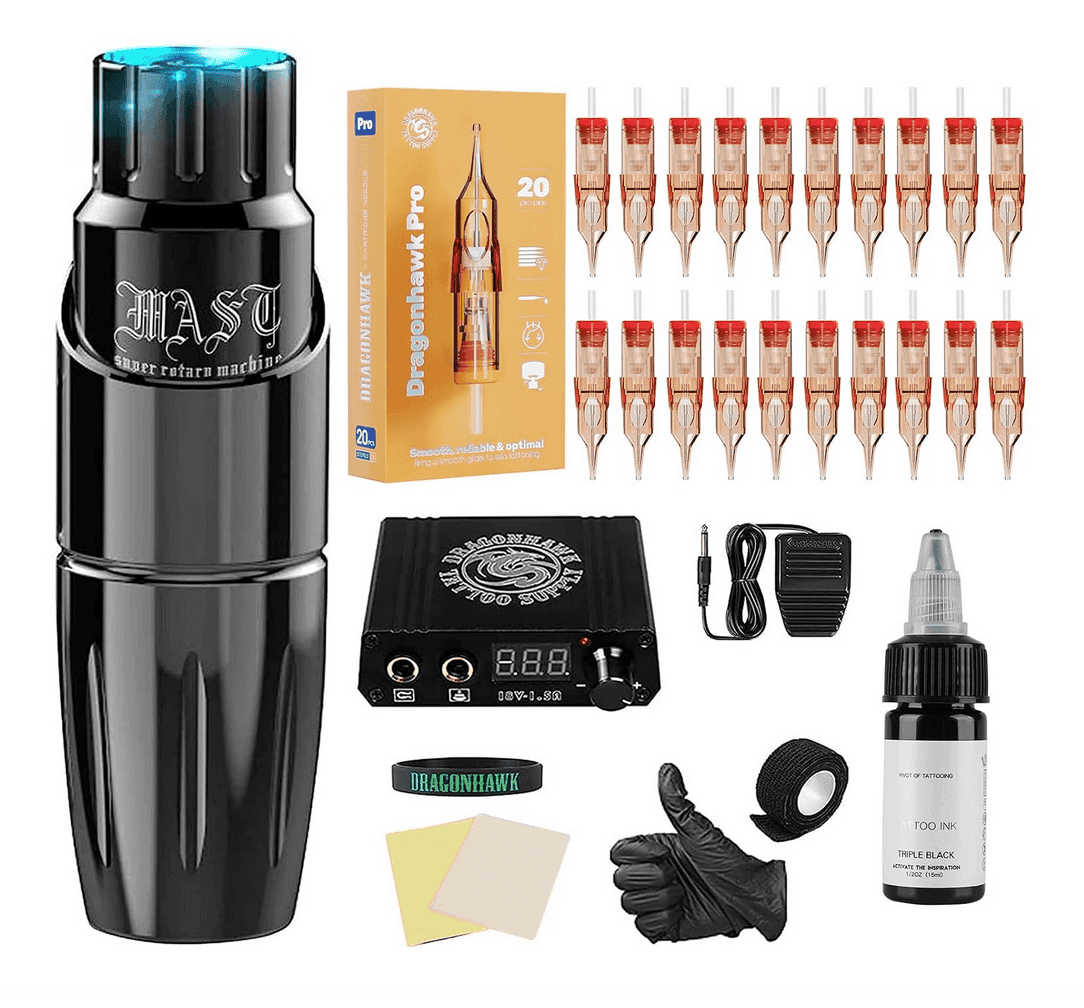
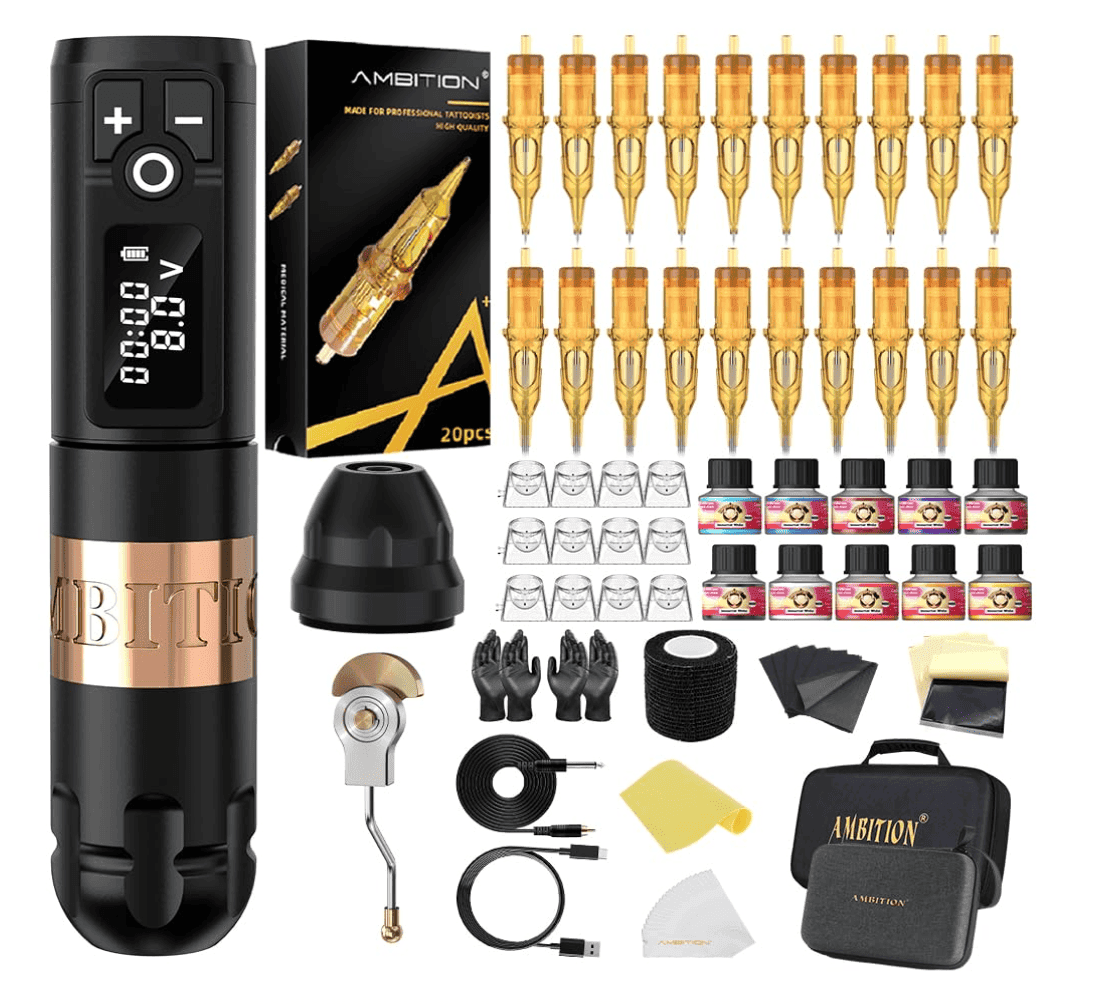
82g and wired — two things that matter more than any spec sheet when you are starting out. The wired connection means the only variable is you, not a battery percentage creeping toward zero mid-practice session. The fixed 3.5mm stroke removes another decision beginners do not need to make yet. The kit ships with 20 cartridges, ink, practice skin, power supply, and foot pedal in one box. You open it and start. The RCA connection also works with a compatible battery pack if you buy one separately later, so you are not locked into a wired-only setup forever.
The kit ink and practice skin are starter quality — fine for learning hand positioning and line control, but switch to proper professional ink and real practice skin once you have the basics down.
Why Motor Consistency Determines What You Actually Learn
A tattoo machine motor under load behaves differently from a motor running free. When the needle contacts skin resistance the motor draws more current to maintain speed. Cheap motors with poor torque curves slow down under this load — sometimes by 15 to 20 percent — which changes the effective hit rate without any change in your hand position or speed. Your brain registers the result as inconsistency in your technique when the problem is entirely in the machine. Coreless and brushless motors maintain their speed curve under variable resistance loads because their electromagnetic design does not rely on brush contact to transfer current. The motor speed stays consistent whether the needle is passing through epidermis, dermis, or scar tissue. This consistency is not a luxury feature — it is what allows you to build accurate muscle memory, because the variable you are learning to control is your hand, not the machine compensating for its own limitations.
"The machine that removes the most variables while you are learning is the right machine. Wired power, fixed stroke, light body — everything else is a decision you can make in six months when you know what you are actually optimising for."
Already have your design? Each design in our library includes the recommended aftercare protocol for its specific style and placement. Browse verified designs →
Exactly What To Do, Day by Day
START ON SILICONE
Keep apprentices on 3mm silicone mats. Human skin practice before you understand machine vibration leads to irreversible blowouts. Period.
VOLTAGE CALIBRATION
Start rotary pens at 6V for lining. Bump up by 0.5V until the needle punches through the synthetic mat cleanly without snagging. Every machine is different.
MEMBRANE CARTRIDGE VERIFICATION
Only use cartridges with full safety membranes. Rubber bands let ink flow back into the motor housing and destroy the machine.
STENCIL APPLICATION
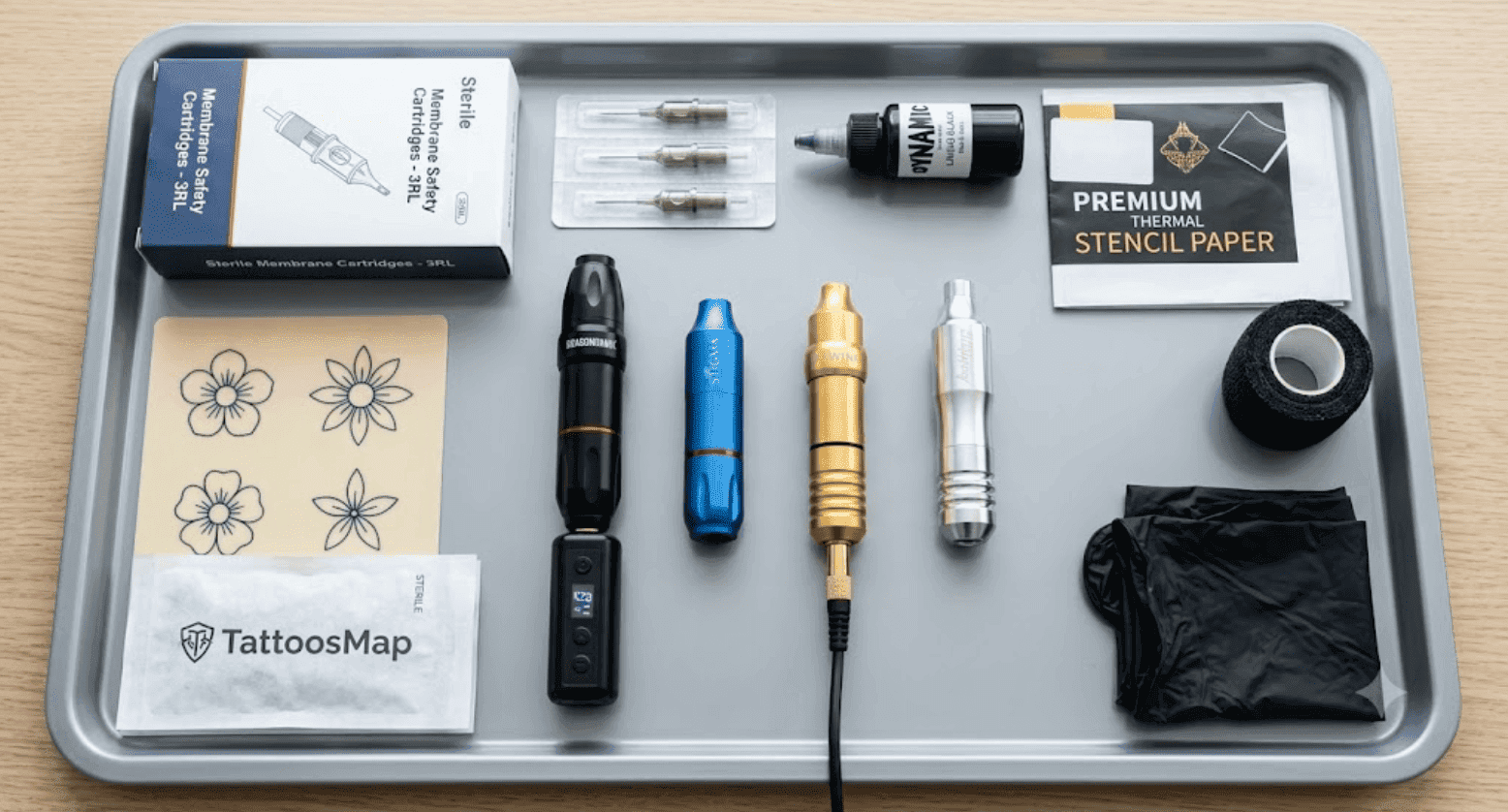
Clean with alcohol. Thin layer of transfer gel. Press premium stencil paper firmly for 10 seconds. No shortcuts.
STERILIZATION STANDARDS
Bag the entire rotary pen in barrier film. Discard any cartridge with a compromised blister pack immediately. No exceptions
What To Never Use
Complete kit machines under $50
The motors in budget kits cannot maintain consistent speed under skin resistance — you spend your apprenticeship compensating for machine inconsistency and calling it your own technique problem
Coil machines as your first machine
Coil machines require tuning and produce vibration that adds a mechanical learning curve on top of the tattooing learning curve — start rotary and move to coil when you have experience to appreciate the difference
Machines with proprietary cartridge systems
Proprietary cartridges lock you into one needle supplier and prevent you from using the needle brands your mentor or shop uses — always buy machines with universal Cheyenne-thread cartridge compatibility
Wireless-only machines for client work
Battery management becomes a real variable during long sessions — a machine without a corded backup option will eventually die mid-session at the worst possible moment