Related Studio & Technical Guides
- Needle Configuration: Understand taper & groupings in our Best Tattoo Needles Guide.
- Machine Setup: Compare starter rotary options in our Best Tattoo Machine for Beginners Guide.
- Hygiene Standards: Review barrier controls in our Best Tattoo Grip & Supply Guide.
The Ranked List
DISCLOSURE: This post contains affiliate links. If you purchase through our links we may earn a small commission at no extra cost to you.
Dragonhawk Extreme 1205RL
BEST FOR LINING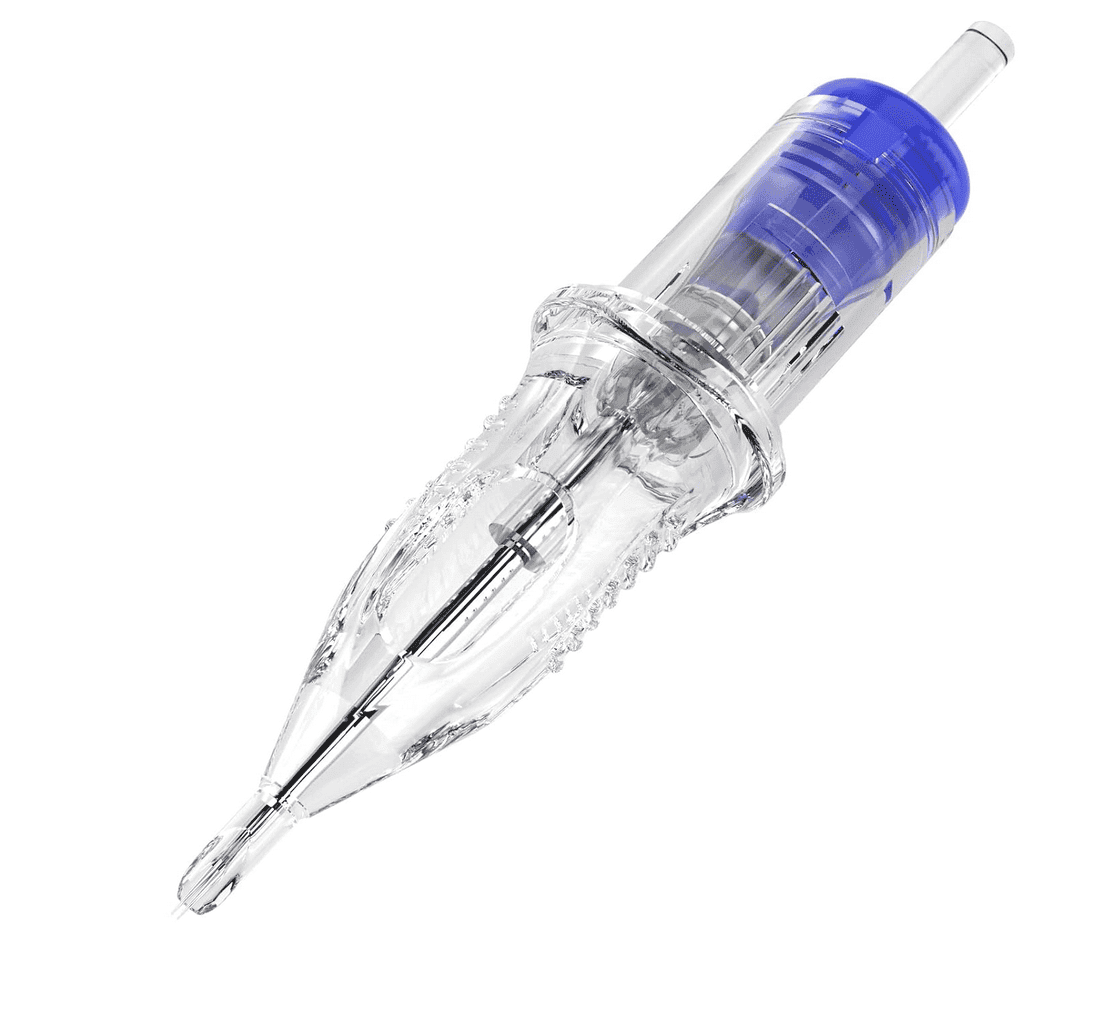
What it actually does >> These hit clean and consistent. The polished, long taper design gives you excellent control, and the unique indentation at the tip enhances ink flow so you're not fighting for saturation. The one-piece needle and plunger overmold means no wobble, maximum stability even on longer lines. Transparent cartridge body lets you see how much ink you have left, so you're not caught off guard mid-stroke. Fits all rotary and pen-style machines.
The 5RL is a specific size, great for medium lining but you'll need other configurations for shading or fine detail work. Also, the ink flow enhancement takes a few strokes to get used to if you're switching from another brand.
How Needle Taper Determines Skin Trauma and Ink Deposit
A tattoo needle penetrates skin approximately 150 to 200 times per second at standard machine speeds. Each penetration creates a micro-channel through the epidermis and into the dermis. The taper — the length over which the needle point is sharpened to its finest diameter — determines how much tissue displacement occurs with each penetration. A standard 1.5mm taper requires more force to reach working depth than a 2.0mm long taper because the transition from full needle diameter to point is more abrupt. More force means more tissue displacement, which means more inflammatory response and more trauma to the collagen scaffold that holds ink in position. Long taper needles reach working depth with less displacement because the gradual transition from shaft diameter to point spreads the pressure over a longer distance. This is why long taper needles produce softer, more settled heals — the inflammatory response is lower because the mechanical trauma per penetration is lower. The tradeoff is that long taper needles deposit ink slightly less densely per pass because the point is narrower at working depth, which means more passes may be required for full saturation on colour work.
"A dull needle does not just produce worse lines — it causes more trauma per penetration than a fresh needle, which means more inflammation, more fallout, and longer healing."
Already have your design? Each design in our library includes the recommended aftercare protocol for its specific style and placement. Browse verified designs →
Exactly What To Do, Day by Day
INSPECT EVERY CARTRIDGE BEFORE OPENING.
Check the blister pack for damage. If it's compromised, toss it. No exceptions.
SCREW IT ON FIRMLY.
Not too tight you can crack the housing. Not too loose you'll get needle wobble. Snug is right.
RUN IT DRY FOR A SECOND.
Tap the pedal once to make sure the needle moves freely. No hang ups, no grinding sounds.
DIP AND TAP.
Dip the needle in ink. Tap off excess on the side of the cap. No dripping no pooling.
STRETCH AND GLIDE.
Stretch the skin. Hold the needle at the right angle. Let the machine do the work don't push.
CHANGE CARTRIDGES EVERY 45-60 MINUTES.
Fresh needles are sharp needles. Don't cheap out on your client's skin.
What To Never Use
The absolute cheapest carts from no-name brands.
ScienCustomer reviews are filled with "wobbles" and "skips" and "blew out my tattoo." Not worth the savings.tific reasoning why this causes issues.
Carts without visible sterilization marks.
Every legitimate brand prints expiration dates and sterilization indicators on the packaging. If it's blank, it's not sterile.
Reusing needles.
Ever. Not even on yourself. Not even once. The risk of infection and cross-contamination isn't worth it.
Using the wrong configuration for the job.
1RL and 3RL for fine detail, 5RL for lining, 7RM and 9RM for shading. Using a liner for shading gives you scratchy transitions. Using a shader for lining gives you fuzzy edges.