DISCLOSURE: This post contains affiliate links. If you purchase through our links we may earn a small commission at no extra cost to you.
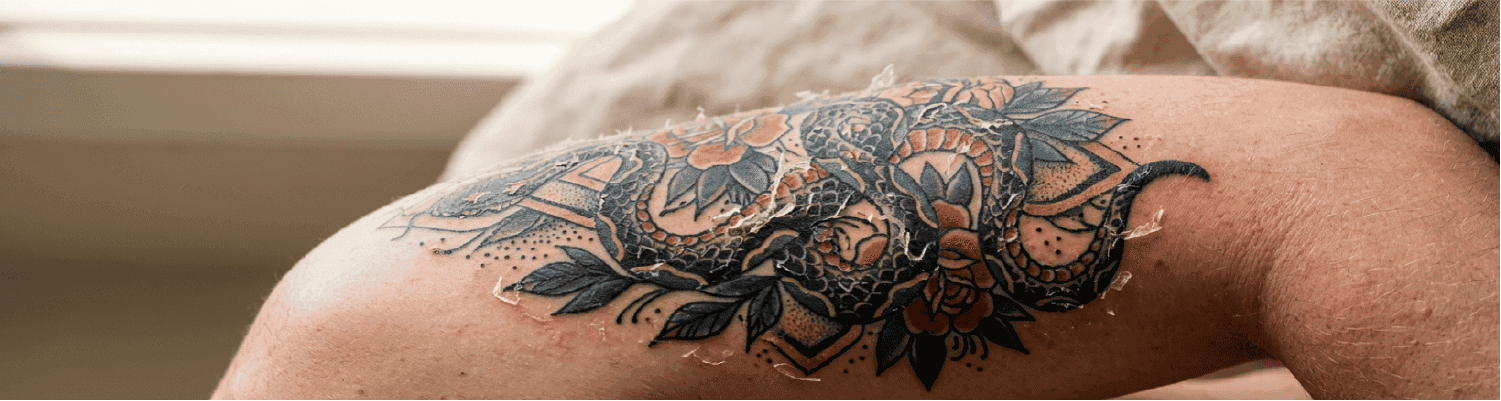
You looked down at your fresh tattoo and a chunk of coloured skin just… fell off. Into your lap. Onto your pillow. Maybe into your morning coffee. And now you're convinced your tattoo is literally disintegrating. It's not. That flake was dead skin carrying surface ink, and it was always going to leave — your tattoo underneath is fine. But peeling is the most visually alarming phase of healing, and nobody prepares you for what it actually looks like.
Why Tattoos Peel in the First Place
A tattoo needle punctures your skin 50 to 3,000 times per minute, depositing ink into the dermis — the second layer of skin. The top layer, the epidermis, gets destroyed in the process. Your body does what it always does with damaged skin: it sheds it and grows new skin underneath.
That shedding is the peeling.
- The damaged epidermis dies and loosens from the new skin forming below it
- Excess ink trapped in that dead layer comes off with it — those coloured flakes are dead skin cells stained with surface ink, not your actual tattoo leaving
- The ink that matters — the ink deposited in the dermis — stays put, locked in place by your immune system's response to the wound
- New epidermis grows over the top, initially looking cloudy or milky before it thins out and lets the ink show through clearly
"Every coloured flake on your pillowcase was dead skin that was already on its way out — your tattoo is underneath it, not inside it."
The amount of peeling varies wildly between tattoos, even on the same person. A lightly-worked fine-line piece might barely flake. A heavily saturated colour piece might shed like a snake for a week. Neither extreme means something went wrong — it reflects how much the epidermis was disrupted during the session, which depends on needle grouping, pass count, ink saturation, and your skin's individual response. There's no "correct" amount of peeling.
What Normal Peeling Looks Like
Peeling typically starts between days 3 and 7, peaks around days 7 to 10, and finishes by day 14 — though larger or heavily worked tattoos can peel longer.
Light Peeling
- Thin, translucent flakes — like a mild sunburn peel
- May or may not carry visible colour
- Common with fine-line work, single-needle tattoos, and lightly shaded pieces
- The tattoo underneath usually looks good almost immediately
Heavy Peeling
- Thicker flakes, sometimes large sheets of skin
- Clearly coloured — black, grey, or whatever colours are in the tattoo
- The tattoo looks patchy, faded, and rough underneath the peeling layer
- Common with bold traditional work, heavy colour saturation, and large pieces
- Looks terrifying but is equally normal
Scabbing vs. Peeling
These are different things, and knowing the difference matters.
- Peeling — thin, dry, flaky skin that lifts and falls off naturally. Normal and expected.
- Light scabbing — slightly thicker patches that sit on the surface and eventually fall off. Still normal, especially over heavily worked areas.
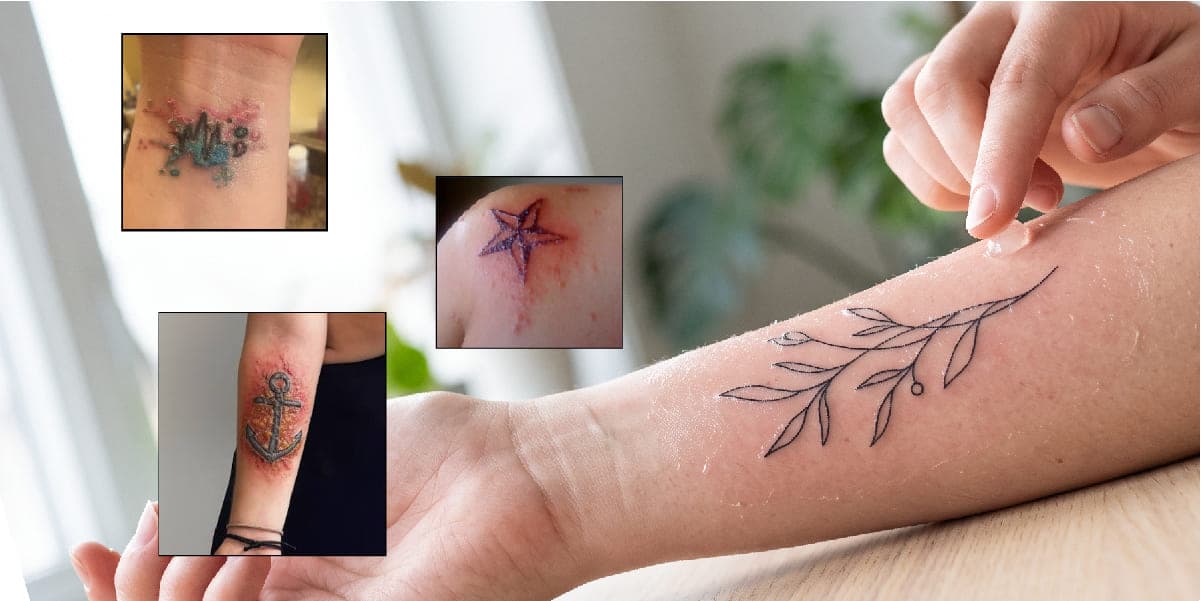
- Heavy scabbing — thick, raised, crusty scabs that crack, bleed, or feel hard to the touch. This is less ideal and usually means the tattoo is drying out too much, was over-worked, or isn't getting proper aftercare.
Some areas of a tattoo will peel before others, which makes the whole thing look uneven and strange for a few days. Lighter areas and outlines tend to peel first, while heavily saturated sections take longer. You'll have patches that look healed next to patches that are still flaking, and that patchwork effect is not a sign of uneven healing — it's just different areas on different timelines. It evens out.
What to Do While Your Tattoo Peels
The rules here are simple, and the hardest one is doing nothing.
Don't Pick, Pull, or Peel
This is the single most important rule of tattoo healing, and the one people break most often.
- Pulling a flake that isn't ready can rip out ink from the dermis below, leaving a light patch or blank spot
- Picking at scabs interrupts the healing underneath and dramatically increases the chance of scarring
- Peeling large sheets of skin — even when they're barely hanging on — can pull ink from areas that were still settling
The flake will fall off on its own. In the shower, while towelling off, in your sleep. Let it. Every piece you pull risks a permanent mark in your tattoo that only a touch-up can fix.
Keep It Moisturised (But Not Drowned)
The goal is keeping the peeling skin soft enough that it releases naturally without cracking or pulling.
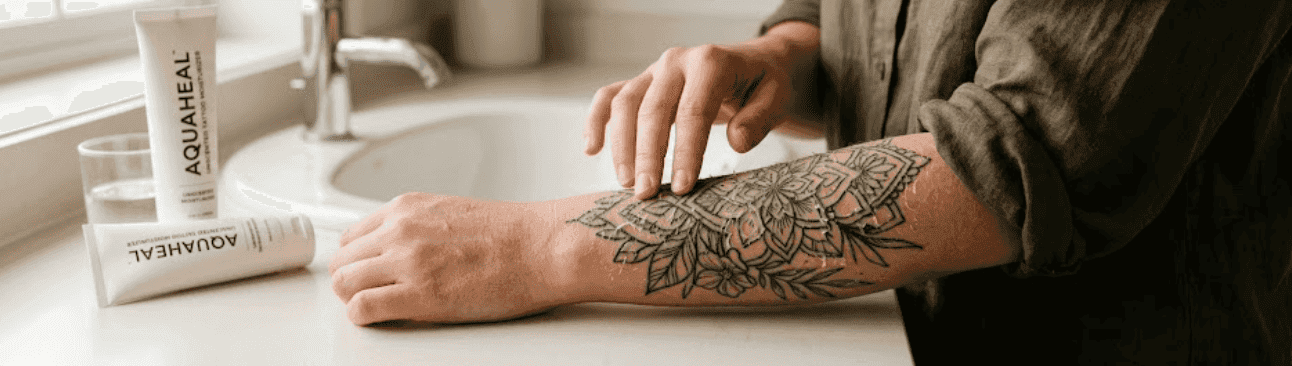
- Apply a thin layer of unscented moisturiser 2–3 times a day
- Thin means thin — you should barely see a sheen, not a glob. If it's shiny and wet, you used too much.
- Unscented is non-negotiable — fragrance ingredients irritate healing skin and can cause reactions
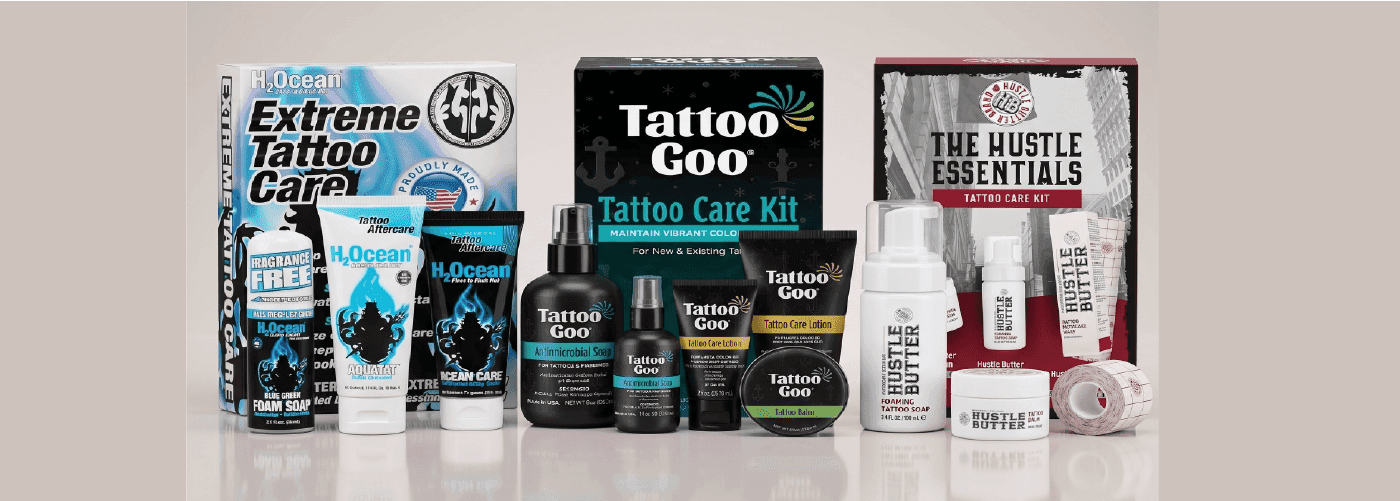
- Good options: Hustle Butter, Aquaphor (thin layer, first few days only), unscented Lubriderm, coconut oil if your skin tolerates it
- Bad options: Vaseline (too thick, suffocates), scented lotions, anything with alcohol or retinol
Moisturiser doesn't stop peeling — nothing does. The dead epidermis is coming off regardless. What moisturiser does is keep it from drying out so aggressively that it cracks, pulls, or forms thick scabs that take ink with them. Think of it as managing the exit, not preventing it. If your tattoo is going to peel heavily, it's going to peel heavily whether you moisturise or not — but well-moisturised peeling is gentle and clean, while dry peeling is aggressive and damaging.
Wash Gently
- Use lukewarm water and a mild, unscented soap
- Pat the area — don't rub. Rubbing during the peeling phase pulls flakes before they're ready.
- It's fine if flakes come off during washing — water-loosened flakes were ready to go
- Pat dry with a clean paper towel, not a cloth towel (cloth fibres snag on peeling skin)
The Cloudy Stage That Follows Peeling
Once the dead skin finishes shedding, many people hit a second wave of panic: the tattoo looks milky, dull, or faded underneath. This is the "cloudy stage" or "milky phase," and it's the number-one reason people think their tattoo is ruined.
It's not ruined. Here's what's happening:
- The new epidermis growing over your ink is initially thicker and more opaque than mature skin
- You're literally looking at your tattoo through a frosted layer of brand-new skin
- As that skin matures over the next 2–4 weeks, it thins out and becomes transparent
- The ink underneath gradually shows through with full clarity and vibrancy
"The cloudy phase is you looking at your tattoo through brand-new skin that hasn't thinned out yet — the ink is still there, sharp and saturated, waiting for the window to clear."
This stage overlaps with the end of peeling and can last 1–3 weeks. You don't need to do anything special — just keep moisturising and give it time. The tattoo you see at week 6 is the real result, not the tattoo you see at week 2.
For the full stage-by-stage breakdown, our healing timeline guide covers every phase from day one to month three.
When Peeling Is Actually a Problem
Normal peeling doesn't need intervention. But a few patterns are worth watching:
- Thick, cracking scabs that bleed — the tattoo is too dry, or was over-worked. Increase moisturiser frequency (still thin layers) and don't pick. If it persists, message your artist with a photo.
- Peeling that hasn't started by day 10 — unusual but not automatically bad. Some tattoos peel so subtly you barely notice. If the tattoo looks fine otherwise, it's probably fine.
- Peeling that restarts after stopping — could be a reaction to a product you're using, friction from clothing, or sun exposure. Switch to a simpler moisturiser and protect the area.
- One colour peeling differently than others — red and yellow pigments sometimes trigger mild allergic reactions that look like persistent peeling or raised texture confined to that one colour
- Foul smell, pus, or increasing pain during peeling — this isn't a peeling problem, it's a potential infection. Get it checked.
Losing some ink during peeling is normal and happens to every tattoo — it's why touch-ups exist. Even with perfect aftercare, some spots may heal slightly lighter where a scab took a bit of ink with it, or where the skin's healing response pushed some pigment out. This is especially common on fingers, feet, inner wrists, and other high-movement areas. It's not a failure on your part or your artist's — it's skin being skin. A quick touch-up session after full healing fixes it in minutes.
Peeling by Tattoo Style
Different styles peel differently because different amounts of skin get disrupted.
- Fine-line and single-needle — minimal peeling, often just light flaking. Heals fastest.
- Bold traditional — moderate to heavy peeling, especially in solid-fill areas. Those thick black outlines and packed colour blocks mean more epidermal damage.
- Realism and portraiture — heavy peeling in shaded areas, lighter in softer gradients. The peeling can look alarming because the tonal variation makes patches more obvious.
- Colour saturation work — heavy peeling with vividly coloured flakes. The more passes the artist made to pack colour, the more the epidermis was disrupted.
- Dotwork and geometric — variable. Lightly dotted areas peel minimally; densely packed sections peel like traditional work.
- Blackout and heavy black — the heaviest peeling. Large areas of solid black ink require aggressive packing, and the epidermis sheds accordingly. Expect sheets, not flakes.
Your artist's technique matters as much as the style. A heavy-handed fine-line artist can cause more peeling than a light-touch traditional artist. The style gives you a rough expectation, but your specific tattoo's peeling depends on how your particular artist worked your particular skin on that particular day. Don't compare your peeling to someone else's tattoo in the same style — too many variables differ.
The ugly truth about tattoo peeling is that it looks like something going wrong when it's actually everything going right. Your body is clearing the wreckage so new skin can settle over the ink and protect it for the next several decades. The coloured confetti on your bedsheets isn't your tattoo leaving — it's the construction debris from the renovation underneath. Sweep it up, moisturise, keep your hands off, and check back in a month. The tattoo that emerges will be worth the messy middle.
"Every coloured flake on your pillowcase was dead skin that was already on its way out — your tattoo is underneath it, not inside it."
Already have your design? Each design in our library includes the recommended aftercare protocol for its specific style and placement. Browse verified designs →
What To Never Use
Picking, pulling, or peeling flakes and scabs
rips ink from the dermis, leaves permanent light patches
Over-moisturising with thick layers of product
suffocates healing skin and traps bacteria underneath
Rubbing the tattoo dry with a cloth towel
snags on peeling skin and pulls flakes prematurely
Using scented lotions or products with alcohol/retinol
irritates healing skin and can trigger reactions
Comparing your peeling to someone else’s
different styles, artists, and skin types peel completely differently